 Soku AI
How to Cut App Install CPI by 40% with AI-Powered Ad Creatives
App install campaigns are getting more expensive every quarter. Here's how mobile growth teams are using AI creative optimization to reduce CPI by 40% or more — with real benchmarks, proven strategies, and a practical playbook.
By Soku Team · March 18, 2026 · 9 min read
The global average cost per install sits at $2.24 — but that number hides enormous variation. Finance apps pay $8.70 per install. Gaming ranges from $2.50 for hyper-casual to $6+ for hardcore titles. And across every category, CPI has been climbing steadily as more advertisers compete for the same mobile users.
Most UA teams respond by adjusting bids, refining audiences, or testing new networks. Those levers matter, but they are not the biggest one. Meta's research shows that creative quality drives up to 56% of auction outcomes — more than targeting, bidding, or placement combined. On TikTok, the number is even higher: 65-70% of campaign performance is determined by creative.
This article breaks down exactly how mobile growth teams are using AI-powered creative optimization to cut CPI by 40% or more, with real benchmarks and a playbook you can run this month.
The CPI Problem in Numbers
Before talking solutions, it helps to understand why app install costs keep rising:
| Metric | 2026 Benchmark |
|---|---|
| Global average CPI | $2.24 |
| iOS CPI (US) | $2.37 |
| Android CPI (global) | $0.44 |
| Finance app CPI | $8.70 |
| Gaming CPI (casual) | $2.50 |
| Gaming CPI (hardcore) | $6.00+ |
| Shopping app CPI | $1.30 |
| Entertainment app CPI | $1.10 |
| Google UAC average CPI | $2.65-$3.50 |
| Creative's share of auction outcomes | 56% (Meta) / 65-70% (TikTok) |
The drivers are familiar: more apps competing for installs, privacy changes reducing targeting precision, and creative fatigue burning through ad sets faster than teams can replace them. But here is what most teams miss — the single biggest variable they control is not the bid or the audience. It is the creative.
Why Creative Is the Biggest CPI Lever
Ad platforms run auctions. When your ad competes for an impression, the algorithm evaluates a combination of your bid, expected engagement, and creative quality. If your creative is stale or underperforming, the algorithm pushes it down the auction stack — fewer impressions, higher costs, worse placements.
This creates a compounding problem:
- Creative fatigue accelerates CPI. The average app install creative hits fatigue within 7-10 days. Once CTR drops by 15% or more week-over-week, CPI spikes — not because competition changed, but because your creative quality score declined.
- Volume of variants determines your optimization ceiling. Running 20 creative variants and letting the algorithm find winners consistently outperforms running 3 polished creatives. The algorithm needs options to optimize against.
- Production speed is the bottleneck. Most mobile growth teams produce 4-8 creatives per week. Ad networks like TikTok, Meta, Unity, and AppLovin consume 20-40+ creatives per week to perform optimally. That gap is where CPI inflates.
- App store conversion rate compounds the effect. If your app listing converts at 35% instead of 55%, your effective CPI is 57% higher — without any change to your bids or creative. Creative quality in the ad and creative quality on the store page both matter.
The teams cutting CPI by 40%+ are not finding secret audiences. They are out-producing and out-iterating on creative.
The AI Creative Playbook for Lower CPI
Companies achieving significant CPI reductions are running a systematic workflow that covers the full creative lifecycle — not just generating more ads.
Strategy 1: High-Velocity Creative Testing
The most immediate impact comes from testing velocity. AI video and image generators can produce 20-50 ad creative variants in the time it takes a human team to produce 3-5.
What the cadence looks like:
- Week 1: Generate 30 creative variants across 5 angles (pain point, social proof, demo, comparison, value proposition)
- Week 2: Analyze performance, kill the bottom 70%, scale the top 30%
- Week 3: Generate 20 new variants inspired by winning patterns, with variations in hook, pacing, and CTA
- Week 4: Repeat — each cycle is more informed than the last
The data backs this up. Teams testing more than 10 variants weekly report 20-40% lower CPI within the first 90 days. Apps that refresh creative every 7-10 days maintain stable CPI, while those refreshing monthly see 30-50% CPI increases from fatigue alone.
Key insight: The goal is not to make one perfect creative. It is to run enough variants that the algorithm has strong signals about what works, and you always have fresh creative ready before fatigue hits.
Strategy 2: UGC-Style Video Ads
The highest-performing format for app install campaigns in 2026 is not the polished brand video. It is UGC-style content — someone demonstrating the app, reacting to a feature, or explaining why they use it.
The Bend stretching app provides a clear example. Their traditional brand ads delivered a CPI of $2.38. Switching to UGC-style creative dropped CPI to $1.44 — a 39% reduction — while also improving cost per purchase from $41 to $36.
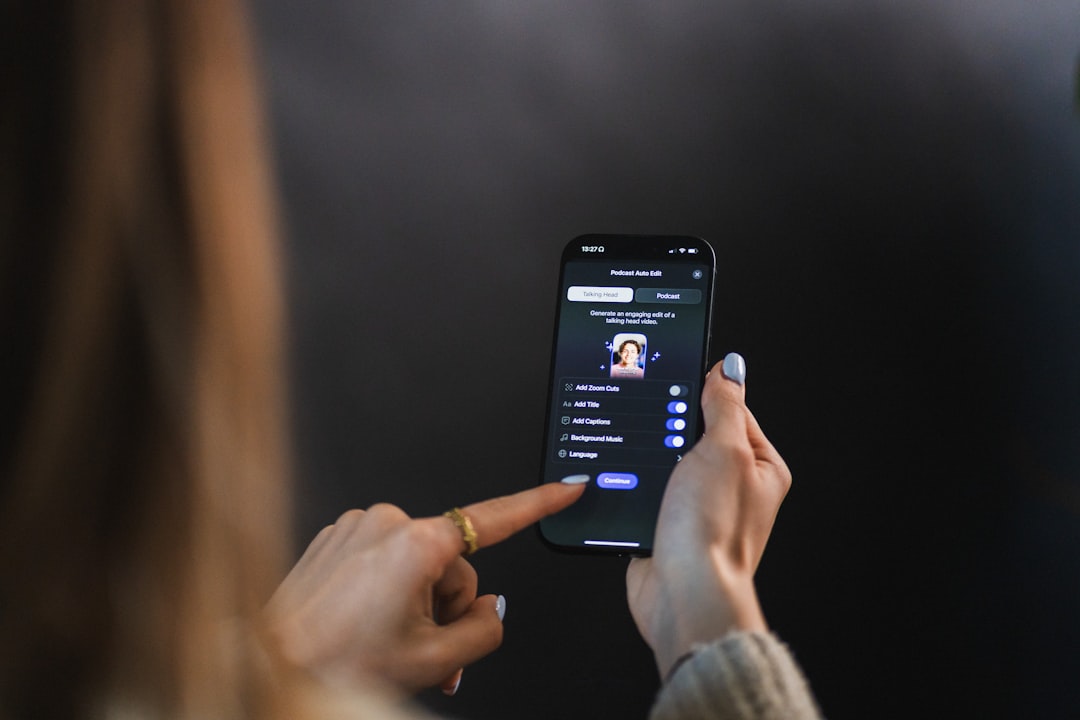
The problem with real UGC is speed. Finding creators, briefing them, reviewing footage, and editing takes 2-4 weeks per batch. AI avatar tools compress that to hours.
The workflow:
- Write 10 scripts targeting different user motivations and app features
- Generate each script as a video using AI avatars (different presenters, styles, backgrounds)
- Test all 10 across Meta, TikTok, and ad networks
- Identify winners, generate 5 more variations of the top 2-3 performers
- Scale budget on winners while generating the next batch
Apps running this playbook report 30-50% lower CPI on AI UGC ads compared to traditional brand video. The format signals authenticity in the feed, which drives higher engagement rates and better auction outcomes.
Strategy 3: Platform-Specific Creative
A creative that performs well on Meta will not necessarily work on TikTok. The platforms have different formats, different user behaviors, and different algorithm preferences. Yet most UA teams generate one batch of creative and distribute it everywhere.
AI tools make platform-specific production cheap enough to do properly:
- Meta: Static images and short video (6-15 seconds) perform well. Square and vertical formats. Lead with the value proposition.
- TikTok: Native-feeling content wins. Vertical only. Hook in the first 2 seconds. UGC-style consistently outperforms polished ads. See our TikTok creative guide for the full breakdown.
- Google App Campaigns: The algorithm needs diverse asset types — landscape and portrait video, multiple image sizes, varied headlines. More assets give Google more optimization surface.
- Unity/AppLovin: Playable ads and interactive formats drive lower CPI in gaming. Short reward-style previews for non-gaming.
Teams that generate platform-native variants from the start — rather than resizing after the fact — consistently see 15-25% CPI improvement compared to cross-posting the same creative.
Strategy 4: Cross-Platform Creative Intelligence
The most sophisticated mobile growth teams are not just generating more creative. They are building feedback loops between creative performance and creative production.
This means:
- Identifying why creatives work, not just that they work. Is it the hook? The visual style? The app feature shown? The CTA placement?
- Cross-pollinating insights across platforms. A hook that resonates on TikTok might work as a Meta Reel — but only if you are tracking creative-level performance across both.
- Predicting fatigue before it hits. If a creative's CTR is declining 2-3% daily, you have 4-5 days before CPI spikes. Start generating replacements now, not when performance drops.
This is where most teams hit a wall. They can generate creative at scale, but they cannot analyze performance at scale. Dashboards show numbers, but they do not tell you what to make next.
Soku was built for exactly this gap. It connects to your ad platforms — Meta, Google, TikTok, Unity, AppLovin — and acts as an AI marketing agent that identifies which creatives are driving installs efficiently, diagnoses why others are underperforming, and generates specific briefs for your next production cycle. Instead of manually pulling reports from five platforms and trying to spot patterns, Soku surfaces insights like:
- "Creative A's CPI increased 28% this week — hook fatigue detected. The gameplay footage still performs; generate new hooks with the same app demo."
- "UGC-style creatives outperform brand video by 2.1x on TikTok but only 1.3x on Meta. Shift TikTok budget entirely to UGC variants."
- "Your top performer on Unity has a similar visual style to your worst performer on Meta. The audiences respond to different triggers — split your creative strategy."
The loop becomes: generate, test, analyze, brief, generate. Each cycle is faster and more informed than the last.
CPI Reduction Math: A Real Example
Here is how the numbers work for a mobile app spending $50K/month on user acquisition:
| Metric | Before AI Creatives | After AI Creatives |
|---|---|---|
| Monthly UA spend | $50,000 | $50,000 |
| Creative production cost | $8,000/mo (agency + freelancers) | $800/mo (AI tools) |
| New variants per month | 15-20 | 80-120 |
| Average creative lifespan | 8 days | 12 days (less fatigue) |
| Average CPI | $3.20 | $1.92 (-40%) |
| Monthly installs | 15,625 | 26,042 |
| Effective CPI (incl. production) | $3.71 | $1.95 |
The savings come from three places:
- Lower production costs — AI tools cost a fraction of agency or freelancer creative, freeing budget for actual media spend
- Lower CPI — more variants means more algorithm optimization surface, and faster refresh prevents fatigue-driven CPI spikes
- Better install quality — rapid testing finds the messages that attract high-intent users, not just high click-through rates. Teams optimizing for day-7 retention alongside CPI report 15-20% better cohort performance
At scale, cutting effective CPI from $3.71 to $1.95 means you acquire 67% more users for the same total budget. Compounded over a quarter, that is the difference between hitting growth targets and missing them.

Common Mistakes to Avoid
Optimizing for installs instead of downstream events
A low CPI means nothing if those users churn on day 1. Always optimize toward post-install events — registration, tutorial completion, first purchase, day-7 retention — not just install volume. AI tools can generate attention-grabbing hooks that drive installs from low-intent users. Guard against this by tracking full-funnel metrics.
Generating volume without creative diversity
AI makes it easy to produce 100 variants. But if all 100 show the same app feature with slightly different text, you have not actually expanded your testing surface. Structure generation around distinct hypotheses: different features, different user motivations, different formats, different emotional hooks.
Ignoring the app store page
Your ad creative and your app store listing work together. A high-performing ad that drives users to a poorly optimized store page wastes money. If your store conversion rate is below category average, fixing that will reduce effective CPI more than any ad creative change.
Treating creative optimization as a one-time project
The value of AI creative is not just lower production costs — it is faster iteration cycles. If you generate a batch of AI creatives and then do not analyze performance for two weeks, you have missed the point. The goal is a continuous generate-test-learn loop on a weekly cadence.
Running the same creative across all markets
CPI varies dramatically by geography — $2.37 in the US versus $0.22 in Brazil. Creative that resonates in one market often falls flat in another. If you are running multi-market campaigns, generate market-specific creative variants, not just translated versions of US creative.
Getting Started: A 30-Day Plan
Week 1: Foundation
- Audit your current creative library — identify your top 5 performers and analyze why they work (hook type, format, message, visual style)
- Set up creative-level tracking across all platforms (ensure each creative has a unique ID you can trace to install and post-install metrics)
- Choose your AI creative tools: one video generator, one avatar/UGC tool, one image generator
Week 2: First Batch
- Generate 30 creative variants across your top 3 platforms (10 per platform, platform-native formats)
- Launch with $15-30 per variant for initial signal
- Cover at least 4 distinct angles: feature demo, UGC testimonial, problem-solution, social proof
Week 3: First Analysis
- Kill the bottom 60% of creatives
- Identify winning patterns: which hooks, formats, and messages drove the lowest CPI with acceptable post-install quality
- Generate 20 new variants based on winning patterns
- Connect an analytics layer (like Soku) to automate creative performance tracking across platforms
Week 4: Scale and Systematize
- Double budget on top 5 performers
- Launch new batch with refined angles
- Establish weekly creative refresh cadence (minimum 10 new variants per week)
- Document your winning formula — which app features, which hooks, which formats, which platforms
Most mobile growth teams see measurable CPI improvement within the first two cycles (weeks 2-3). The compound effect — where each cycle's insights inform the next — is what drives the 40%+ reductions over a full quarter.
The Bottom Line
App install CPI has been rising for three years straight across nearly every category. The teams reversing that trend are not finding cheaper inventory or gaming bid strategies. They are winning the creative game — producing more variants, testing more angles, refreshing more frequently, and building data-driven feedback loops between performance and production.
The math is straightforward: creative quality determines 56-70% of auction outcomes. If you are not optimizing the variable that matters most, no amount of bid optimization or audience refinement will compensate.
AI tools have made it possible to generate, test, and optimize app install creatives at a velocity that was previously only available to publishers with dedicated creative studios and six-figure production budgets. The playbook is clear. The teams that run it systematically are not just lowering CPI — they are building a compounding creative advantage that gets harder to replicate over time.
CPI benchmarks cited from Business of Apps, Mapendo, and AppTweak 2025-2026 reports. Creative impact data from Meta, TikTok, and AppsFlyer cross-industry studies through Q1 2026.