 Soku AI
How a DTC Brand Expanded from the US to 6 APAC Markets — With a 2-Person Team and AI Localization
A US skincare brand used AI dubbing, lip sync, and cross-market creative intelligence to launch in Japan, Korea, Australia, Singapore, Indonesia, and India — cutting localization costs by 78% and time-to-market from 6 months to 8 weeks.
By Soku Team · March 17, 2026 · 8 min read
A US-based DTC skincare brand had a problem most founders would envy: their domestic growth was plateauing, and the obvious next move was international expansion. Asia-Pacific — a $4.86 trillion e-commerce market growing at nearly 9% annually — was the target.
The less enviable part: they had two people on their marketing team, zero in-house localization capability, and agency quotes that started at $80,000 per market for video ad localization alone. Multiply that by six target markets — Japan, South Korea, Australia, Singapore, Indonesia, and India — and the budget hit half a million dollars before a single ad ran.
They launched in all six markets in eight weeks. Total localization cost: under $110,000. Here is exactly how they did it.
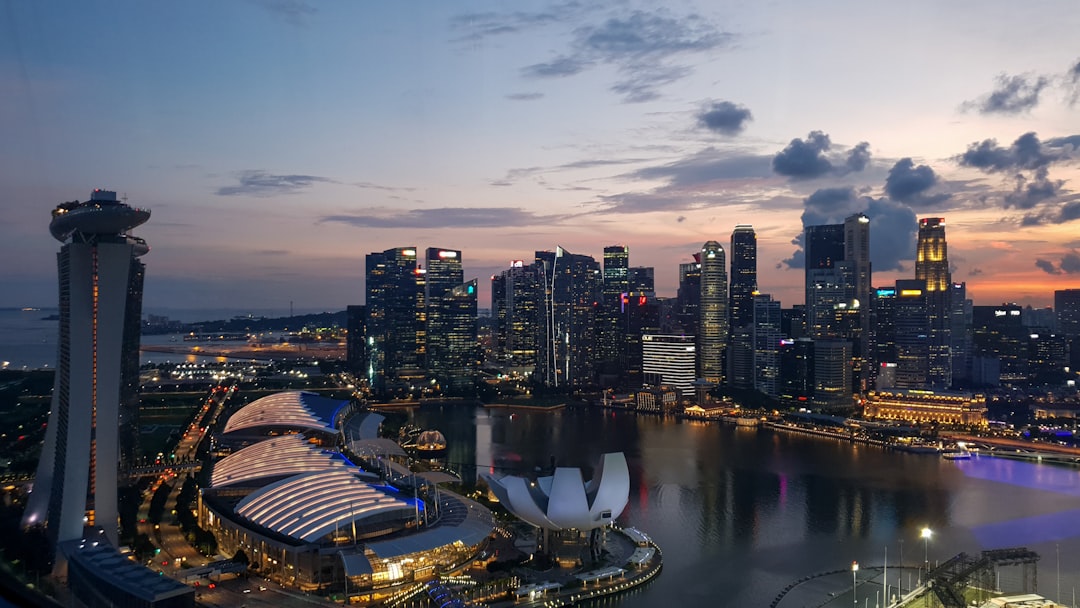
The $4.86 Trillion Opportunity — and the Wall in Front of It
The math behind APAC expansion is compelling. Southeast Asia's digital economy alone surpassed $300 billion GMV in 2025, with e-commerce growing at 18.6% annually. South Korea's cross-border e-commerce is expanding 30% year-over-year. India is on track to hit $345 billion in e-commerce by 2030.
But the data on consumer behavior is even more compelling — and more sobering. According to CSA Research's multi-year study across 29 countries:
- 76% of online shoppers prefer buying products with information in their native language
- 40% will never buy from websites in other languages
- 65% prefer native-language content even if it is lower quality than English alternatives
For a DTC brand running video ads — the format that drives the highest engagement on Meta and TikTok — this means English-language creative is essentially leaving money on the table across APAC. Localized mobile ad campaigns outperform English counterparts by wide margins: one cross-market study found localized ads achieved 42% higher CTR and 22% higher conversion rates compared to English-only versions.
The opportunity is massive. The barrier is that traditional localization is slow, expensive, and does not scale.
The Old Way: 6 Months, $500K, and a Lot of Coordination
Before exploring what they actually did, it helps to understand what the traditional path looks like for a DTC brand localizing video ads into six APAC markets.
Per market, the traditional process involves:
- Hire a localization agency ($8,000-15,000 per market for translation and cultural adaptation)
- Cast local voice actors or on-camera talent ($3,000-8,000 per market)
- Record audio in a professional studio ($2,000-5,000 per session)
- Edit and sync video to new audio ($1,500-3,000 per video)
- Cultural review and revision cycles (2-4 weeks per market)
For video dubbing specifically, industry rates run approximately $1,200 per finished minute. A brand running 10 video ads averaging 30 seconds each across 6 markets would spend roughly $36,000 on dubbing alone — before any cultural adaptation, re-editing, or creative testing.
The timeline is equally painful. From brief to final deliverables, most agencies quote 3-4 months per market. Running markets sequentially means 6+ months before all six are live. Running them in parallel requires a project manager just to coordinate the agencies — a role this two-person team could not absorb.
Total estimated cost for 6 markets: $480,000-$650,000
Timeline: 4-6 months
The New Way: AI Localization in 8 Weeks
The team took a fundamentally different approach. Instead of hiring agencies per market, they built a lightweight localization pipeline using AI tools — and spent the saved budget on actual media spend.
Week 1-2: Audit and Prioritize
They started by identifying their top 15 performing US video ads — the creatives with the lowest CPA and highest ROAS over the previous 90 days. The logic was simple: if a creative concept works in the US, the underlying message likely transfers. What needs to change is the language, voice, and cultural framing.
They categorized the 15 ads into three tiers:
- Tier 1 (6 ads): Universal appeal — product demos, before/after, ingredient science. These could be dubbed directly.
- Tier 2 (5 ads): Messaging needs adaptation — testimonial-style, humor-based, or culturally specific hooks.
- Tier 3 (4 ads): US-only — Super Bowl references, American slang, seasonal ties. Skip these.
This filtering saved weeks. Instead of localizing everything, they focused on the 11 ads most likely to transfer.
Week 3-4: AI Dubbing and Lip Sync
For the Tier 1 ads, they used AI dubbing tools (HeyGen and ElevenLabs) to generate localized audio with lip-synced video. The process per ad:
- Upload original video
- Select target language
- AI generates translated script, synthesizes voice, and synchronizes lip movements
- Review and adjust (15-20 minutes per ad per language)
Cost per ad per language: approximately $5-15 (compared to $600+ traditionally)
For 6 ads across 6 languages, that is roughly $360-540 total — versus $21,600 at traditional rates. The quality has improved dramatically: modern AI dubbing achieves 95%+ lip-sync accuracy and preserves 90-95% of original emotional tone.
For faces that needed local talent, the team used an AI face swap tool to adapt presenter visuals for each market while keeping the original performance. For Tier 2 ads, they hired freelance native speakers on Fiverr to review and rewrite the scripts before running them through AI dubbing. This added $50-100 per script but ensured cultural nuance was preserved. A Japanese copywriter, for example, softened direct calls-to-action into more suggestive phrasing — a critical adaptation, since direct commands in Japanese advertising can feel aggressive.
Week 5-6: Cultural Adaptation Beyond Language
Language is only part of localization. The team made visual and structural changes per market:

Japan: Longer ad formats (45-60s vs. 15-30s in the US) to match Japanese preference for detailed product information. Added ingredient certifications prominently. Softened music to ambient tones.
South Korea: Leaned into social proof and K-beauty aesthetics. Overlaid user review counts and ratings. Used before/after formats that dominate Korean beauty marketing.
Australia: Kept creative closest to US originals — similar cultural context, English language (with Australian voice). Adjusted pricing to AUD and added "free shipping to AU" messaging.
Singapore: English + Mandarin bilingual overlays. Emphasized the brand's clean ingredient positioning, which resonates with Singapore's health-conscious consumer base.
Indonesia: Mobile-first vertical video only — 95% of Indonesian e-commerce happens on mobile. Shorter formats (15s max). Emphasized value pricing and bundle deals.
India: Hindi and English bilingual versions. Localized ads achieved dramatically lower CPAs — industry data shows Hindi ads can achieve 36% lower CPA and Telugu ads 22% lower CPA compared to English-only campaigns in India.
Week 7-8: Launch and Rapid Testing
They launched all six markets simultaneously on Meta and TikTok, running 66 total creative variants (11 base ads × 6 markets). Initial budgets were modest — $50-100 per creative per market for the first 72 hours — to gather performance signals before scaling.
This is where the process became genuinely difficult. Two people cannot manually monitor 66 creatives across 12 ad accounts (Meta + TikTok per market) across 6 time zones. The spreadsheet approach that works for a single-market operation breaks down completely at this scale.
Where Soku Fits: Cross-Market Creative Intelligence
The team connected all 12 ad accounts to Soku and used it as their cross-market creative intelligence layer. Instead of pulling reports from each platform manually, Soku unified performance data and surfaced insights that would have been invisible otherwise.

What Soku revealed in the first two weeks:
- The ingredient-science ad (Tier 1) was the top performer in Japan, Singapore, and Australia — but underperformed in Korea and Indonesia, where social-proof formats dominated
- Korean audiences responded 2.4x better to before/after formats than any other creative type — a pattern visible only when comparing across markets
- Indonesian vertical video ads had 68% higher completion rates than the same content in horizontal format, confirming the mobile-first hypothesis
- One specific hook ("dermatologist-tested" in local language) drove 31% lower CPA across all six markets — a cross-market insight that let them prioritize that angle in the next creative batch
- Creative fatigue hit faster in India (7 days) than in Japan (18 days), requiring different refresh cadences per market
The critical value was pattern recognition at scale. A two-person team cannot spot cross-market trends across 66 creatives and 12 accounts. Soku automated the analysis and generated specific creative briefs for the next production cycle — "Generate 3 new before/after variants for Korea emphasizing user review counts" or "Refresh the Hindi dermatologist-tested ad with a new hook; current version is 80% through its performance lifecycle."
The loop became: localize → launch → analyze → brief → localize — with each cycle taking days instead of months.
The Results
Eight weeks after starting, all six markets were live and optimizing. By the end of the first quarter:
| Metric | English-Only (Projected) | AI-Localized (Actual) |
|---|---|---|
| Markets live | 1-2 (sequential rollout) | 6 (simultaneous) |
| Total creative variants | 11 | 66 |
| Localization cost | $480K-650K (agency) | $108K (AI + freelance review) |
| Time to all markets live | 4-6 months | 8 weeks |
| Average CTR (vs. English baseline) | Baseline | +42% |
| Average CPA (vs. English baseline) | Baseline | -31% |
| Top market CPA reduction (India, Hindi) | — | -36% |
| Creative refresh cycle | 4-6 weeks | 5-7 days |
Cost breakdown of the $108K:
- AI dubbing and lip sync tools: ~$2,400 (HeyGen + ElevenLabs subscriptions)
- Freelance cultural script review: ~$5,600 (native speakers for 6 markets)
- Visual adaptation and editing: ~$12,000 (contracted video editor)
- Media spend for testing phase: ~$88,000
The localization tooling itself cost under $10,000. The majority of the budget went directly to media spend — exactly where it should go.

Key Takeaways
Start with your winners, not your entire catalog
Localizing all creative assets is wasteful. The team's decision to filter down to 11 proven ads before localizing saved weeks and ensured they were investing in concepts already validated by US performance data.
Language is necessary but not sufficient
AI dubbing gets you 70% of the way there. The remaining 30% — cultural tone, visual preferences, format expectations, pricing localization — requires human input. Budget for native-speaker review even when using AI translation.
Different markets fatigue at different rates
The team discovered that creative refresh cadences cannot be uniform across APAC. Indian audiences burned through creative in 7 days while Japanese audiences sustained engagement for 18+ days. Without cross-market analytics, they would have applied a single refresh schedule and overspent in some markets while underperforming in others.
Cross-market pattern recognition is the real unlock
The most valuable insight was not any single market's performance — it was the patterns that emerged across markets. The "dermatologist-tested" hook working universally, or before/after formats dominating in Korea, were insights that only became visible when all six markets were analyzed together.
The economics have fundamentally changed
Traditional localization at $1,200/minute of video made APAC expansion a six-figure commitment before any media spend. At $5-15 per ad per language with AI tools, the barrier drops by 95%+. For DTC brands, this means international expansion is no longer a Series B decision — it is viable at seed stage.
Market data from Mordor Intelligence, CSA Research, and Google e-Conomy SEA 2025. AI localization benchmarks from industry studies through Q1 2026.