 Soku AI
How a Boutique Hotel Group Boosted Direct Bookings 25% with AI-Personalized Ad Creatives
A 12-property boutique hotel group was losing bookings to OTAs despite heavy ad spend. AI-personalized creatives matched to destination, season, and traveler intent drove a 25% jump in direct bookings and cut OTA dependency from 52% to 38%.
By Soku Team · March 30, 2026 · 7 min read
A boutique hotel group with 12 properties across the Caribbean, Mediterranean, and Southeast Asia was spending $200K per month on Meta and Google Ads. Traffic numbers looked healthy. Click-through rates were respectable. But 52% of their bookings were still flowing through OTAs like Booking.com and Expedia — meaning they were paying for discovery twice: once through ads, and again through OTA commissions averaging 18-22%.
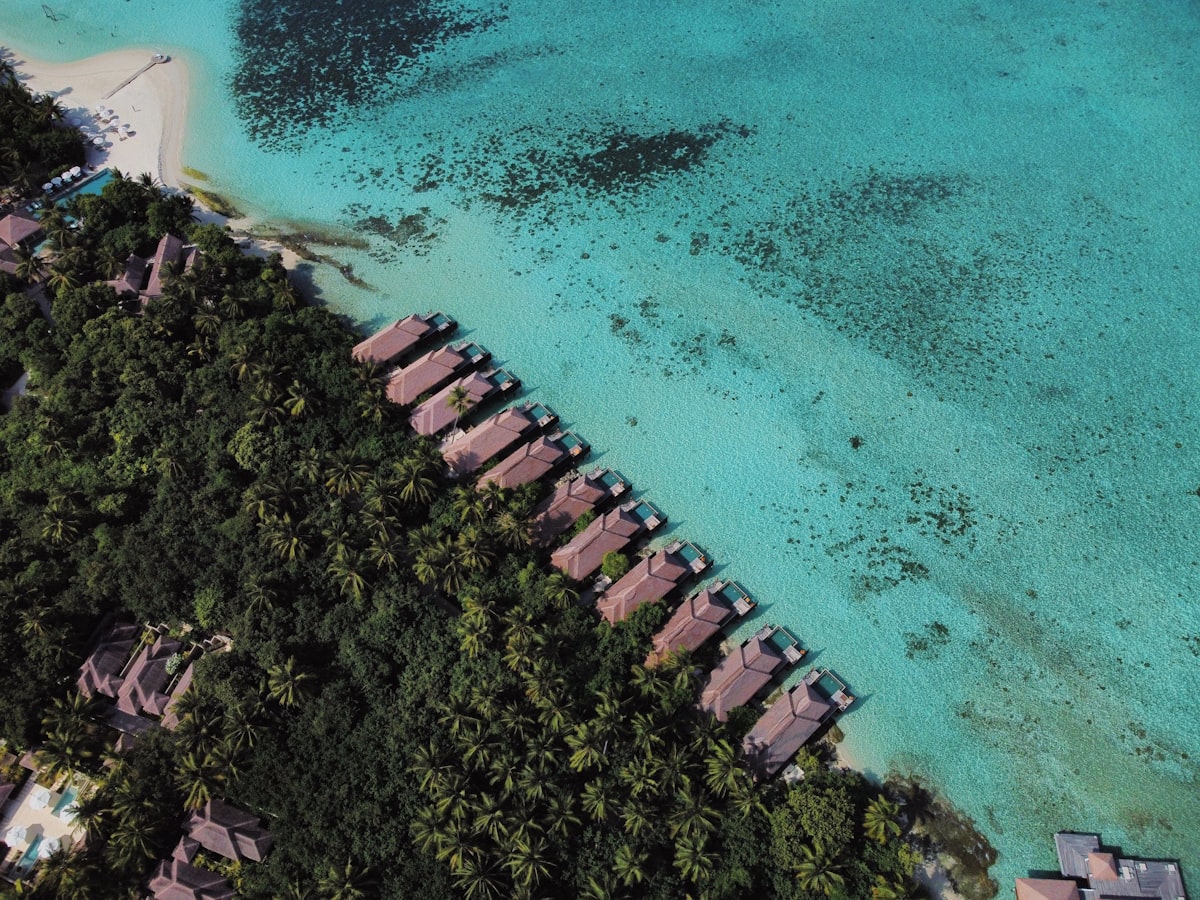
The marketing team knew they had an attribution problem, but the deeper issue was creative. They were running the same handful of polished brand videos and lifestyle shots across all 12 properties, all seasons, all audience segments. A honeymooner searching for a Maldives overwater villa was seeing the same creative as a family looking for a Mallorca beach resort in August.
Generic creatives were generating clicks. They were not generating direct bookings.
The OTA Tax
The economics of OTA dependency are brutal for hotel groups. On a $400/night room, an 18% OTA commission means $72 per booking goes to the middleman. For this group — averaging 8,500 bookings per month — that amounted to roughly $612K in monthly OTA fees. Even a modest shift from OTA to direct bookings would translate to hundreds of thousands in recovered margin.
The team had invested in a solid direct booking engine with competitive rates, loyalty perks, and free cancellation. The product was there. The problem was that their ads were not doing the job of convincing travelers to book direct instead of defaulting to the OTA they already had open in another tab.
Industry data confirmed they were not alone. According to 2026 hospitality benchmarks, only 27% of hotel bookings occur directly through property websites, with another 25% via hotel brand sites — meaning nearly half of all reservations still route through third-party channels.
Why Generic Creatives Fail in Travel
Travel advertising has a unique combination of challenges that make one-size-fits-all creative strategies particularly ineffective:
Hyper-seasonality. A ski resort in the Alps needs completely different messaging in December (peak ski season, urgency-driven) versus June (summer hiking, value-driven). Multiply that across 12 properties in different hemispheres and climate zones, and you need dozens of seasonal creative variations running simultaneously.
Destination diversity. Each property attracts a different traveler profile. The couple booking a cliffside suite in Santorini has different motivations, budgets, and booking timelines than the family reserving a villa in Bali. Creative that resonates with one audience falls flat with another.
The 72-hour booking window. Travel research happens over weeks, but the actual booking decision typically happens within a 72-hour window. During that window, the traveler is comparing options across multiple tabs — your direct site, Booking.com, Expedia, Google Hotels. The creative that reaches them during this window needs to be specific enough to tip the decision toward direct booking.
Creative fatigue compounds fast. With 56% of senior marketing executives identifying real-time personalization as a significant challenge, travel brands face an especially acute version: seasonal creative that was performing well can become irrelevant overnight when a destination transitions from peak to shoulder season.
The team had tried to address this manually. Their in-house creative team of three was producing about 15 new ad variations per month — nowhere near enough to cover 12 properties × 4 seasons × 3 audience segments × 2 platforms.
The Personalization Approach
Instead of producing a few "hero" creatives and hoping they would work everywhere, the team shifted to a modular, AI-assisted production model. The goal: destination-specific creatives matched to season and traveler intent, produced at 10x the previous volume.
The approach had three layers:
Layer 1: Destination × Season Creative Matrix
For each property, the team defined 3-4 seasonal angles based on what actually drives bookings during that period. A Caribbean resort in January gets "escape winter" messaging. The same property in September gets "hurricane season deals" value messaging. This created a matrix of ~48 base creative concepts across the portfolio.
Layer 2: Traveler Intent Segmentation
Using booking data and GA4 audience signals, the team identified three primary intent segments:
- Dreamers — early research phase, respond to aspirational imagery and destination storytelling
- Planners — comparing options, respond to specific amenities, rates, and direct-booking incentives
- Bookers — ready to convert within 72 hours, respond to urgency, limited availability, and price-match guarantees
Each base creative was adapted for these three segments, tripling the variation count.
Layer 3: AI-Powered Production and Optimization
This is where the volume became manageable. Using AI tools for image generation, copy variation, and format adaptation, the team scaled from 15 new creatives per month to 60+ per campaign cycle — without adding headcount. The modular framework for creating 100 ad variants in one hour describes the exact production methodology they adopted.

How Soku Powered the Workflow
The creative production was only half the equation. The harder problem was figuring out which of those 60+ variations were actually working, and why.
The team connected Soku to their full stack: Meta Ads, Google Ads, GA4, and their booking engine (via webhook). All read-only integrations. No engineering resources required.
Soku's role in the workflow:
Cross-Channel Attribution for Travel
Travel bookings rarely happen in a single session. A typical path might be: see Meta ad → visit site → leave → Google search brand name → click Google ad → book on Expedia anyway. Or: see Meta ad → visit site → leave → return directly three days later → book direct.
Soku connected these touchpoints and built attribution models that showed the real conversion paths. The team discovered that their Meta prospecting ads were generating 3.2x more assisted direct bookings than last-click reporting showed — they had been systematically undervaluing (and under-investing in) their top-of-funnel campaigns.
Automated Creative Performance Diagnosis
With 60+ active creatives across two platforms, manual performance monitoring was impossible. Soku automated three critical analyses:
- Fatigue detection — flagging creatives where CTR had declined 20%+ over 5 days, before CPA spikes became visible
- Destination-season fit scoring — identifying when a creative's performance diverged from its intended seasonal window (e.g., a "summer escape" ad still running in October)
- Winner pattern recognition — grouping top performers by visual style, copy angle, and audience segment to generate creative briefs for the next production cycle
Real-Time Budget Reallocation Signals
The biggest operational win was Soku's ability to flag budget allocation opportunities across the portfolio. When one property's shoulder season started outperforming expectations — say, Bali in April picking up early monsoon-season deals demand — Soku surfaced the signal within 48 hours instead of waiting for the weekly reporting cycle. The team could shift budget from underperforming destinations to the opportunity in real time.
Results After 12 Weeks
The combined impact of personalized creative production and AI-powered optimization:
| Metric | Before | After | Change |
|---|---|---|---|
| Direct booking share | 48% | 62% | +25% relative increase |
| OTA dependency | 52% | 38% | -14 percentage points |
| Blended ROAS | 3.2x | 5.1x | +59% |
| Average CPA (direct booking) | $38 | $24 | -37% |
| Creative production volume | 15/month | 60+/month | 4x increase |
| Weekly reporting time | 8 hours | 45 minutes | -91% |
| Creative hit rate | 1 in 8 | 1 in 3 | 2.7x improvement |
The financial impact was significant. The 14-percentage-point shift from OTA to direct bookings — on a base of 8,500 monthly bookings at $400 average nightly rate — represented roughly $170K per month in recovered OTA commissions. Against a $200K monthly ad spend plus Soku costs, the ROI case was clear within the first month.
What Made the Difference
Three factors drove the results, and they are applicable to any travel or hospitality brand running paid media:
1. Specificity beats polish
The team's old "hero" creatives were beautifully produced — drone shots, professional color grading, cinematic transitions. The new personalized creatives were simpler but hyper-specific: "Your Santorini cliffside suite, available June 14-21, €280/night direct — save €65 vs Booking.com." The specific creative outperformed the polished creative by 3.4x on direct booking conversion rate.
2. Cross-channel visibility changes budget decisions
Before Soku, the team was evaluating Meta and Google in isolation. They nearly paused their Meta prospecting budget because last-click ROAS was below target. Cross-channel attribution revealed it was their single most valuable campaign for driving direct bookings — just on a longer, multi-touch path. The budget increase that followed drove 40% of the overall improvement.
3. Speed of iteration matters more than volume
Producing 60+ creatives was useful, but the real advantage was the speed of learning. With Soku flagging fatigue, surfacing winners, and generating creative briefs automatically, the feedback loop from "launch creative" to "learn what works" to "produce next iteration" shrank from 2 weeks to 3 days. In a business with 72-hour booking windows and constant seasonal shifts, that speed is the competitive advantage.
Key Takeaways for Travel Brands
- Stop running the same creatives across your entire portfolio. Destination × season × intent is the minimum viable personalization for travel. Generic creatives are leaving direct bookings on the table.
- Invest in cross-channel attribution before making budget cuts. Travel booking paths are long and multi-touch. Last-click reporting will systematically mislead you about what is working.
- Automate creative fatigue monitoring. In travel, creative fatigue is amplified by seasonality. A great summer creative becomes a terrible fall creative. Catch the transition before your CPAs tell you something is wrong.
- Measure OTA displacement, not just ROAS. The true value of direct booking campaigns includes the OTA commission you did not pay. Factor that into your ROI calculations and your budget decisions will look very different. Our guide to measuring AI ad creative ROI walks through building this kind of full-picture measurement stack.
- AI personalization does not require a massive team. This group achieved 4x creative volume with the same 3-person team. The bottleneck was never production capacity — it was knowing what to produce next. That is where AI-powered analytics changes the game.