Soku AI
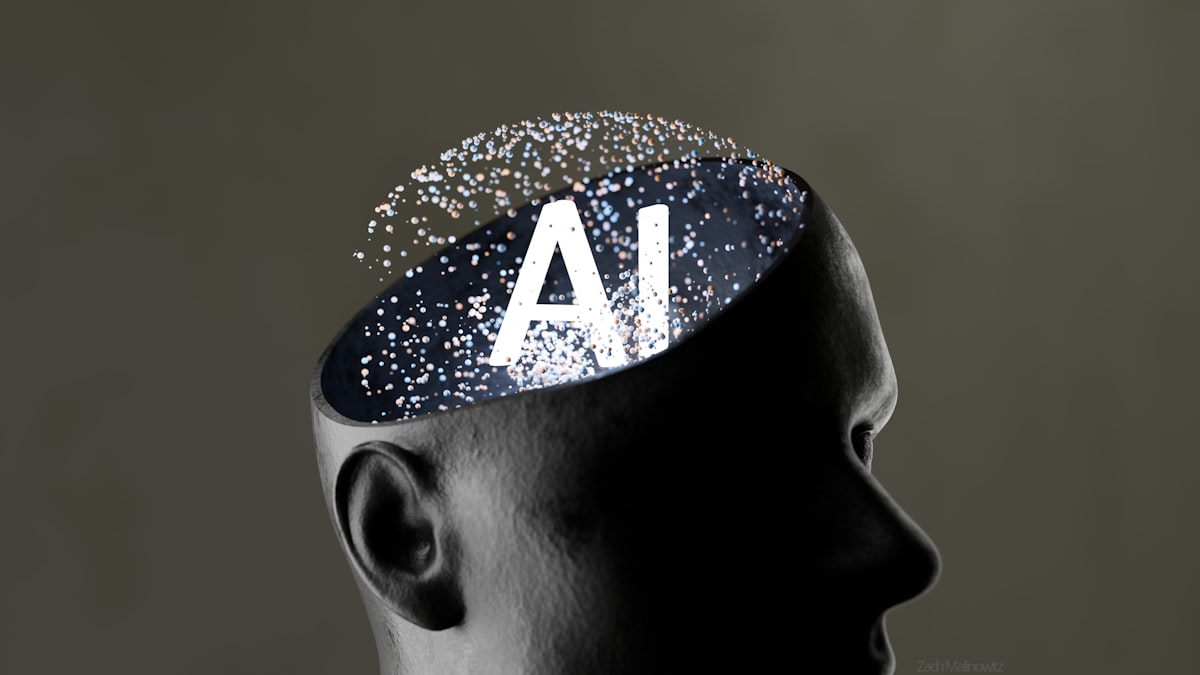
On March 26, 2026, a content management system misconfiguration at Anthropic exposed roughly 3,000 unpublished assets to the public internet. Among them: draft blog posts describing an unreleased AI model called Claude Mythos — internally codenamed Capybara — that the company called "a step change" in AI capabilities and "by far the most powerful AI model" it had ever built.
This essay is part of our Claude for Marketing & Sales guide — the complete operating manual, updated for the Fable 5 era.
The leak was accidental. The implications are not.
Mythos isn't just another incremental model upgrade. According to the leaked documents, it dramatically outperforms Claude Opus 4.6 in software coding, academic reasoning, and — most strikingly — cybersecurity. Anthropic itself warned that the model "presages an upcoming wave of models that can exploit vulnerabilities in ways that far outpace the efforts of defenders."
But here's the question that should matter to every digital marketer reading this: If AI reasoning is reaching this level of sophistication, why is most marketing automation still stuck in the generation era?

The Gap: Generation vs. Reasoning
Open any AI marketing tool today and you'll find the same pitch: generate ad copy, generate images, generate variations at scale. Generation is useful. It's also table stakes.
The real bottleneck in digital advertising was never "can we make more creative?" It's always been "can we understand why this campaign is underperforming and what to do about it?"
This is the difference between generation and reasoning — and it maps directly onto where AI models are headed.
Generation answers: "Here are 50 headline variations for your Meta ad."
Reasoning answers: "Your CPA increased 34% this week because creative fatigue set in on your top ad set after 14 days, while your audience overlap between Campaign A and Campaign B is cannibalizing both budgets. Here's a reallocation plan."
The first task requires pattern matching. The second requires the kind of multi-step logic, context synthesis, and causal reasoning that models like Mythos are specifically being built for.
Think of it like the difference between a code formatter and a debugger. Both work on code. But only one can trace a memory leak through 50,000 lines of interconnected systems to find the root cause. Marketing has its own version of memory leaks — budget waste that compounds silently across ad sets, audiences, and channels until someone notices that ROAS has been declining for weeks.
The 2026 Agentic Shift
The Mythos leak didn't happen in a vacuum. It landed in the middle of what industry analysts are calling the year of agentic AI in marketing.

Adweek, WordStream, Klaviyo, and Marketing Dive all flagged the same trend: marketing automation is moving from scheduled workflows to self-optimizing systems that plan, execute, and adjust campaigns across channels in real time.
The evidence is everywhere:
- Meta is reportedly building toward fully automated AI-driven ad campaigns, where advertisers set objectives and the system handles the rest — targeting, creative, bidding, and optimization.
- Salesforce Agentforce, HubSpot Breeze AI Agents, and Adobe Agent Orchestrator are all shipping autonomous marketing agents that go beyond basic automation.
- The Model Context Protocol (MCP) is enabling AI systems to access tools, data, and actions across CRM, analytics, and ad platforms in a unified way.
The common thread: AI is moving from assistant to agent. Not "here's a suggestion" but "here's what I did, here's why, and here are the results."
But there's a catch. Agentic AI is only as good as the reasoning layer powering it. An agent that can execute fast but can't reason deeply will make fast, confident mistakes. This is exactly why the Mythos leak matters — it signals that the reasoning layer is catching up to the execution layer.
Soku: Reasoning-First Ad Intelligence
This is where Soku comes in — and why we've been building the way we have.
Most AI marketing tools picked a lane: creative generation, bid automation, or reporting dashboards. Soku took a fundamentally different approach. We built an AI marketing agent that connects to your entire stack — Meta Ads, Google Ads, TikTok Ads, GA4, Shopify, Semrush — and reasons across all of it simultaneously.
Here's what that looks like in practice:
Root-Cause Diagnostics
When your Meta campaign's CPA spikes, most tools will show you the spike. Soku tells you why. Is it creative fatigue? Audience saturation? A broader channel shift pulling attention away from Meta? A seasonal pattern that hit the same week last year?
This isn't keyword matching against a FAQ. It's genuine multi-signal analysis across your connected accounts, performed in natural language so you can ask follow-up questions and drill deeper.
Cross-Channel Performance Analysis
Your Meta Ads don't exist in isolation. A Google Ads budget increase can cannibalize your Meta retargeting pool. A Shopify promotion can spike traffic that makes your GA4 attribution model look broken.
Soku sees across channels simultaneously and surfaces the connections that siloed tools miss.
Action Plan Drafting
Analysis without action is just expensive curiosity. When Soku identifies an issue or opportunity, it drafts specific, executable plans: campaign briefs, scaling strategies, budget reallocation recommendations, and experiment hypotheses — all grounded in your actual data.
Architected for the Reasoning Era
The Mythos leak revealed something important about where AI is headed: context windows are expanding to 1M+ tokens, and reasoning depth is increasing faster than most applications can absorb.
This matters for marketing because the most valuable analysis requires holding enormous amounts of context simultaneously — months of campaign history, creative performance data, audience overlap patterns, seasonal trends, competitive signals, and channel interactions.
A model that can reason across 1M tokens of context doesn't just answer questions faster. It answers different questions — questions that were previously impossible because no human (and no previous AI) could hold all the relevant context in working memory at once.
Soku's architecture was built from day one to leverage exactly this kind of capability:
- Multi-model infrastructure that can route different reasoning tasks to the most capable available model
- Deep integration layer that pulls live data from across your marketing stack, giving reasoning models the full context they need
- Structured action framework that translates model reasoning into executable marketing actions
As models like Mythos move from early access to general availability, Soku's infrastructure is ready to ingest their expanded context windows and deeper reasoning capabilities from day one.
What This Means for Advertisers

The Mythos leak isn't just an Anthropic story. It's a signal about the trajectory of every AI-powered marketing tool you use. Here's how to think about it:
1. Audit Your Stack for Reasoning Capability
Most marketing tools today use AI for generation or simple pattern matching. Ask your vendors: can your AI explain why a metric changed, not just that it changed? Can it synthesize signals across channels? The gap between generation-only tools and reasoning-capable tools will widen dramatically as underlying models improve.
2. Consolidate Your Data Layer
Reasoning models are only as good as the context they receive. If your ad data lives in Meta's dashboard, your analytics in GA4, your revenue in Shopify, and your SEO data in Semrush — with no connective tissue — even the most powerful model can't help you. Invest in tools that unify your data layer.
3. Shift From "More Creative" to "Smarter Decisions"
The ROI ceiling on generating more ad variations is real. The ROI ceiling on making better allocation, targeting, and timing decisions is much higher. As reasoning models improve, the competitive advantage shifts from "who can produce the most content" to "who can make the best decisions fastest."
4. Watch the Agent Space — But Verify
2026 will see dozens of "AI agent" launches in marketing. Not all agents are equal. The differentiator isn't whether a tool calls itself an agent — it's whether it can actually reason through complex, multi-variable marketing problems and produce actionable recommendations you'd trust.
Staying Ahead of the Curve
The Claude Mythos leak was, in Anthropic's words, "human error." But the capabilities it revealed are very much intentional — and they represent the direction every major AI lab is heading.
For marketers, the message is clear: the AI tools that will matter most in the next 12 months aren't the ones that generate the most content. They're the ones that reason the best — that can look at your entire marketing operation, identify what's actually working and what isn't, and tell you what to do about it.
We're not just watching this shift at Soku. We're building the infrastructure that makes it useful for real marketing teams with real budgets and real performance targets.
The reasoning era is here. The question is whether your marketing stack is ready for it.
The best time to connect your accounts is before the next wave hits. Get started with Soku AI and see what reasoning-first marketing intelligence looks like in practice.