Soku AI
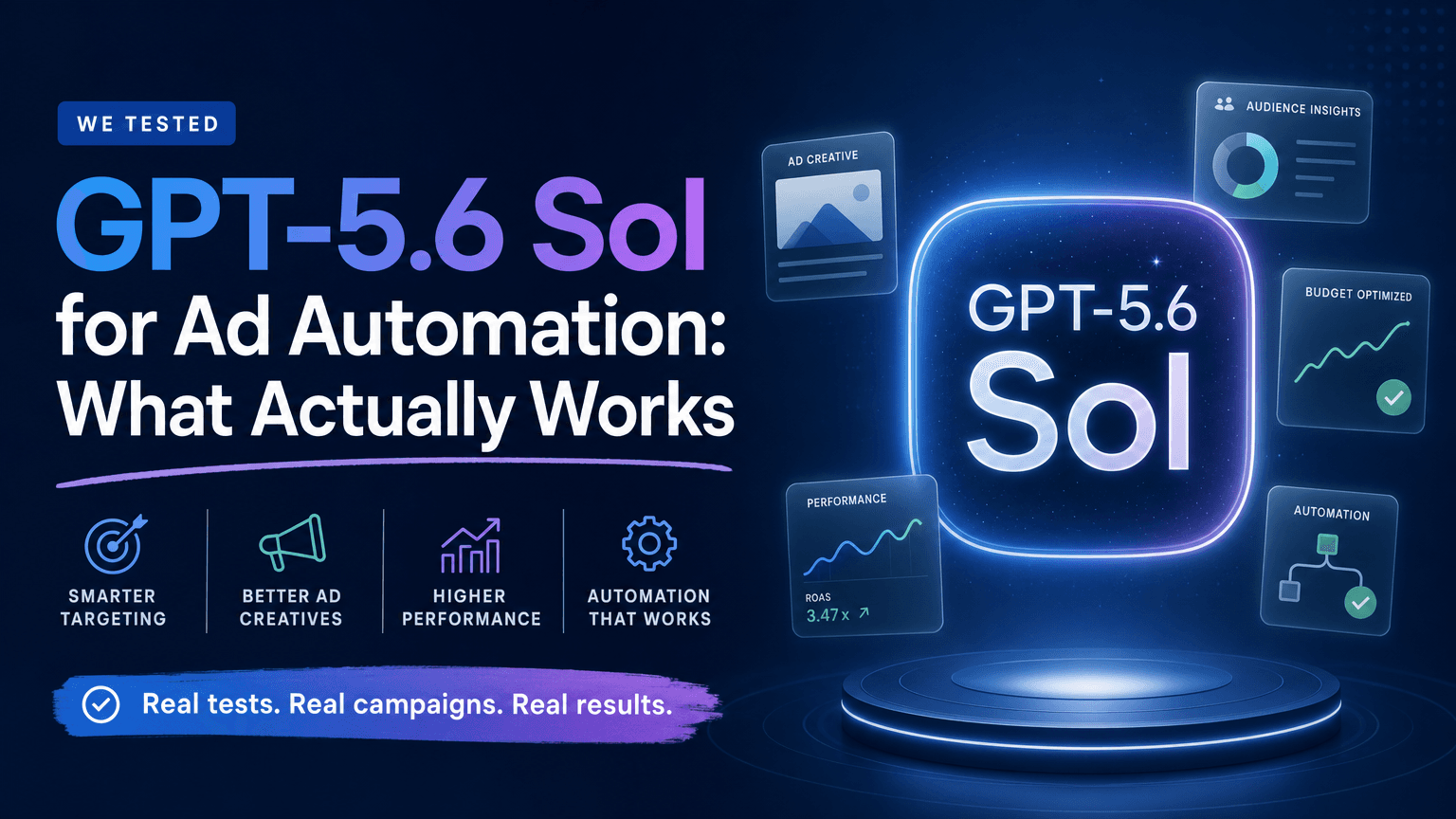
OpenAI's GPT-5.6 Sol preview is not just another model-release headline for marketers. The useful question is narrower: which parts of an ad team's workflow are now worth routing to a more capable, more expensive reasoning model, and which parts should stay on cheaper fast models?
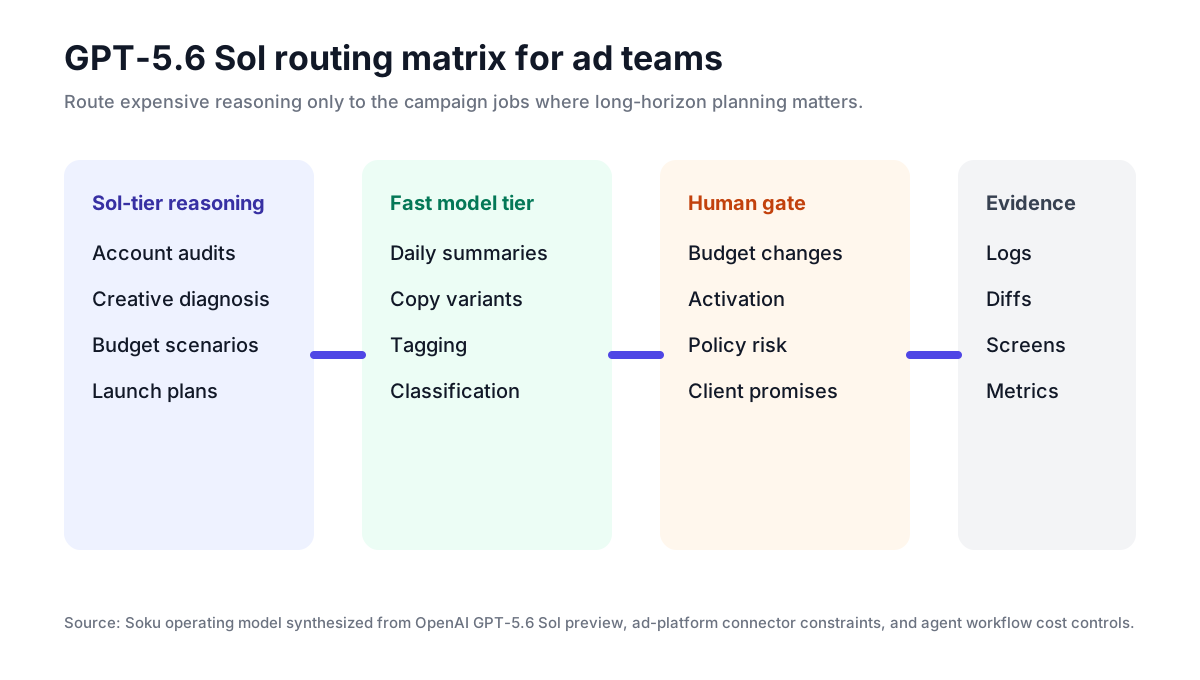
The answer is not "use GPT-5.6 for everything." That is how teams turn a model upgrade into a cost spike. The better answer is a routing map: use Sol-class reasoning for the jobs where long-horizon planning, tool choice, and evidence handling matter; keep daily copy variants, tagging, summaries, and simple reporting on cheaper tiers.
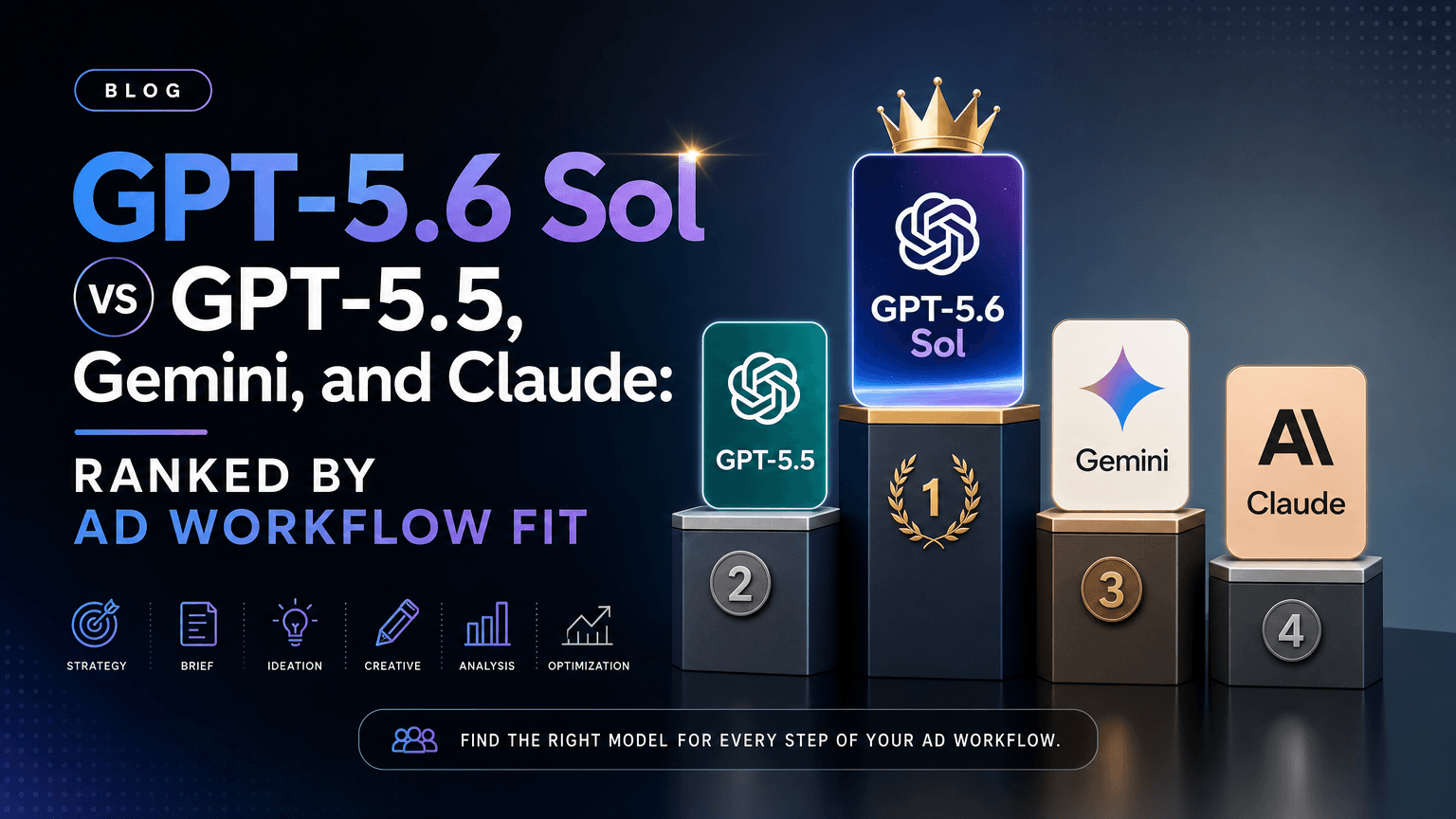
This is the hub for the GPT-5.6 Sol cluster. For implementation, read the GPT-5.6 Sol setup guide for Meta and Google Ads teams. For the model-choice question, use the GPT-5.6 Sol vs alternatives ranking. For the practical dry run, see our GPT-5.6 Sol ad automation test.
The search signal is early but real
DataForSEO shows gpt 5.6 at 1,300 US monthly searches, low competition, and a high estimated CPC. The long-tail phrases that matter to marketers - gpt-5.6 marketing, gpt-5.6 ad automation, gpt-5.6 setup, and gpt-5.6 alternatives - still show no stable volume. That is exactly the window where a useful cluster can rank before the market hardens.
The topic is also easy to write badly. A generic model recap will lose to the official launch page and the big AI news sites. The Soku angle is different: what changes when the model sits inside an ad-automation system with Meta, Google, TikTok, GA4, Shopify, and creative tools attached?
What changes for ad teams
The core change is not better copy. Better copy is table stakes. The harder jobs are multi-step campaign work:
| Job | Why Sol-class reasoning helps | Why it still needs a gate |
|---|---|---|
| Full-funnel account audit | The model must reconcile Meta, Google, GA4, Shopify, and landing-page evidence | It can overstate causality when tracking is incomplete |
| Creative fatigue diagnosis | It has to connect spend, frequency, hooks, format, audience, and landing-page fit | It cannot replace creative approval or policy review |
| Budget scenario planning | It must reason over constraints, targets, pacing, and attribution delay | Spend changes need human approval |
| Launch planning | It can turn a messy brief into tasks, assets, naming, QA, and measurement | Activation should not be automatic |
| Experiment design | It can structure hypotheses and holdouts | Business risk belongs to the operator |
For Soku, the model is not the product by itself. The product is the loop around it: connected data, tool access, evidence logs, approval gates, and a memory of what was tried before.
The routing model
The practical routing rule is simple:
Use GPT-5.6 Sol when the work has high ambiguity, multiple tools, irreversible consequences, or a long chain of dependent steps.
Use a cheaper model when the work is repeatable, isolated, reversible, or high-volume.
That means GPT-5.6 is a strong fit for a prompt like:
Audit this week's Meta and Google Ads performance for the ecommerce brand, identify the top three budget or creative risks, compare each finding against GA4 revenue and Shopify orders, and draft a proposed action plan with evidence and confidence levels.It is a poor fit for:
Write 40 headline variants for this product.The second task is useful, but it is volume work. Run it on a fast model, then let Sol review the shortlist against the account objective.
Where Soku uses the model
The strongest Sol workflow is a planner-inspector loop:
- Soku pulls structured performance data from Meta, Google, TikTok, GA4, Shopify, and Search Console.
- GPT-5.6 Sol reasons over the evidence and proposes a diagnosis.
- A cheaper model generates variant copy or asset ideas from the approved strategy.
- Soku checks platform constraints and brand rules.
- A human approves any budget, bid, launch, or audience change.
- Soku logs the recommendation, evidence, action, and outcome.
This avoids two common failures. The first is using a frontier model as an expensive autocomplete engine. The second is letting an agent make spend-impacting changes without enough evidence.
The original Soku take
The best model-routing strategy for ad teams is not a leaderboard. It is a control system.
The model should be allowed to think deeply, but not allowed to act broadly. It should have access to the evidence needed to make a recommendation, but every recommendation should carry confidence, source links, and a concrete rollback plan.
That is the real GPT-5.6 change for marketers: a frontier model makes long-horizon campaign reasoning more credible. It does not remove the need for guardrails. It makes the guardrails more valuable, because the recommendations become strong enough that teams will be tempted to act on them.
FAQ
What is GPT-5.6 Sol?
GPT-5.6 Sol is OpenAI's previewed next-generation model. For marketers, the relevant question is how it performs on long, tool-heavy campaign workflows, not whether it can write a better tagline.
Should ad teams switch every workflow to GPT-5.6?
No. Use it for audits, planning, diagnosis, experiment design, and multi-tool reasoning. Keep high-volume copy and classification on cheaper models.
What is the best first GPT-5.6 workflow for marketing?
Start with read-only account diagnosis: pull last 14 days of performance, compare channels, identify risks, and draft an action plan. Do not let the model launch or edit spend on day one.
How does this relate to Soku?
Soku is the operating loop around the model: data connectors, creative generation, launch workflows, measurement, and approval gates. GPT-5.6 can improve the reasoning layer, but the system still needs evidence and controls.