 Soku AI
The 2026 FIFA World Cup is the biggest advertising event in history — and the old playbook won't survive it.
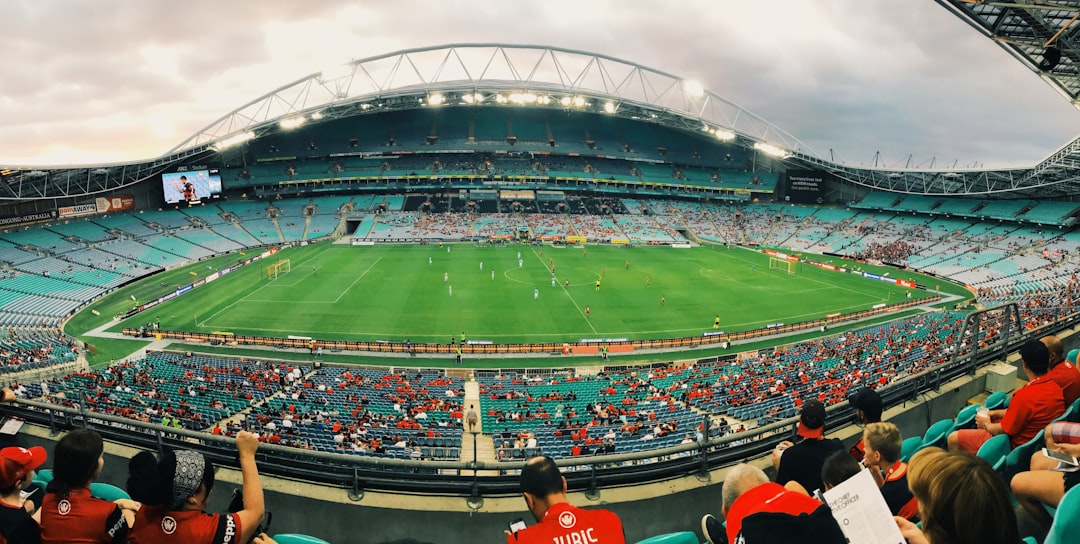
Forty-eight teams. One hundred four matches. Thirty-nine days. Sixteen host cities across three countries. An expected audience of 6 billion people across all platforms. And an estimated $10.5 billion surge in global ad spend during the tournament quarter, according to WARC.
But here's what makes 2026 different from every World Cup before it: linear TV audiences have dropped 12% since 2018, over 80% of ad spend is shifting to digital channels, and the platforms where fans actually watch — TikTok, YouTube, Instagram, CTV — burn through ad creatives faster than any production team can make them.
The brands that win the World Cup won't be the ones with the biggest budgets. They'll be the ones that can produce, test, localize, and refresh ad creatives at the speed the tournament demands.
This is how AI makes that possible.
The Scale of the Opportunity
The 2026 World Cup is structurally larger than any previous tournament. The expansion from 32 to 48 teams adds 40 more matches, extends the tournament by 10 days, and brings fans from every continent into the conversation simultaneously.
The numbers tell the story:
| Metric | 2022 (Qatar) | 2026 (US/Canada/Mexico) |
|---|---|---|
| Teams | 32 | 48 |
| Total matches | 64 | 104 |
| Tournament duration | 29 days | 39 days |
| Host time zones | 1 (AST) | 4 (ET to PT) |
| Expected audience | ~5 billion | ~6 billion |
| Ad spend surge | — | $10.5 billion |
Broadcasters are already betting big. Telemundo has sold 90% of its US Spanish-language ad inventory — at double the rate advertisers committed for 2022. Fox Sports has pre-sold 80% of its English-language inventory. A 30-second spot during the 2022 final cost up to $476,000; 2026 prices are expected to rise significantly with North American prime-time scheduling.
And for the first time, FIFA has mandated 3-minute hydration breaks in each half of every match — creating 208 new mid-game ad slots across the tournament that didn't exist before.
The inventory is massive. The question is whether your creative can keep up.
Why Creative Fatigue Is the Real Opponent
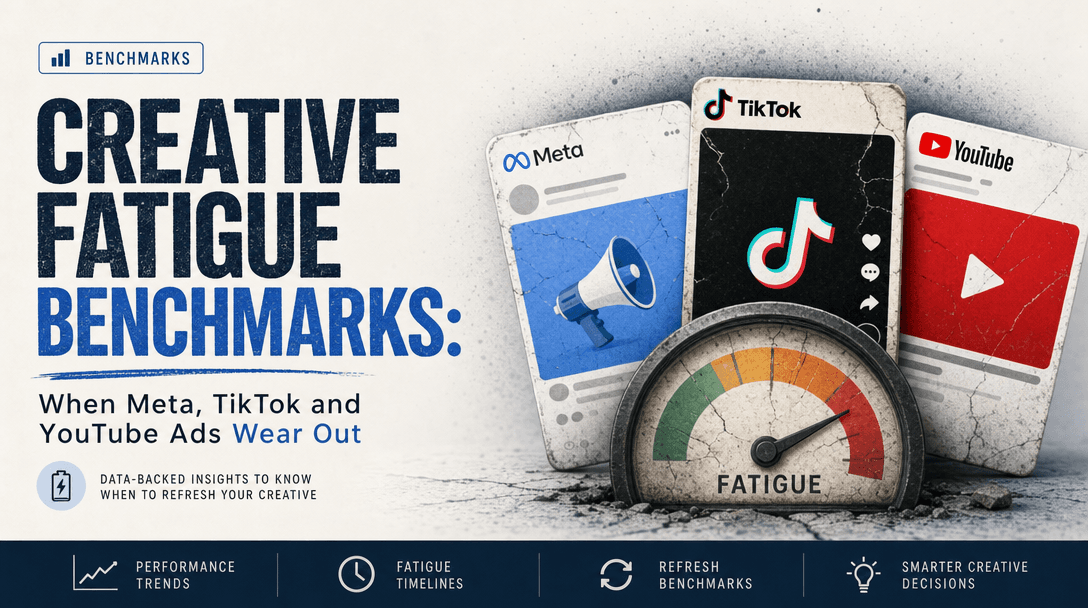
Here's the problem most advertisers don't plan for: during a 39-day tournament with matches every single day (sometimes four per day during group stages), ad creatives die fast.
Meta's own research shows that ad performance nosedives after audiences see a creative just 2.5 times. People who see an ad 6-10 times are 4.1% less likely to purchase than those who see it 2-5 times. On TikTok and Instagram Stories, creatives saturate within 7-10 days. On YouTube, pre-roll fatigue sets in after 7-10 exposures.
During a normal campaign, you can plan around this. During the World Cup, you can't. The volume of impressions compressed into 39 days means your best creative will burn out in the first week — and you still have four weeks of tournament left.
The math is brutal:
- You need a minimum of 12 creative variants per ad set to maintain performance through the tournament
- Each variant has a 7-10 day effective lifespan on social platforms
- With 39 days of tournament, that means 3-4 complete creative refreshes
- Across multiple ad sets, audiences, and platforms, you're looking at hundreds of unique assets
Traditional creative production — where a single campaign with three image ads takes a week, and a 30-second video takes 4-12 weeks — simply cannot operate at this pace. The production timeline for one creative refresh is longer than the tournament itself.
This is where AI changes the equation.
The AI Creative Playbook for World Cup 2026
The 2026 Super Bowl proved that AI-powered creative production has moved from experiment to mainstream. Nearly 39 commercials at Super Bowl LX were primarily developed using generative AI — including spots from Google, Dove, Bud Light, and Svedka. NBCU used AI to scan and preview 6,000 ad creatives for brand safety at the 2026 Winter Olympics.
For the World Cup, AI enables four capabilities that traditional production can't match:
1. Volume at Speed
The defining advantage of AI creative tools is production speed. What used to take 13 days for a 60-second marketing video now takes 27 minutes. Instead of producing 3 hero creatives and hoping they last, you can generate AI video ad variants — 50+ before the first whistle — and refresh continuously throughout the tournament.
This isn't about replacing your creative team — it's about giving them the throughput to match the tournament's pace. Your creative director sets the strategy and brand guidelines. AI handles the permutations: different aspect ratios for different platforms, different copy variants for different audiences, different visual treatments for different match contexts.
What this looks like in practice:
- Pre-tournament (May): Generate your base creative library — team-themed variants, product shots with national colors, copy templates for win/loss/draw scenarios
- Group stage (June 11-26): Refresh daily based on results, memes, and trending moments
- Knockout rounds (June 28 - July 19): Intensify production for remaining teams, create urgency-driven creatives as the final approaches
2. Real-Time Moment Marketing at Scale
In 2013, Oreo won the cultural moment of Super Bowl XLVII with a single tweet during a blackout: "You can still dunk in the dark." It took a dedicated human war room at agency 360i, pre-positioned to react. It generated 10,000+ retweets in one hour and won Cannes Lions.
In 2026, AI makes that same reactivity available across every channel simultaneously — not for one moment, but for every moment across 104 matches.
Sportradar's AI-driven adtech detects key game events and activates campaigns in real time. Dynamic Creative Optimization (DCO) selects the most resonant assets — hero image, CTA, localized copy — within milliseconds of a game-changing moment. No war room required.
Moment marketing opportunities during a single match:
- Pre-match: Lineup announcements → auto-generate player-specific ads
- Goals: Instant celebration creatives with score overlays
- Hydration breaks: Push fresh creatives during the new 3-minute ad windows
- Halftime: Performance-based creative swaps based on first-half engagement data
- Final whistle: Victory/defeat-themed creatives deployed within seconds
- Post-match: Highlight-driven content for next-day remarketing
Brands that manually create and approve each creative will capture maybe one or two of these windows. AI-powered teams can capture all of them, across every match, every day.
3. Multi-Market Localization
Forty-eight teams means fans from every continent, speaking dozens of languages, with vastly different cultural contexts for what makes an ad resonate.
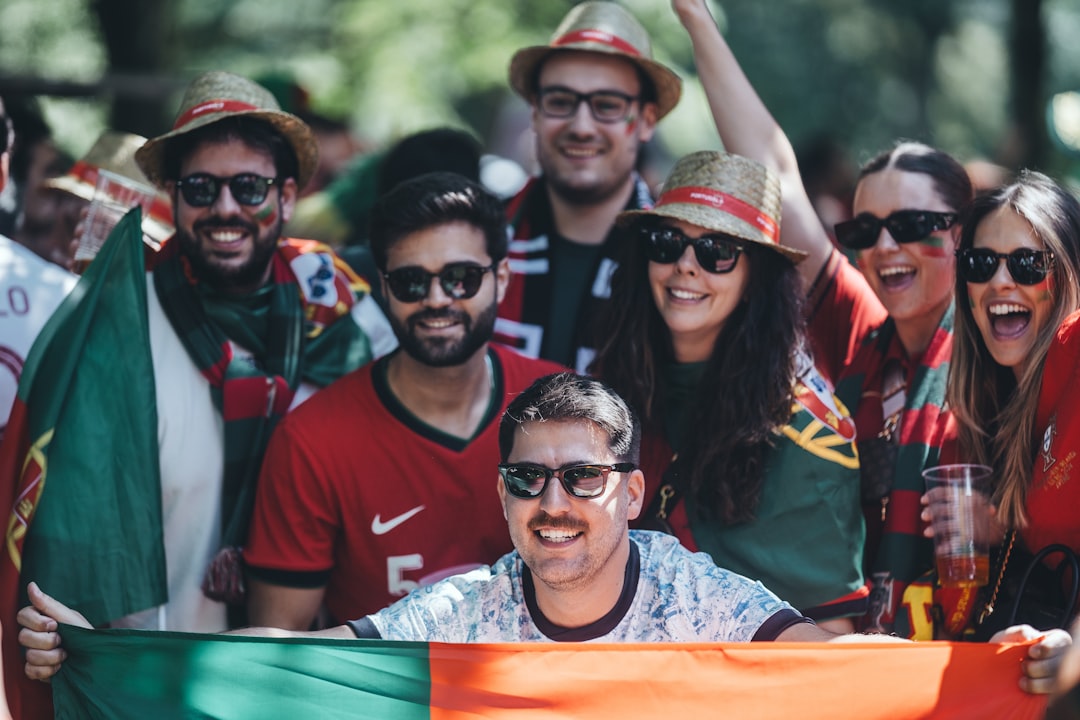
A Brazilian fan watching Argentina play doesn't need the same ad as a Japanese fan watching the same match. The cultural references, humor, visual preferences, and even color associations are completely different. And with three host countries (US, Canada, Mexico) spanning English, Spanish, and French, even domestic campaigns need multi-language support.
AI-powered localization cuts production time by up to 90%. One brand used this approach to run AI-localized creatives across 12 markets simultaneously, cutting per-market production costs by 85%. Google demonstrated the same principle at the 2026 Super Bowl, using AI to dynamically personalize localized ad versions with cultural references adapted in real time for different markets.
The localization stack for World Cup 2026:
| Layer | AI Capability | Example |
|---|---|---|
| Copy | AI translation + cultural adaptation | "Score big savings" → culturally equivalent idioms in 10+ languages |
| Visuals | Dynamic product shots with team colors | Product image auto-composited with national flag color schemes |
| Video | AI dubbing + lip sync | English hero video → Spanish, Portuguese, Japanese voiceovers |
| Format | Platform-specific resizing | One master creative → Meta feed, TikTok vertical, YouTube pre-roll, Stories |
| Compliance | Regional ad policy checks | Auto-flag restricted claims by market (alcohol, gambling, health) |
Unilever, the official personal care sponsor, is deploying thousands of creators across North America for multi-market, multi-language activation — the largest social activation in the brand's history. For brands without Unilever's resources, AI localization is the equalizer.
4. Platform-Specific Optimization
The 2026 World Cup has a more fragmented media landscape than any previous tournament. Fans aren't just watching on TV — they're on TikTok, YouTube, Instagram, and CTV simultaneously.
TikTok is FIFA's first-ever "Preferred Platform," with an immersive World Cup hub featuring custom stickers, filters, and gamification. Eighty-five percent of fans use TikTok as a second screen during matches, and watching clips on TikTok makes viewers 42% more likely to watch the full match. Broadcasters can live-stream and monetize World Cup coverage via TikTok's premium ad solutions.
YouTube followed with its own "Preferred Platform" deal, allowing all Media Partners to live-stream the first 10 minutes of every match on their channels — creating new pre-roll and mid-roll inventory tied to official World Cup content.
Fox Sports is streaming all 104 matches in 4K on FOX One, with Tubi (free) simulcasting select matches. Telemundo is streaming in Spanish on Peacock.
Each platform has different creative specs, different audience behaviors, and different fatigue curves. AI creative tools handle the platform matrix automatically:
- Aspect ratios: 9:16 (TikTok/Stories), 1:1 (feed), 16:9 (YouTube/CTV)
- Duration: 6-15 seconds (TikTok), 15-30 seconds (YouTube pre-roll), 30-60 seconds (CTV)
- Hooks: First-frame optimization for skip-heavy platforms
- Audio: Music/voiceover for sound-on; text overlays for sound-off
- CTAs: Platform-native action buttons and shopping features
The World Cup Creative Calendar
Planning your creative pipeline around the tournament structure is critical. Here's a phased approach:
Phase 1: Pre-Tournament (Now through June 10)
Goal: Build your base creative library before the tournament starts.
- Generate team-themed creative templates for all 48 participating nations
- Create product shots composited with national colors and flag elements
- Pre-write copy variants for win, loss, draw, and elimination scenarios
- Build platform-specific templates (TikTok vertical, Stories, YouTube, feed)
- Set up automated workflows for real-time creative deployment
- Test creative performance with early-bird campaigns targeting soccer fans
Phase 2: Group Stage (June 11-26)
Goal: Maximum creative velocity. 48 matches in 16 days.
- Deploy 12+ creative variants per ad set, refreshing every 3-4 days
- Activate moment marketing for goals, upsets, and trending storylines
- Localize winning creatives for emerging audience segments (e.g., underdog teams gaining popularity)
- Use hydration break ad slots for fresh mid-match creative pushes
- Monitor fatigue signals daily and replace underperforming assets immediately
Phase 3: Knockout Rounds (June 28 - July 11)
Goal: Shift creative to urgency and stakes.
- Narrow creative focus to remaining teams and their fan bases
- Increase emotional intensity — rivalry angles, elimination drama, "last chance" messaging
- Accelerate production cadence as matches become higher stakes
- Deploy real-time creatives tied to specific match outcomes
Phase 4: Semifinals & Final (July 14-19)
Goal: Peak moment marketing. Maximum creative impact.
- All-in on the final 4 teams with hyper-targeted creatives
- Pre-build victory celebration and "what a tournament" wrap-up creatives
- Capture the final's emotional peak with instant post-match ads
- Transition to post-tournament retargeting with tournament highlight themes
What This Means for Your Ad Budget
The World Cup isn't just a creative challenge — it's a budget allocation challenge. With CPMs spiking during live sports (premium event inventory runs $50-$250 CPM on streaming platforms), every impression needs to count.
AI creative optimization directly impacts ROI:
- Frequency capping + fresh creative extends campaign effectiveness by 30-40%
- Fatigue management improves conversion rates by ~8% for high-exposure audiences
- Platform-native creative (vs. repurposed TV spots) drives 2-3x higher engagement on social
- Real-time creative swaps capture moment-marketing premiums without the production overhead
The brands spending $300K+ on a single TV spot and running it unchanged for the entire tournament are leaving money on the table. The brands producing 100+ AI-generated variants in a single hour, refreshing weekly, and optimizing across platforms will get more from a fraction of that budget. Building that engine starts with the right stack — our roundup of the best AI tools for Meta ad creatives covers the generation, analytics, and automation layers worth assembling before kickoff.
The Bottom Line
The 2026 World Cup is a 39-day sprint where creative production speed determines advertising ROI. Traditional workflows can't keep pace with 104 matches, 208 hydration-break ad slots, and platform fatigue cycles measured in days.
AI doesn't replace your creative strategy — it gives you the production capacity to execute it at tournament speed. Generate variants in minutes instead of weeks. Localize for 48 nations simultaneously. React to match moments in real time. Refresh creatives before fatigue kills your performance.
The tournament kicks off June 11. The time to build your creative pipeline is now.
Soku AI helps brands generate, test, and optimize ad creatives at scale — across Meta, Google, and TikTok. Whether you're preparing for the World Cup or running everyday campaigns, get started with Soku AI to see how AI-powered creative production works.