Google DeepMind's Gemma 4 12B launch looks like a model release. For marketers, it is more specific than that: it is a new option for running a local multimodal marketing agent close to the creative files, campaign briefs, and brand rules that teams hesitate to send through every hosted model call.
The headline is not "another open model." The headline is that Gemma 4 12B sits between the tiny edge models that are cheap but shallow and the large hosted models that are capable but operationally heavier. Google frames it as a mid-sized, encoder-free multimodal model with native audio input, strong reasoning, and a reduced memory footprint. For an ad team, that combination maps to the annoying daily work nobody wants to do manually: reviewing creative variants, checking whether video/audio assets match the brief, catching policy risk before upload, and turning campaign performance notes into the next creative batch.
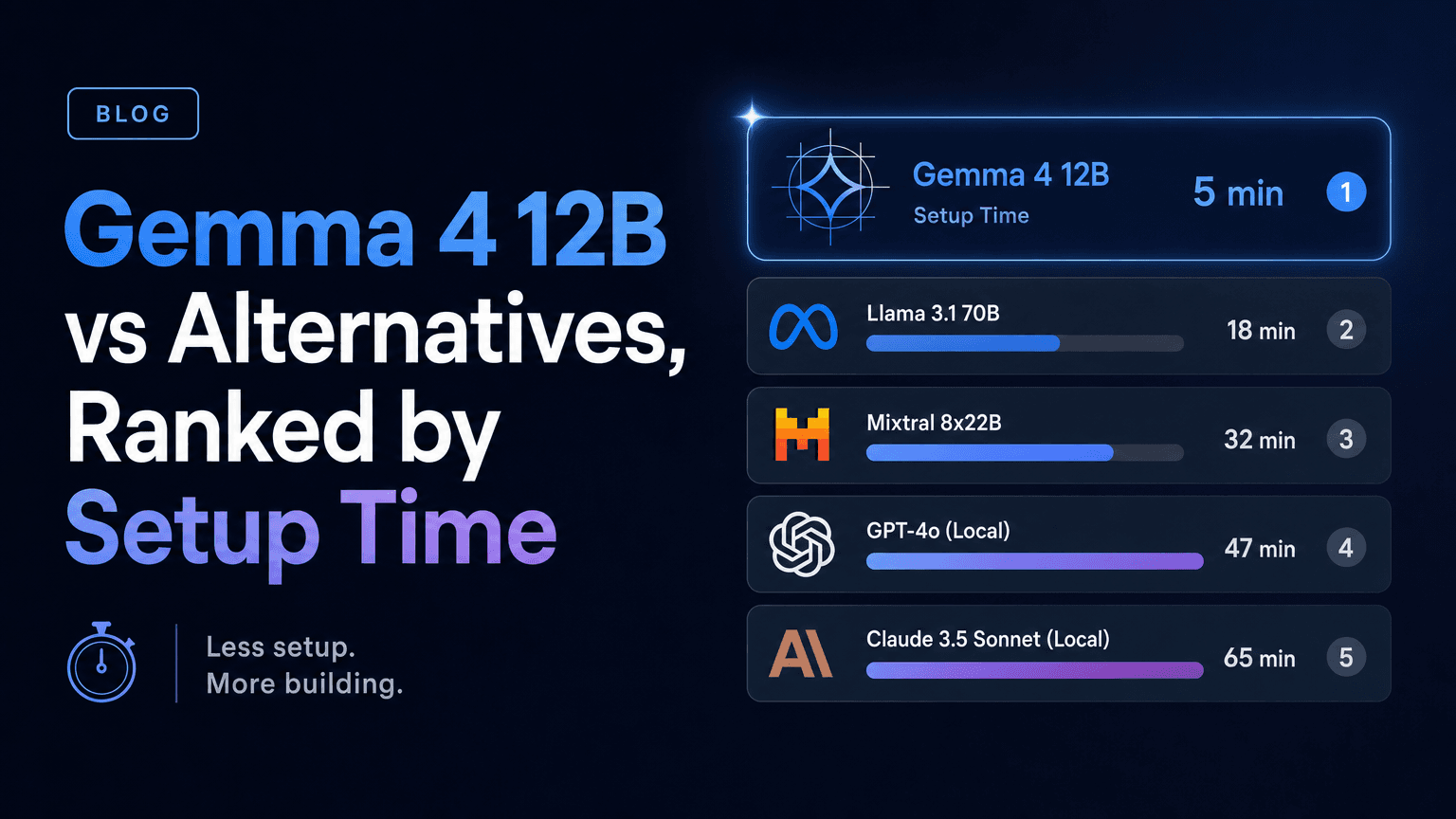
This is the cluster hub. If you came here to run it, use the Gemma 4 12B setup guide for Meta and Google Ads. If you are comparing model choices, read Gemma 4 12B vs alternatives ranked by setup time. If you want the field test, read our Gemma 4 12B ad automation test.
Why the encoder-free detail matters
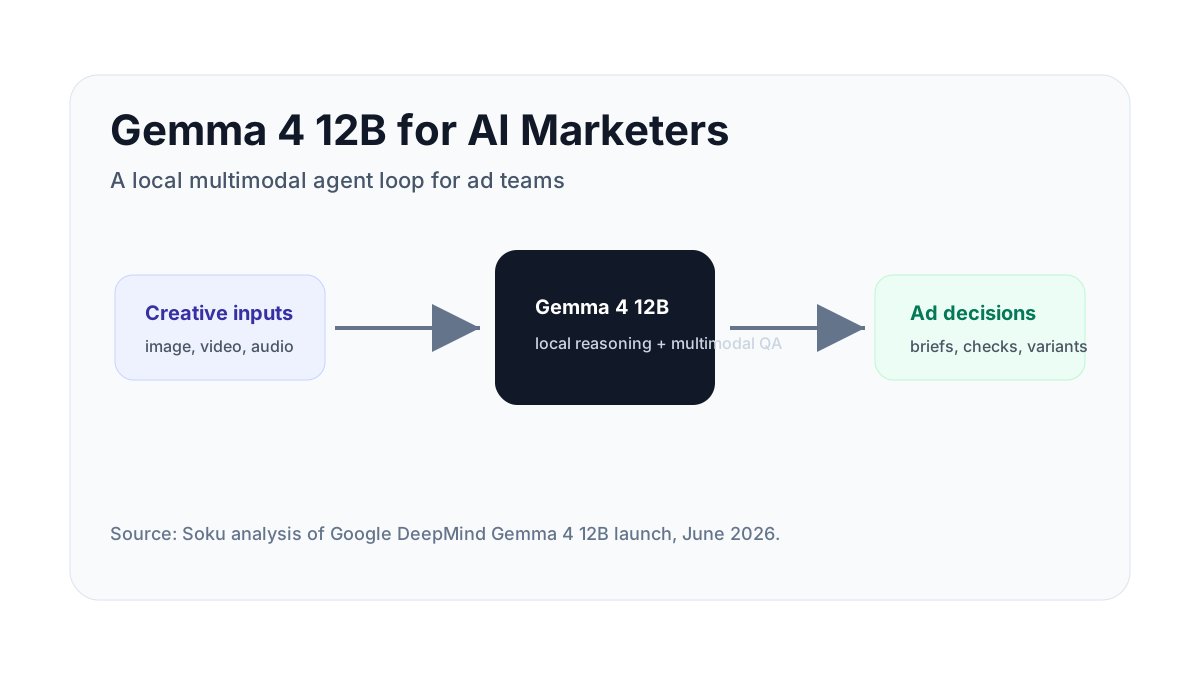
Most multimodal systems route images, audio, or video through separate encoders before the language model reasons over the result. Google says Gemma 4 12B removes that intermediate encoder pattern and projects multimodal inputs directly into the language model's embedding space. The practical marketing implication is not magic accuracy. It is lower friction for workflows where the asset itself is the input.
That matters because ad teams do not work from text alone. The object to judge is usually a bundle: a product image, a UGC script, a hook line, a voiceover, the first three seconds of a video, a landing page screenshot, and a brand rule. A model that can reason over more of that bundle locally becomes useful for preflight review before you spend media dollars.
The first useful marketer workflow
The most defensible first workflow is creative QA, not autonomous campaign management.
Feed the model the brief, the brand guardrails, the asset, and the destination page. Ask it to produce a pass/fail table:
| Check | What Gemma reviews | Human still owns |
|---|---|---|
| Hook alignment | Does the first frame and opening line match the promised offer? | Whether the offer is strategically right |
| Platform fit | Does the asset feel native to Meta, TikTok, YouTube, or Reddit? | Final media plan and spend allocation |
| Policy risk | Claims, before/after language, financial or health promises | Legal approval and escalation |
| Variant gaps | Missing angles, personas, formats, or objections | Which variants to produce next |
| Audio QA | Voiceover clarity, pacing, brand tone | Final voice and brand taste |
That loop is valuable even if Gemma never touches an ad account. It saves the expensive human review for the assets that deserve it.
Where it fits with Soku
Soku is the orchestration layer: it reads campaign performance across channels and tells the team what needs to change. Gemma 4 12B can be one local model inside that workflow, especially for private creative review. The loop looks like this:
- Soku identifies a performance gap: a TikTok hook is fatiguing, Meta CTR is down, or Google demand is shifting.
- The creative team generates new variants.
- Gemma 4 12B reviews the variants locally against the brief, policy rules, and platform format.
- Soku tracks which approved variants actually improve CPA, ROAS, or lead quality after launch.
The model does not replace the ad agent. It makes the creative input to the ad agent cleaner.
What not to overclaim
Do not treat Gemma 4 12B as a drop-in replacement for a hosted frontier model on every reasoning task. A 12B local model is attractive because it is deployable, inspectable, and cheaper to run near the asset pipeline. The trade-off is that deep strategy, long-context account reasoning, and tool-heavy campaign operations may still belong to a stronger hosted model or a purpose-built ad agent.
That is the right division of labor. Use Gemma 4 12B where locality and multimodal review matter. Use a platform agent like Soku where account context, cross-channel optimization, approvals, and execution matter.
The marketer's takeaway
Gemma 4 12B is most interesting as a local creative operating layer. It can review assets before launch, summarize visual/audio issues, turn performance learnings into structured creative briefs, and help teams produce more variants without lowering the quality bar. The teams that get value will not be the ones that write "use AI for marketing" into a roadmap. They will be the ones that wire it into one narrow daily loop and measure whether fewer bad assets reach the auction.
FAQ
Is Gemma 4 12B useful for ad teams?
Yes, primarily for local multimodal review: creative QA, brand checks, audio/video review, and campaign-brief generation.
Can Gemma 4 12B run Meta or Google Ads by itself?
Not by itself. It is a model, not an ad-platform integration. Use it with an orchestration layer and platform connectors.
What is the best first project?
Build a creative QA checklist for one channel, run 20 assets through it, and compare the model's flags with human review notes.