 Soku AI
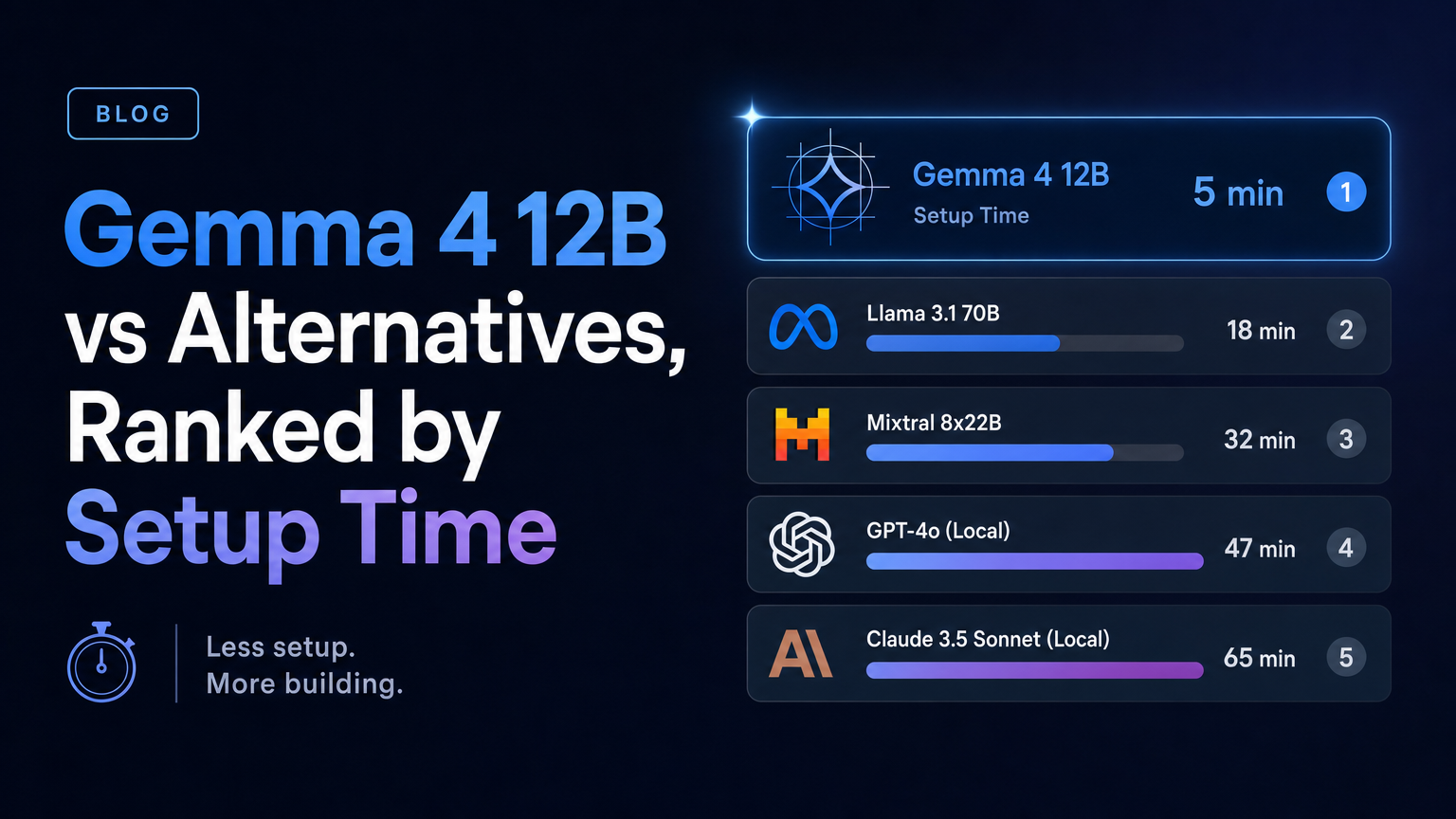
If your question is "which model is smartest?", this is the wrong comparison. For a marketing team, the useful question is: which option can we put into a real creative-review workflow this week without creating a security or operations mess?
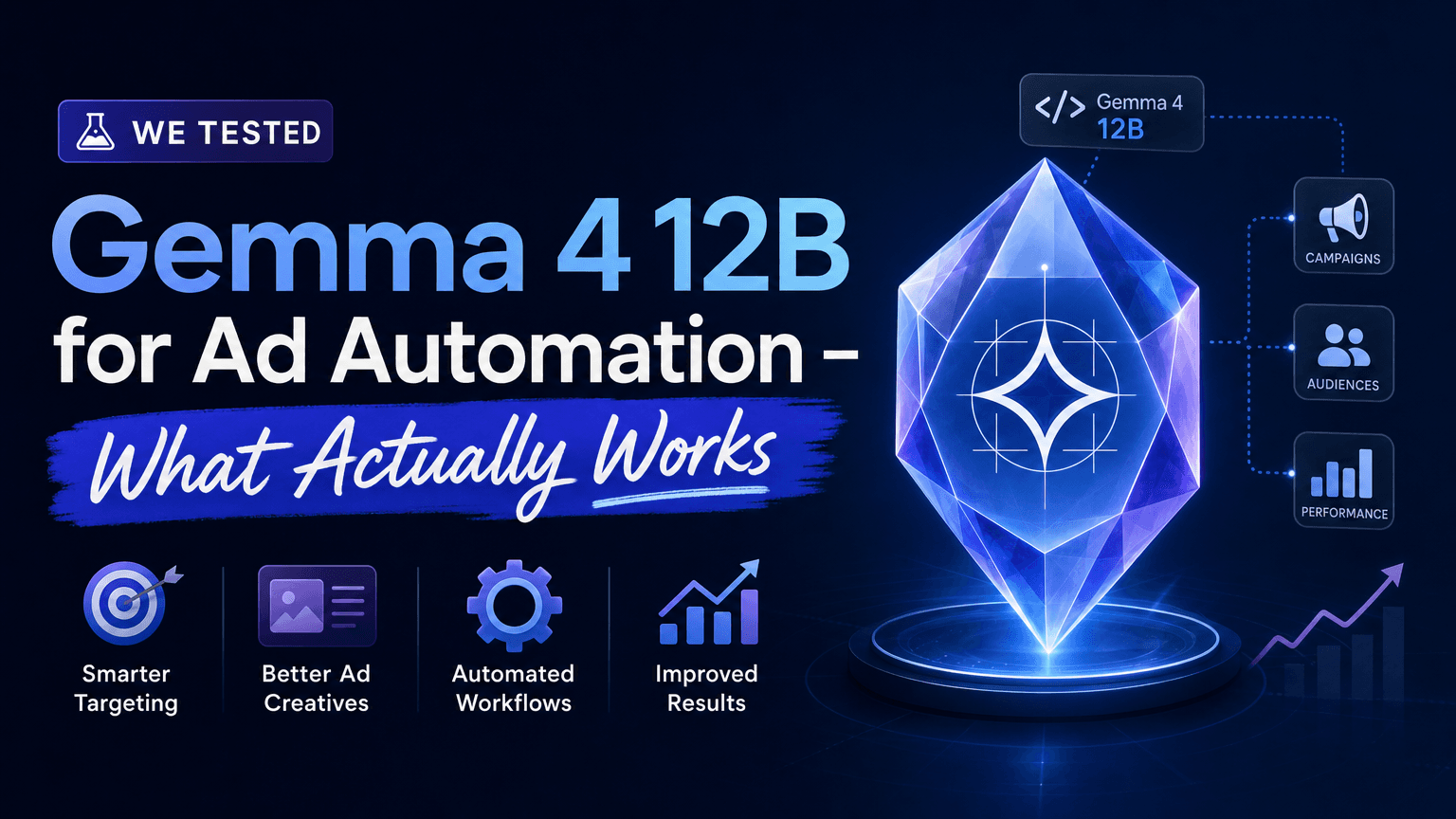
Gemma 4 12B is interesting because it is not the biggest option. It is the middle option: local/private enough for sensitive creative assets, multimodal enough for ad review, and small enough that the setup conversation is not dominated by infrastructure. This page ranks it against the alternatives first, then shows the review loop and the setup work that the ranking assumes. If you want the field test instead, read our Gemma 4 12B ad automation test.
The ranking
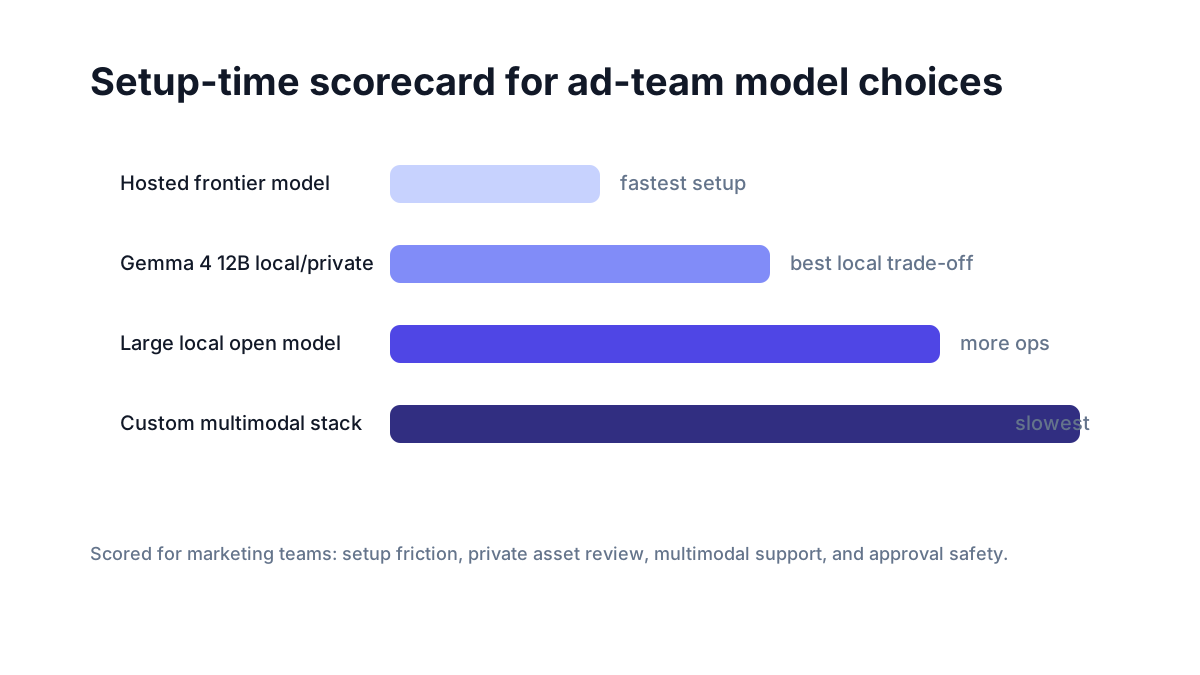
| Rank | Option | Setup time | Best use | Main trade-off |
|---|---|---|---|---|
| 1 | Hosted frontier model | Hours | Strategy, long-context analysis, broad reasoning | Sends assets to a hosted model; cost and data-boundary concerns |
| 2 | Gemma 4 12B local/private | 1-3 days | Creative QA, audio/image review, private workflows | More setup than an API; less capable than top hosted models |
| 3 | Larger local open model | 3-7 days | Local reasoning where quality matters more than speed | Hardware and serving complexity |
| 4 | Custom multimodal stack | 1-3 weeks | Specialized production pipeline | Highest maintenance burden |
This ranking assumes a performance marketing team, not an ML research group. The score rewards speed to a trustworthy workflow: repeatable prompts, predictable outputs, safe data handling, and clean handoff to the human or Soku.
Hosted frontier model: fastest, but not always safest
A hosted model wins setup time. You can connect an API, write a prompt, and review assets the same day. It is the right answer for strategy, long-context account analysis, and messy reasoning tasks where model quality matters more than data locality.
The trade-off is operational. Ad teams often review unreleased product pages, embargoed campaign briefs, customer testimonials, and raw performance exports. Even when the provider has strong enterprise controls, some teams want those assets to stay local. That is where Gemma's position becomes attractive.
Gemma 4 12B: the local sweet spot
Gemma 4 12B is the best fit when the workflow is narrow and multimodal: review this video, inspect this product image, compare this voiceover to the brand tone, produce a variant table, and flag the assets that need human approval.
The setup is not zero. You still need a runtime, an input packet format, logging, and a review prompt. But those are marketing-ops problems, not research-infra problems. A motivated team can turn it into a working internal tool in a few days.
Larger local open model: quality with more operations
A larger local model can be the right call if the team already has infrastructure and needs more reasoning quality. But for most ad teams, the extra setup cost is real: heavier hardware, slower iteration, more serving work, and more debugging when multimodal inputs fail.
Use this route when the first Gemma workflow proves valuable but hits quality limits that matter to the business.
Custom multimodal stack: powerful, but slow
A custom stack can combine separate OCR, speech-to-text, vision, policy, and language models. It can outperform a general model on a narrow task after enough tuning. It is also the slowest path to value.
Do not start here unless the workflow is already revenue-critical and repeated at high volume. Most teams should prove the review rubric with a single model first, then specialize.
Our recommendation
Use hosted frontier models for strategy and account reasoning. Use Gemma 4 12B for private creative review. Use Soku to connect the reviewed creative to live campaign outcomes.
That division keeps each layer honest. The hosted model thinks broadly. Gemma reviews the sensitive asset bundle locally. Soku decides what the ad account should learn from the result.
Why Gemma earns the middle slot
Google DeepMind's Gemma 4 12B launch describes a mid-sized, encoder-free multimodal model with native audio input, strong reasoning, and a reduced memory footprint. That combination is what puts it at rank 2 rather than rank 3.
Most multimodal systems route images, audio, or video through separate encoders before the language model reasons over the result. Google says Gemma 4 12B removes that intermediate encoder pattern and projects multimodal inputs directly into the language model's embedding space. The practical implication is not magic accuracy. It is lower friction for workflows where the asset itself is the input — which is exactly what shortens the setup clock.
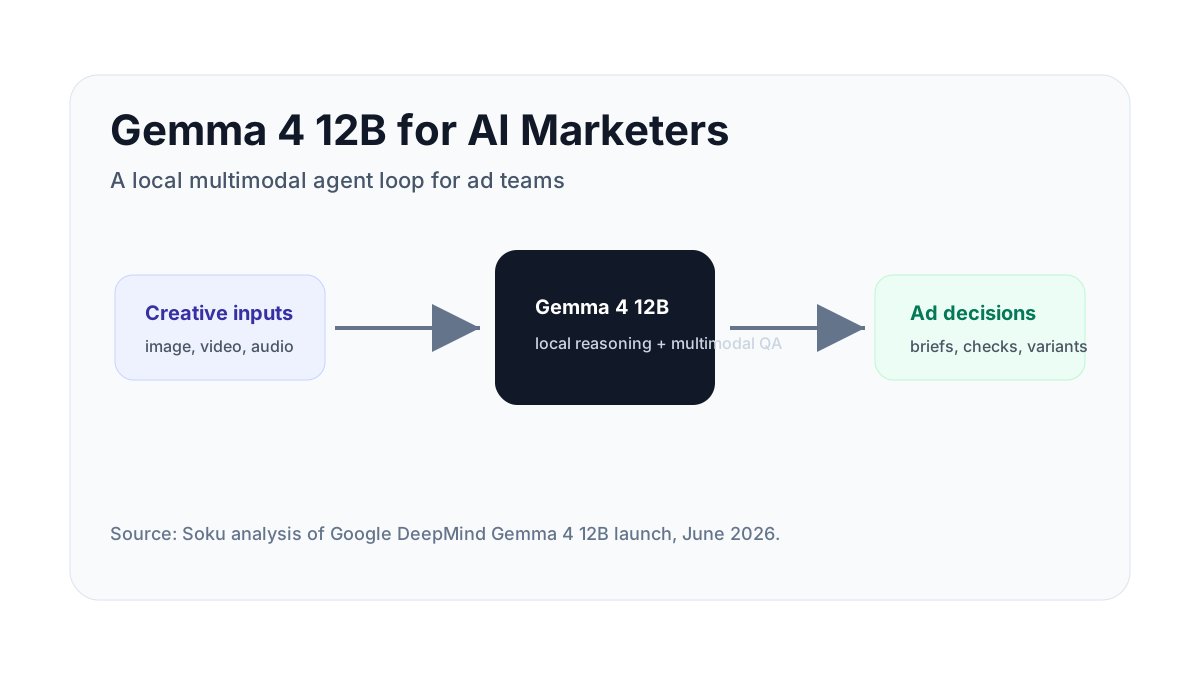
That matters because ad teams do not work from text alone. The object to judge is usually a bundle: a product image, a UGC script, a hook line, a voiceover, the first three seconds of a video, a landing page screenshot, and a brand rule. A model that can reason over more of that bundle locally becomes useful for preflight review before you spend media dollars.
The workflow the ranking assumes
The most defensible first workflow is creative QA, not autonomous campaign management.
Feed the model the brief, the brand guardrails, the asset, and the destination page. Ask it to produce a pass/fail table:
| Check | What Gemma reviews | Human still owns |
|---|---|---|
| Hook alignment | Does the first frame and opening line match the promised offer? | Whether the offer is strategically right |
| Platform fit | Does the asset feel native to Meta, TikTok, YouTube, or Reddit? | Final media plan and spend allocation |
| Policy risk | Claims, before/after language, financial or health promises | Legal approval and escalation |
| Variant gaps | Missing angles, personas, formats, or objections | Which variants to produce next |
| Audio QA | Voiceover clarity, pacing, brand tone | Final voice and brand taste |
That loop is valuable even if Gemma never touches an ad account. It saves the expensive human review for the assets that deserve it.
What the 1-3 days actually goes into
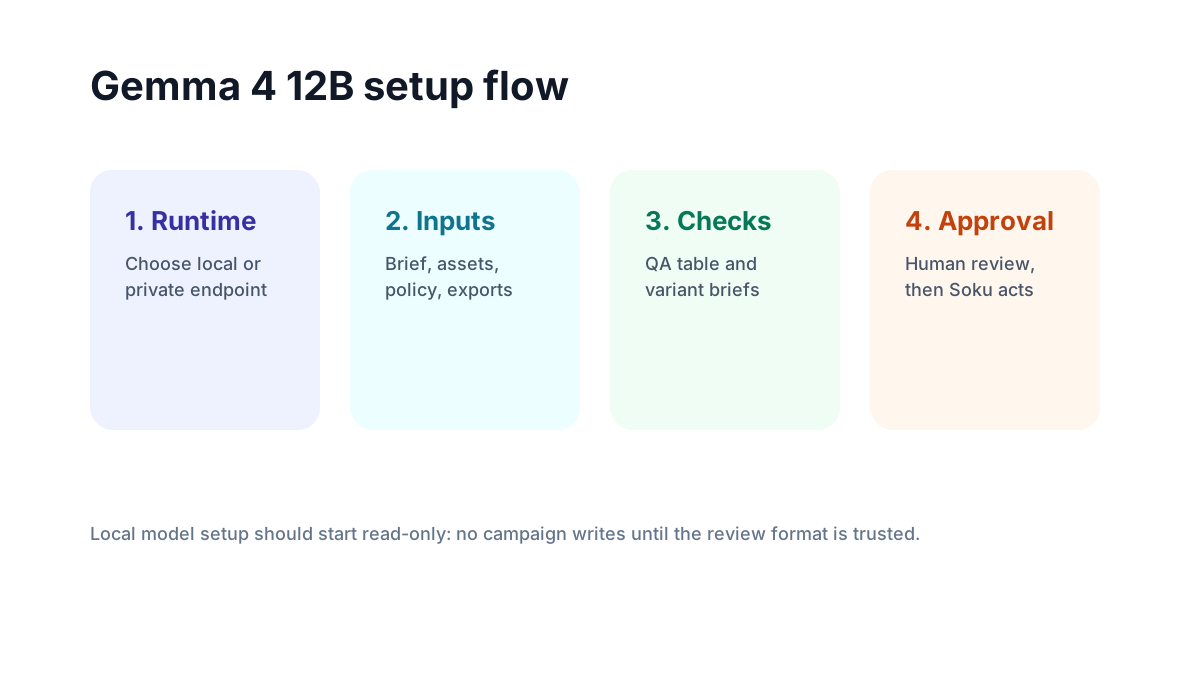
The setup is not zero, but none of it is research work. Here is the whole of it.
Step 1: pick the runtime boundary
Decide where the model runs before you decide what it does.
| Runtime | Best for | Watch-outs |
|---|---|---|
| Local laptop/workstation | Creative review, private screenshots, early tests | Hardware variance, slower batch jobs |
| Private server | Team workflow, shared queues, repeatable evaluations | Access control and logging discipline |
| Hosted endpoint | High throughput and easier operations | Less useful if the goal is private local review |
For most marketing teams, the first useful setup is a private server or local workstation with read-only access to creative folders and exported performance reports. Keep it boring. You want a predictable review surface, not an autonomous agent with spend permissions.
Step 2: standardize the inputs
Gemma is only as useful as the packet you give it. Create one folder or JSON bundle per creative review:
creative-review/
  brief.md
  brand-rules.md
  platform-policy-notes.md
  target-audience.md
  performance-export.csv
  assets/
    hook-01.mp4
    hook-02.mp4
    static-01.png
The key is to separate facts from judgment. Facts are the brief, channel, budget range, claim restrictions, and recent performance. Judgment is what you ask the model to produce: risk flags, missing variants, message clarity, and creative-test recommendations.
Step 3: pull Meta and Google context safely
For Meta, export recent ad-level performance or use a connector that can read campaign/ad creative metadata. For Google, start with campaign and asset-group performance exports or a read-only Google Ads MCP query. You do not need write access for this workflow.
Ask for a compact packet:
| Field | Why it matters |
|---|---|
| Channel and placement | The model judges a TikTok-style hook differently from a Google Demand Gen asset |
| Campaign objective | CTR advice is different from lead-quality advice |
| Existing winner | Prevents the model from recommending variants you already tested |
| Fatigue signal | Tells the model whether to preserve the concept or change the angle |
| Policy notes | Keeps the review practical instead of creatively reckless |
Step 4: use a fixed review prompt
Use the same prompt every time so you can compare model output over time:
You are reviewing ad creative before launch.
Use only the attached brief, policy notes, performance export, and assets.
Return a table with: asset, pass/fail, reason, likely platform issue, missing variant,
recommended rewrite, and whether a human must review.
Do not invent performance data. If the export is insufficient, say what is missing.
The "do not invent data" line matters. A local model can still hallucinate. Your workflow should make uncertainty visible.
The approval-safe sequence
Whichever option you rank first, the sequence around it should look the same. Soku identifies a performance gap — a TikTok hook is fatiguing, Meta CTR is down, or Google demand is shifting — and the model cleans the creative queue that answers it:
- Human or Soku writes the brief.
- Creative team generates variants.
- Gemma reviews assets locally.
- Human approves or rejects flagged assets.
- Soku launches or recommends changes through the ad-platform workflow.
- Soku measures whether the reviewed assets performed better than the control.
What to avoid
Do not connect a fresh Gemma setup directly to campaign write tools. Do not let it rewrite budgets. Do not ask it to infer causality from a single screenshot. Do not use it as a policy oracle. Treat it as a disciplined reviewer that becomes useful when the input packet and output format are stable.
FAQ
Is Gemma 4 12B better than hosted models?
Not generally. It is better when local/private multimodal review matters more than maximum reasoning depth.
Should I build a custom stack first?
Usually no. Start with one model and a fixed review prompt. Specialize only after the review loop has proven value.
What is the best KPI for choosing?
Time to reliable review: how quickly the team can get useful, repeatable asset feedback that humans trust.
Can Gemma 4 12B run Meta or Google Ads by itself?
Not by itself. It is a model, not an ad-platform integration. Use it with an orchestration layer and platform connectors.
Do I need a Meta or Google Ads API connection to start?
No. Start with exported CSVs and asset files. API access becomes useful once the review format is proven.
Can this replace Google Ads MCP or Meta Ads MCP?
No. MCP servers expose ad-platform data and tools. Gemma 4 12B is the reasoning model you can place around assets and review packets.
What is the best first project?
Build a creative QA checklist for one channel, run 20 assets through it, and compare the model's flags with human review notes. That agreement rate — how often the model flags what your reviewer flags — is the first number worth tracking.