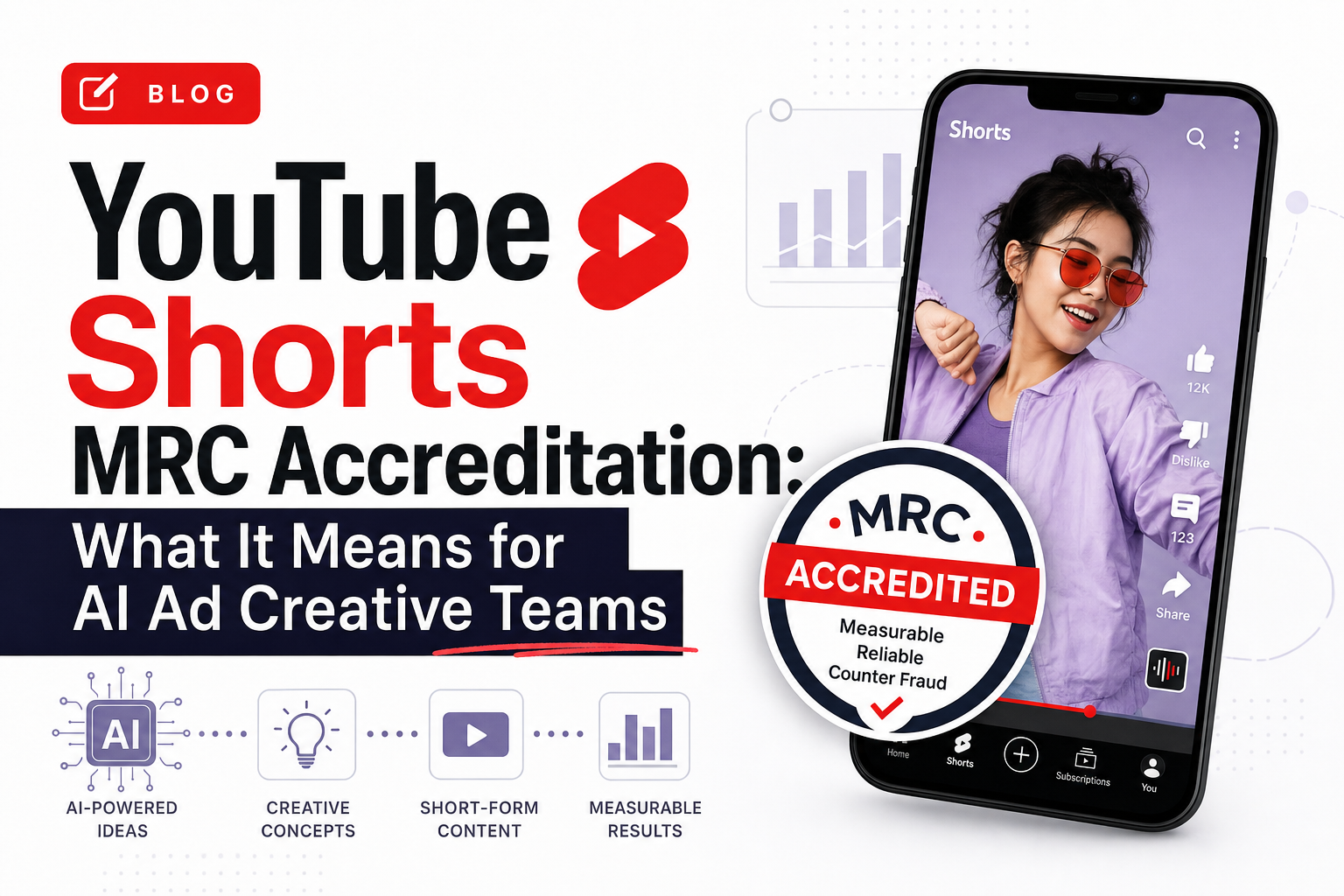
YouTube Shorts just crossed a line that matters to performance marketers: Google says YouTube is the first platform to receive Media Rating Council brand-safety accreditation for short-form video. The announcement is short, but the operating impact is not. Shorts is no longer just a high-reach experimental placement. It is a massive short-form environment with a stronger third-party trust signal behind the inventory.
That does not mean every Shorts campaign is now safe, efficient, or worth scaling. Accreditation validates a platform-level brand-safety system. It does not write the hook, pick the creator format, localize the voiceover, or decide whether your AI-generated creative feels native in a swipe feed. For AI ad teams, the practical takeaway is narrower and more useful: one buying objection got smaller, so the creative testing bar gets higher.
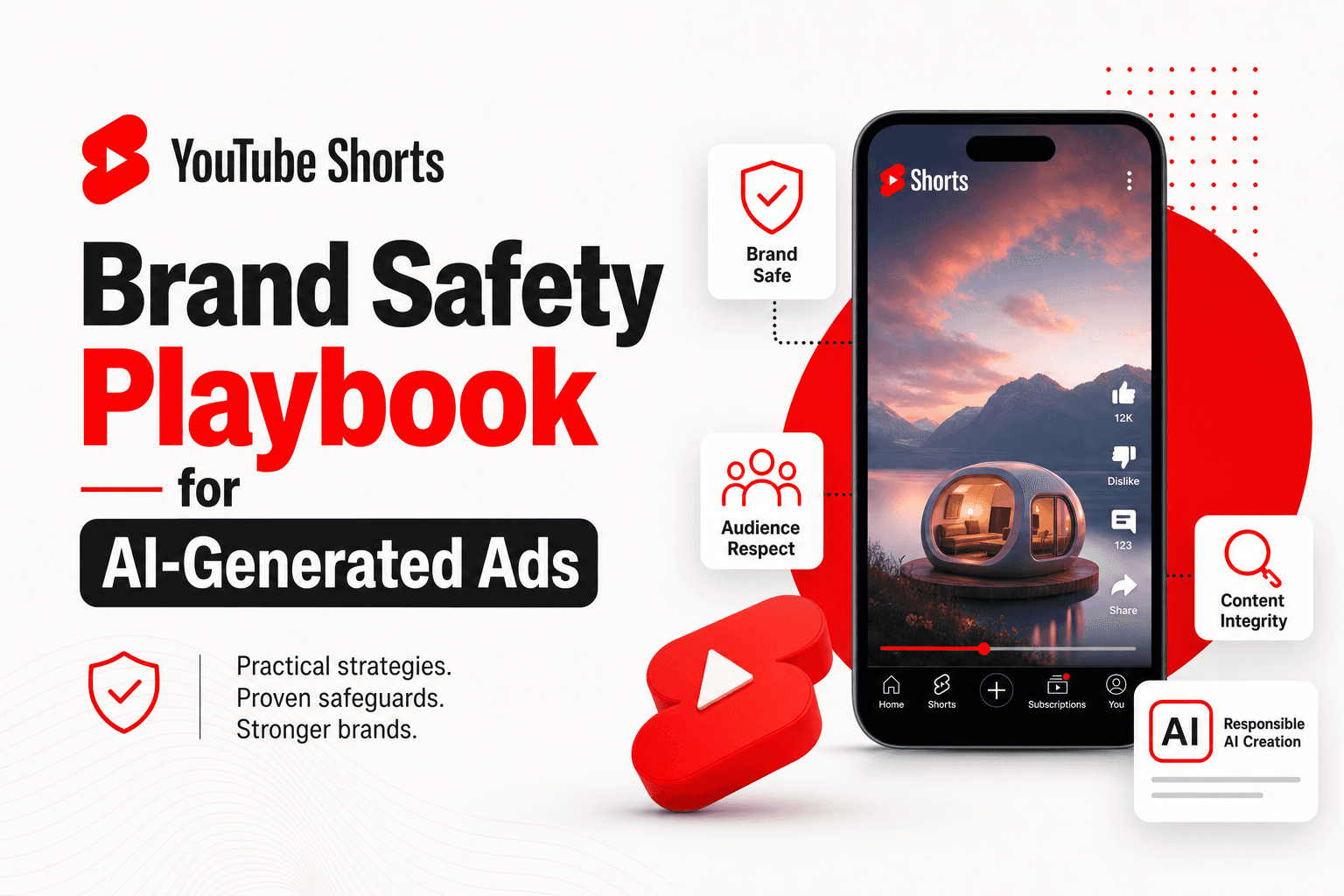
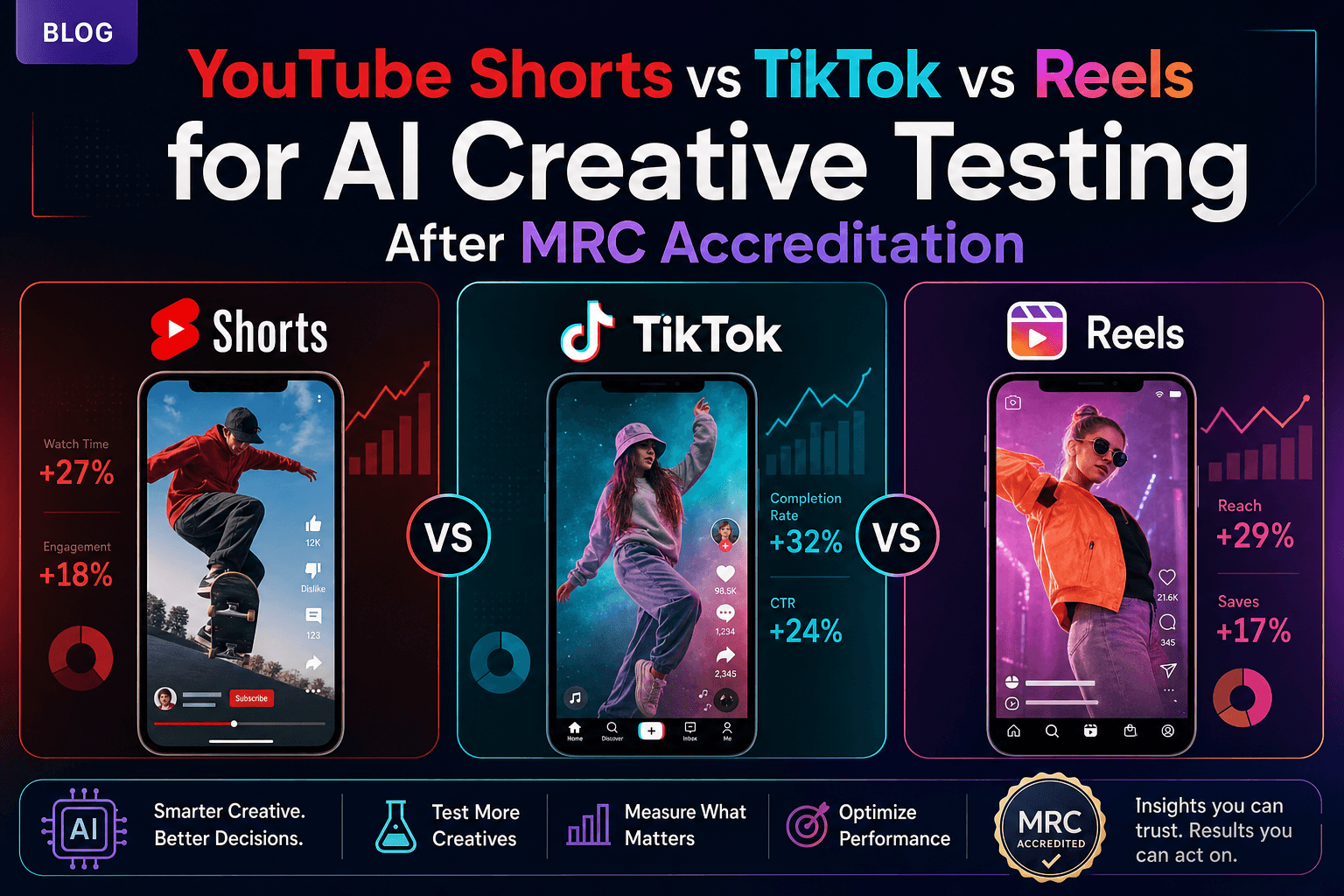
This is the hub for the cluster. If you are turning the announcement into campaign operations, read the YouTube Shorts brand-safety playbook for AI-generated ads. If you are deciding where to test short-form creative next, use the YouTube Shorts vs TikTok vs Reels budget split.
What Actually Happened
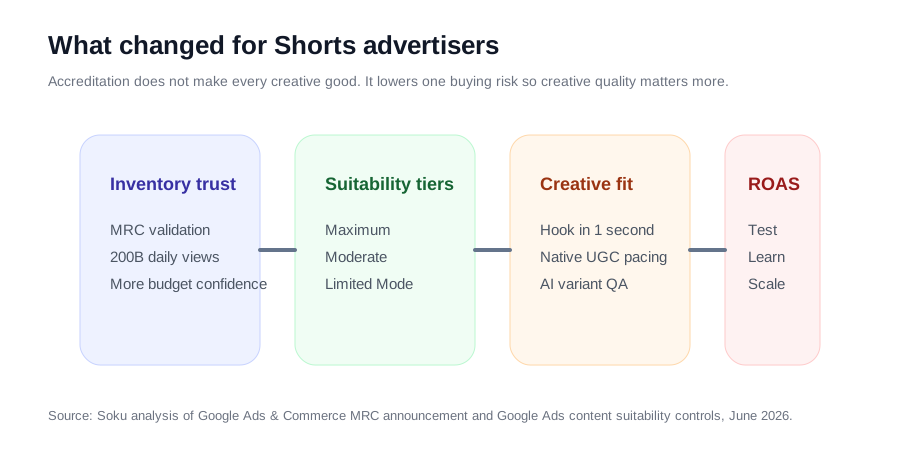
Google's announcement says YouTube received its sixth consecutive MRC brand-safety accreditation, and the scope now includes Shorts. The certification covers YouTube's three inventory suitability tiers: Maximum, Moderate, and Limited Mode. Google also repeats the scale number that changes the budget conversation: Shorts averages 200 billion daily views.
The important distinction is this: the accreditation is about YouTube's brand-safety protections and suitability controls, not about the performance of any one advertiser's campaign. In plain language, the MRC signal gives media buyers more confidence that the platform's systems for avoiding unsuitable content meet an audited standard. It does not guarantee that every impression is perfect, and it does not replace your own suitability settings, exclusions, third-party verification, or post-buy review.
That nuance matters because short-form video is more volatile than long-form video. A Short is dense. The first second carries the hook. The context can be remixed, trend-driven, creator-led, and culturally specific. A long-form video gives classification systems more metadata and more runtime to understand context. A 20-second short-form clip can compress the joke, product, soundtrack, caption, and cultural reference into one tight package. Accreditation says YouTube has a validated system for this environment; it does not mean advertisers can stop thinking.
Why This Is Different from Another Platform Badge
Most brand-safety news is useful but not operational. This one is operational because Shorts sits at the intersection of three shifts:
| Shift | Why it matters for ad teams | What changes after accreditation |
|---|---|---|
| Short-form scale | Shorts has enough daily consumption to absorb real budget | Brand teams have a stronger reason to include Shorts in formal plans |
| AI creative volume | Teams can now produce dozens of vertical variants quickly | More variants need more QA and clearer suitability rules |
| Performance Max and video expansion | Google campaigns increasingly need short-form video assets | Shorts becomes less of a side experiment and more of a default creative input |
The result is not "move all budget to Shorts." The result is "stop treating Shorts as a leftover resize." If a channel is large enough, brand-safe enough, and algorithmically important enough, then it deserves channel-native creative.
The AI Creative Team's New Operating Model
Before this announcement, many teams had a simple reason to underinvest in Shorts: short-form feeds felt risky, creator-led, hard to control, and harder to verify than long-form YouTube. That objection did not disappear, but it weakened.
The new operating model has four layers.
| Layer | Old behavior | Better behavior after the MRC update |
|---|---|---|
| Media plan | Treat Shorts as incremental reach | Give Shorts a defined test budget and success criteria |
| Creative production | Crop Reels or TikToks into YouTube | Produce Shorts-native cuts with YouTube pacing and captions |
| AI generation | Generate many vertical videos and hope | Generate variants inside a suitability and claims QA checklist |
| Measurement | Judge by CTR or cheap views | Compare retention, conversion quality, brand safety, and assisted value |
This is where Soku fits naturally. A human can decide the brand tolerance. An AI creative stack can generate hooks, voiceovers, captions, and cuts. Soku's job is to connect those assets to downstream performance so the team knows which creative pattern to produce next.
What MRC Accreditation Does Not Solve
The fastest way to misuse this news is to treat accreditation as permission to lower creative standards. It solves one risk class. It does not solve five others.
| Risk | Why it still matters |
|---|---|
| Hook mismatch | A brand-safe impression can still be ignored in the first second |
| Bad AI claims | Synthetic voiceovers and generated scripts can overpromise or create compliance risk |
| Format mismatch | A polished 16:9 brand film still feels wrong inside Shorts |
| Audience mismatch | Shorts reach is broad; conversion quality still depends on targeting and landing page fit |
| Measurement mismatch | Views and efficient CPM do not prove incremental revenue |
The accreditation raises the floor of trust. It does not raise the ceiling of performance. Creative teams still need a repeatable workflow for generating, filtering, launching, and learning.
The Practical Creative Shift: From Asset Resizing to Asset Design
Many teams still treat vertical video as a formatting task. They make a hero ad, crop it to 9:16, add captions, and call it a Shorts asset. That is not enough. Shorts creative needs to be designed as a feed-native object.
The base creative brief should include:
- A first-second pattern interrupt.
- A silent-viewing caption plan.
- A voiceover or text rhythm that works without context.
- A visual proof moment by second three.
- A product or offer reveal before the viewer has time to swipe.
- A CTA that does not assume a long story arc.
AI makes that workflow cheaper. A team can use AI copywriting to generate hooks, AI voiceover to test tone, AI video tools to create product movement, and AI editing to make ratio-specific cuts. But speed creates a new problem: review debt. If you can make 80 Shorts variants in a day, you need a process that prevents 70 weak or risky variants from reaching spend.
The Soku QA Checklist for AI-Generated Shorts
Here is the checklist we would run before moving an AI-generated Shorts variant into paid testing.
| Check | Pass condition | Why it matters |
|---|---|---|
| Claim safety | Every claim is specific, supportable, and not exaggerated by the model | AI copy often turns a benefit into an unsupported guarantee |
| Brand fit | Tone, voiceover, visuals, and creator style match the brand's tolerance | Brand-safe inventory does not protect against off-brand creative |
| Platform fit | The first second works in a swipe feed and the story resolves quickly | Shorts punishes slow setup |
| Suitability fit | The campaign's inventory mode matches the brand's risk appetite | Maximum, Moderate, and Limited Mode are strategy choices |
| Conversion fit | The landing page repeats the same promise as the Short | Message mismatch kills post-click performance |
| Learning fit | The variant tests one clear hypothesis | Random volume does not teach the team what to make next |
This is the original operating point: after MRC accreditation, the bottleneck moves from "can we trust the placement enough to test?" toward "can we produce enough good, safe, native creative to learn?" The second problem is a better problem to have, but it still needs discipline.
How to Brief AI Creative for Shorts After This Update
A useful AI creative prompt for Shorts should be more constrained than a generic "make a video ad" request. It should specify the suitability tier, channel behavior, and measurement goal.
Use this structure:
| Brief field | Example |
|---|---|
| Product | "AI voiceover generator for ecommerce video ads" |
| Audience | "Performance marketer at a DTC brand spending on Meta and YouTube" |
| Shorts hook | "Show the pain of recording five voiceovers for one product launch" |
| Suitability constraint | "No shock, fear, exaggerated income claims, or unsafe before/after language" |
| Creative proof | "Show 5 localized voiceover variants from one product script" |
| CTA | "Try the workflow free" |
| Learning goal | "Test whether localization angle beats production-speed angle" |
This gives the model boundaries. It also gives the media buyer a clean read after launch: if localization wins, make more localization variants; if production speed wins, make more operational-efficiency variants.
Where This Fits with PMax and Google Video Strategy
The accreditation also matters because Google campaign types increasingly reward complete creative coverage. A Performance Max or Demand Gen advertiser that provides only static assets or only horizontal video is underfeeding the system. Shorts-ready creative gives Google another surface to test.
That does not mean PMax should receive every AI-generated video. PMax can combine assets broadly, so weak Shorts variants can pollute the learning environment. The right move is to pre-filter Shorts creative with a tighter QA process, then feed the winners or strongest challengers into broader Google campaigns.
For a deeper PMax creative strategy, read our guide to feeding Performance Max better AI creative assets.
Recommended Cluster Path
Use this cluster in order:
| If your question is... | Read this |
|---|---|
| "What changed and why does this matter?" | This hub |
| "How do we safely use AI-generated Shorts ads?" | YouTube Shorts brand-safety playbook for AI-generated ads |
| "Where should we test short-form creative: Shorts, TikTok, or Reels?" | YouTube Shorts vs TikTok vs Reels for AI creative testing |
Bottom Line
YouTube Shorts earning MRC brand-safety accreditation is not a magic performance lever. It is a trust signal that makes Shorts easier to include in serious media plans. For AI ad teams, that changes the constraint. The question is no longer only "is this inventory safe enough?" The sharper question is "can we make enough Shorts-native creative, with enough QA, to learn faster than competitors?"
Teams that answer that question well will not simply generate more videos. They will build a loop: Soku finds the performance signal, AI tools generate constrained variants, a brand-safety checklist filters them, and campaign results decide the next batch.
FAQ
What is MRC accreditation for YouTube Shorts?
MRC accreditation is third-party validation from the Media Rating Council. In this case, Google says YouTube's brand-safety accreditation has expanded to include Shorts, making YouTube the first platform with MRC brand-safety accreditation for short-form video.
Does this mean every YouTube Shorts ad placement is brand safe?
No. It validates YouTube's platform-level brand-safety systems and suitability controls. Advertisers still need to choose inventory settings, monitor performance, and use their own brand-safety policies.
Why does this matter for AI-generated ads?
AI makes it easy to produce many short-form variants. Accreditation gives advertisers more confidence in the inventory, but AI-generated creative still needs claim review, brand fit checks, suitability controls, and performance measurement.
Should advertisers move budget from TikTok or Reels to YouTube Shorts?
Not blindly. Shorts now has a stronger brand-safety trust signal, but TikTok and Reels may still perform better for certain audiences and creative styles. The right move is a structured test with channel-native creative.
How should Soku users act on this?
Use Soku to identify which creative angles deserve Shorts variants, generate a controlled batch, launch with clear suitability settings, and measure which patterns drive qualified conversions rather than only views.