 Soku AI
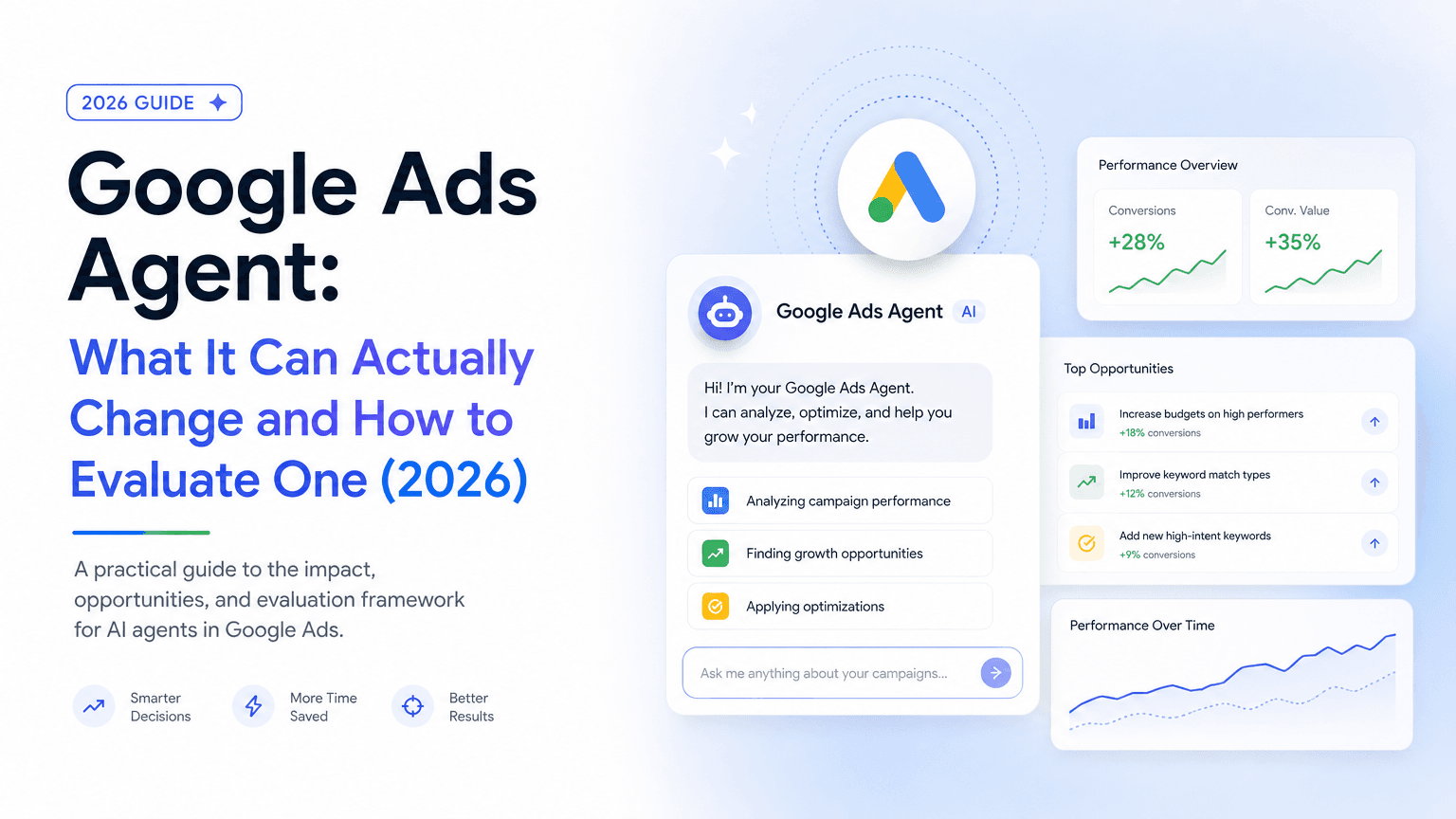
If you're building — or shopping for — an AI agent that runs Google Ads, the most consequential thing to happen in 2026 wasn't a new model or a flashier dashboard. It was a policy page. Google's tightening of brand verification and the way it gates the Basic and Standard access tiers of the Google Ads API quietly redraws the line between a demo that queries your own account and a tool you'd actually trust to touch a client's spend. Most "AI agent for Google Ads" marketing skips this entirely — it says "connects via the Google Ads API" and moves on. That hand-wave hides the whole story.
For the complete overview, see Google Ads API Access & Brand Verification. This post is narrower and aimed at one audience: the people building agentic ad automation, and the teams deciding whether to buy it. The question here isn't what the tiers are — it's what the access model means for how an AI tool should be designed and evaluated.
The access model, from an agent-builder's seat
Every Google Ads API call rides on a developer token — a 22-character string you generate in the API Center of a Google Ads manager account. That token carries an access level, and the access level is the entire ballgame for automation. The official access ladder looks like this:
| Access level | Operations/day (production) | Reality for an AI agent |
|---|---|---|
| Test Account | 15,000 (test accounts only) | Fine for a prototype, useless on live spend |
| Explorer | 2,880, with services blocked | Auto-granted, but can't run real multi-account work |
| Basic | 15,000 | The floor for a genuine automation tool |
| Standard | Unlimited (RMF-gated) | Required for at-scale, multi-client autonomy |
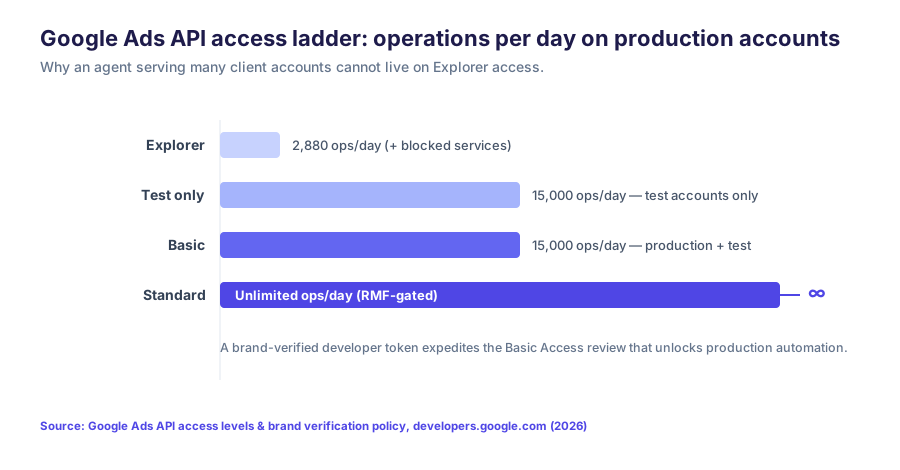
The detail that matters: Explorer access — the tier Google auto-provisions so you can start without an application — caps you at 2,880 operations per day against production and blocks whole service categories like account creation, user management, and planning services. That's a deliberate sandbox. It's enough to build a proof of concept; it is not enough to run automation across a book of client accounts. The moment a tool is real, it needs Basic access at minimum, and anything approaching hands-off autonomy across many advertisers needs Standard. (Which tier fits which product is its own decision — we work through it in Basic vs. Standard access for automation tools.)
So the access model isn't a footnote in an onboarding doc. It's the thing standing between a weekend prototype and a product that touches other people's budgets — and brand verification is now wired directly into how you clear it.
Brand verification is a trust floor, not a checkbox
Here's what brand verification actually is: it's part of Google's OAuth App verification process, the step where a developer confirms they've accurately represented their identity and intent under Google's API Services User Data Policy. You set your OAuth consent screen to External and In production, complete the branding details, and verify. Mechanically it takes a few minutes.
Strategically it does something bigger. Google now uses the brand-verification status of the Cloud project behind your developer token when it reviews Basic Access applications — completing it expedites the review, and Google notes it may in some cases require verification as a prerequisite before it will even process a Basic Access request. Read that in the context of AI tools: the gate to production automation is increasingly "prove who you are and what your tool does" before you're allowed to touch live accounts at scale.
For anyone building agentic automation, that's not bureaucracy — it's the trust floor rising to meet the moment. An AI agent connecting to a client's Google Ads account is asking for a lot: it can read every campaign, every conversion, every dollar of spend, and — with the right scope — change it. Brand verification is the mechanism that lets an advertiser see a verified identity behind the tool before they grant that reach. Reframe it from the buyer's side and it stops being an annoyance: would you connect an unverified agent to your ad account? The verification requirement is Google forcing the answer to be no.
The read/write problem Google's single token doesn't solve for you
There's a design gap here that every serious agent-builder runs into, and no marketing page mentions. Meta's ads API splits access at the scope level: ads_read for the Insights API and ads_management for creating and editing. Read and write are different keys. Google's model doesn't work that way — one developer token, one access level, and the read-versus-write distinction is your responsibility to enforce, not the platform's.
That matters enormously for an LLM-driven agent, because reads and writes have wildly different risk profiles. A reporting query that goes wrong returns a wrong number — annoying, inert, you re-run it. A mutation that goes wrong pauses a top campaign at 2 a.m., zeroes a budget, or rewrites a bidding strategy on a six-figure account. When the platform hands you a single undifferentiated token, a responsible tool has to manufacture the separation Google didn't build in.
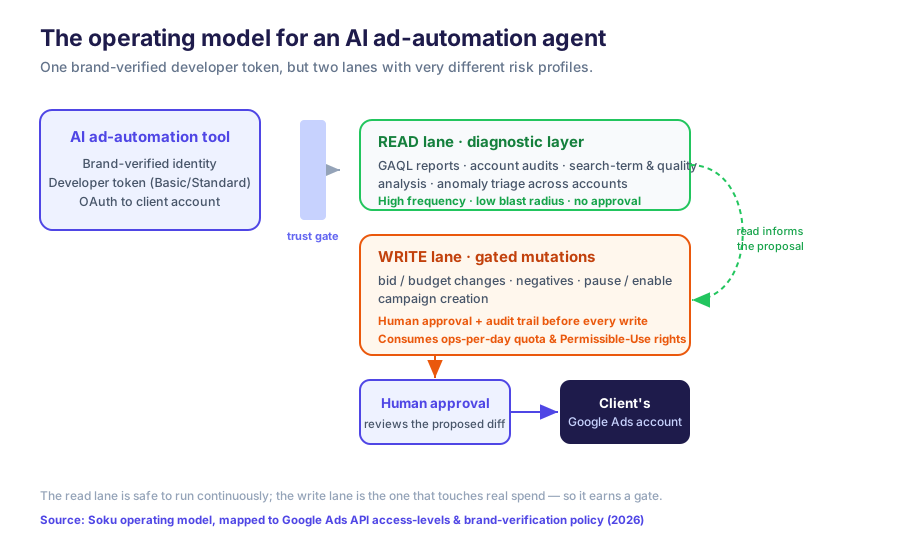
The operating model that falls out of this is the core of the post, so let me be concrete about it.
Split the agent into a read lane and a write lane, and treat them completely differently.
- The read lane is the diagnostic layer. Reporting, account audits, search-term and quality-score analysis, cross-account anomaly triage. This is where an AI agent earns its keep — it eats the nightly slog of pulling and normalizing data and surfaces the three things that matter. Reads are high-frequency, low-blast-radius, and safe to run continuously. This maps cleanly onto Google's own official, strictly read-only Ads MCP server — a signal that Google itself thinks "read first" is the safe on-ramp for agents.
- The write lane is gated. Bid and budget changes, negatives, pausing and enabling, campaign creation — every mutation that touches real spend routes through explicit human approval and lands in an audit trail. The read lane informs a proposal; a human reviews the diff; only then does it become a write. Writes are also where you burn your ops-per-day quota and Permissible-Use rights, so gating them is good economics as well as good safety.
This is the pattern Soku is built around: a read-only Google Ads MCP for the diagnostic layer, and a separate, audited, human-gated path for anything that writes. The agent can recommend a $400/day budget shift with the same fluency Google's read-only model intends — and you decide whether it ever becomes a mutation. For the deeper governance mechanics of gating agent writes — multi-party approvals, who signs off, what's logged — see multi-party approvals for agent write actions.
The uncomfortable truth for the "fully autonomous, 24/7, Level-5 agent" pitch: autonomous writes at scale don't just need clever prompting. They need Standard access (unlimited operations, but gated behind Required Minimum Functionality and a longer review), and they still touch client money on every call. Autonomy is an access-tier and governance problem long before it's a model-quality problem.
The access crunch is the AI boom's own tax
There's an irony worth naming, because it's the strongest evidence that access is now the real constraint. In February 2026 Google acknowledged a developer-token application backlog — Basic and Standard reviews taking longer than usual. The reported cause, per trade coverage, was a surge in applications following the launch of the Google Ads API MCP server, the API Developer Assistant, and v23 of the API. In other words: the exact tooling that made building AI agents easy is what jammed the pipeline that grants them access.
The practical planning numbers (ppc.land's reporting, not an official Google SLA) put Basic access at roughly two business days and Standard at around ten business days plus a demo. If you're building, that means the access application is on your critical path, not an afterthought — brand-verify early, apply early, and don't architect around autonomy you can't yet get a token for. If you're buying, it means a vendor who already holds Standard access and a verified brand has cleared a gate that takes weeks and can't be faked.
A buyer's checklist for agentic Google Ads automation
If you're evaluating a tool rather than building one, the access model gives you a sharper set of questions than "does it have AI":
- What access level does its developer token hold? Explorer-only means it can't really run production automation across accounts. Basic is the floor; Standard signals scale.
- Is the tool's brand verified? It's the minimum identity proof before you connect it to a client account — and increasingly a prerequisite Google itself enforces.
- Does it separate reads from writes? A tool that treats a report query and a budget mutation the same way is a tool that hasn't thought about blast radius.
- Where's the approval and the audit trail on writes? "The AI changed it" is not an acceptable answer when a campaign gets paused. There should be a human in the loop and a log of exactly what changed.
- How does it handle the ops-per-day ceiling? A tool that fires a write on every micro-decision will hit quota and Permissible-Use limits; a well-designed one batches and gates.
None of these are about the model. All of them are about how the tool treats the access it's been granted — which is exactly what brand verification and the tiered model are now forcing into the open.
The bottom line
Brand verification and the Basic/Standard access model look like developer plumbing. For AI ad automation they're something more: the trust floor and the rate limiter that together decide which agents get to touch real accounts, and how carefully they have to behave when they do. The tools that win the next year won't be the ones that promise the most autonomy in a landing-page headline. They'll be the ones that are verified, that hold the right access tier, and that engineer the read/write separation Google's single token leaves to them — running analysis continuously and freely, and putting every write behind a human and an audit trail.
That's the operating model Soku is built on, and it's the one the access model rewards. For the full map of how brand verification and access levels fit together, start with the Google Ads API Access & Brand Verification pillar.