 Soku AI

If you searched for "AI marketing tools" expecting a tidy ranking, here is the uncomfortable truth: there is no single best one, because no single tool does the whole job. The category has fractured into dozens of specialists — writers, generators, SEO platforms, video studios, ad optimizers, analytics engines — each excellent at its one slice of the funnel.
That fragmentation is the actual story of 2026. Adoption is no longer the hard part. According to Salesforce's State of Marketing 2026, 87% of marketers now use generative AI in at least one recurring workflow, up from 51% in 2024. AI in marketing is the default, not the edge. The productivity payoff is real, too: AI now saves the average marketer more than six hours a week — close to a full working day reclaimed. The hard part is that all those tools live in separate boxes, and the value leaks out in the gaps between them.
This guide does two things. First, it walks through the best AI marketing tools by category, honestly — strengths and weaknesses, because every tool has both. Second, it makes an argument: the highest-leverage decision in 2026 is not which AI tool you buy, but how connected your stack is. We will show where Soku fits in that picture, listed alongside the tools it competes and pairs with — not above them.
The real problem: more tools, less connection
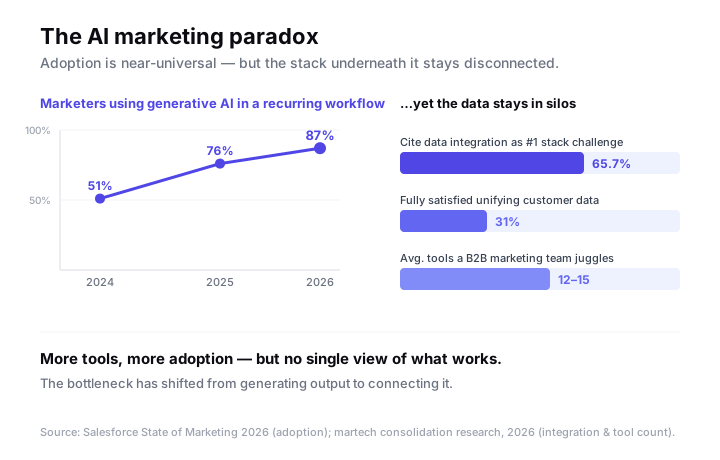
Look at what happens as adoption climbs. The average B2B marketing team now runs 12–15 different tools, and large enterprises operate dozens more. The number of martech products on the market crossed 15,000 in 2025. Buying more AI is easy. The friction is everywhere else: 65.7% of organizations name data integration as their single biggest stack-management challenge — far ahead of cost or skills — and only 31% of marketers say they are fully satisfied with their ability to unify customer data.
So the modern AI marketing stack has a paradox baked in: each tool makes one step faster, but nobody owns the seams between steps. The upside of getting this right is large — McKinsey estimates generative AI could unlock the equivalent of 5–15% of total marketing spend in added productivity — but that value only materializes when the tools feed each other. In a fragmented stack it does not. Your copywriter AI does not know which ad creative actually converted. Your ad optimizer cannot see what your SEO platform learned about intent. A human ends up copy-pasting numbers between five dashboards every Monday to reconstruct a picture the tools could have assembled automatically.
Keep that paradox in mind as you read the categories below. The best individual tool in each category is genuinely useful. But the compounding returns come from connection.
Category 1: AI content and copywriting
This is where most teams start, and it is the most crowded category.
Jasper remains the default for teams that need brand-consistent copy at volume — blog posts, ad variations, email sequences, landing pages. Purpose-built for marketing, its Brand Voice engine analyzes your existing content to capture tone, and in 2026 you can maintain separate voices per product or audience, grounded in reusable Knowledge Assets so copy reflects real product facts. Pricing starts at a Creator plan around $39/seat/month annually ($49 monthly), with a Pro tier near $59/seat adding multiple brand voices, plus custom Business pricing.
Best for mid-size and enterprise content teams that want governance around voice. Honest limitation: like every standalone writer, Jasper produces text in a vacuum — it has no idea whether last quarter's emails actually drove revenue, so it makes your copy faster without making it smarter about what to say next.
Copy.ai has repositioned from a copywriting app into a go-to-market (GTM) workflow platform, now claiming roughly 17 million users. Beyond ad and email copy, it chains multi-step "workflows" — for example pulling a prospect's data and drafting a tailored outreach sequence in one run. There is a free tier (around 2,000 words/month, 90+ tools), a Pro plan near $49/month ($36 annually) that removes word limits, and an Advanced tier (around $249/month) where the full GTM workflow automation lives.
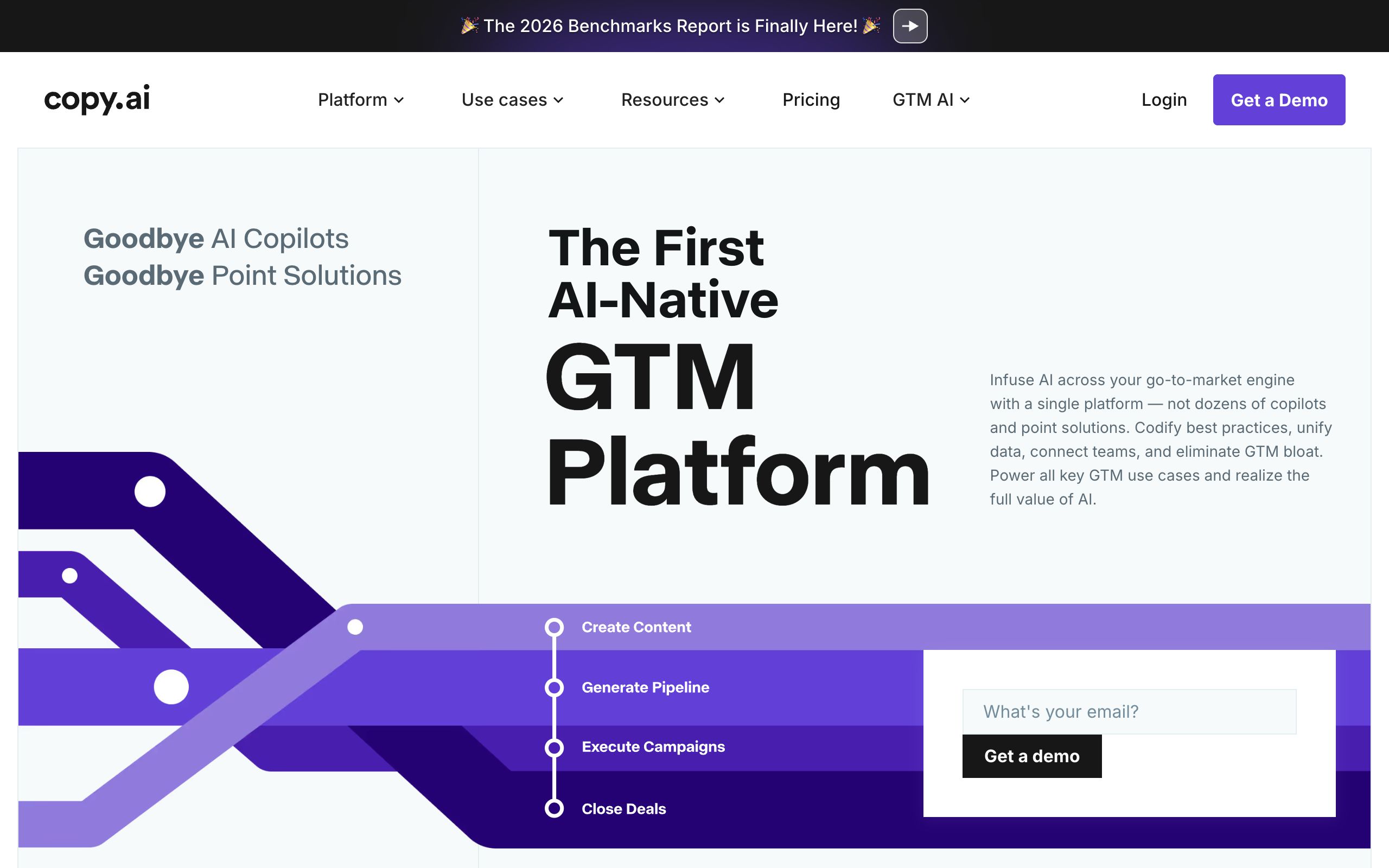
Best for revenue and GTM teams that want repeatable, automated motions rather than one-off copy. Honest limitation: the workflow layer has a real learning curve, and like Jasper it optimizes the writing step in isolation — the workflows only "know" the data you manually wire into them.
Writer targets the enterprise end: governed brand voice, compliance guardrails, and a graph-based RAG layer (Knowledge Graph) that grounds outputs in your company's own data, all powered by Writer's proprietary Palmyra models rather than third-party LLMs. Its standout is governance at scale — enforce terminology and style rules organization-wide and deploy custom agents that stay accurate and on-policy. Paid access starts around $29/month, with the full Knowledge Graph, unlimited agents, and security controls reserved for custom-quoted Enterprise plans.
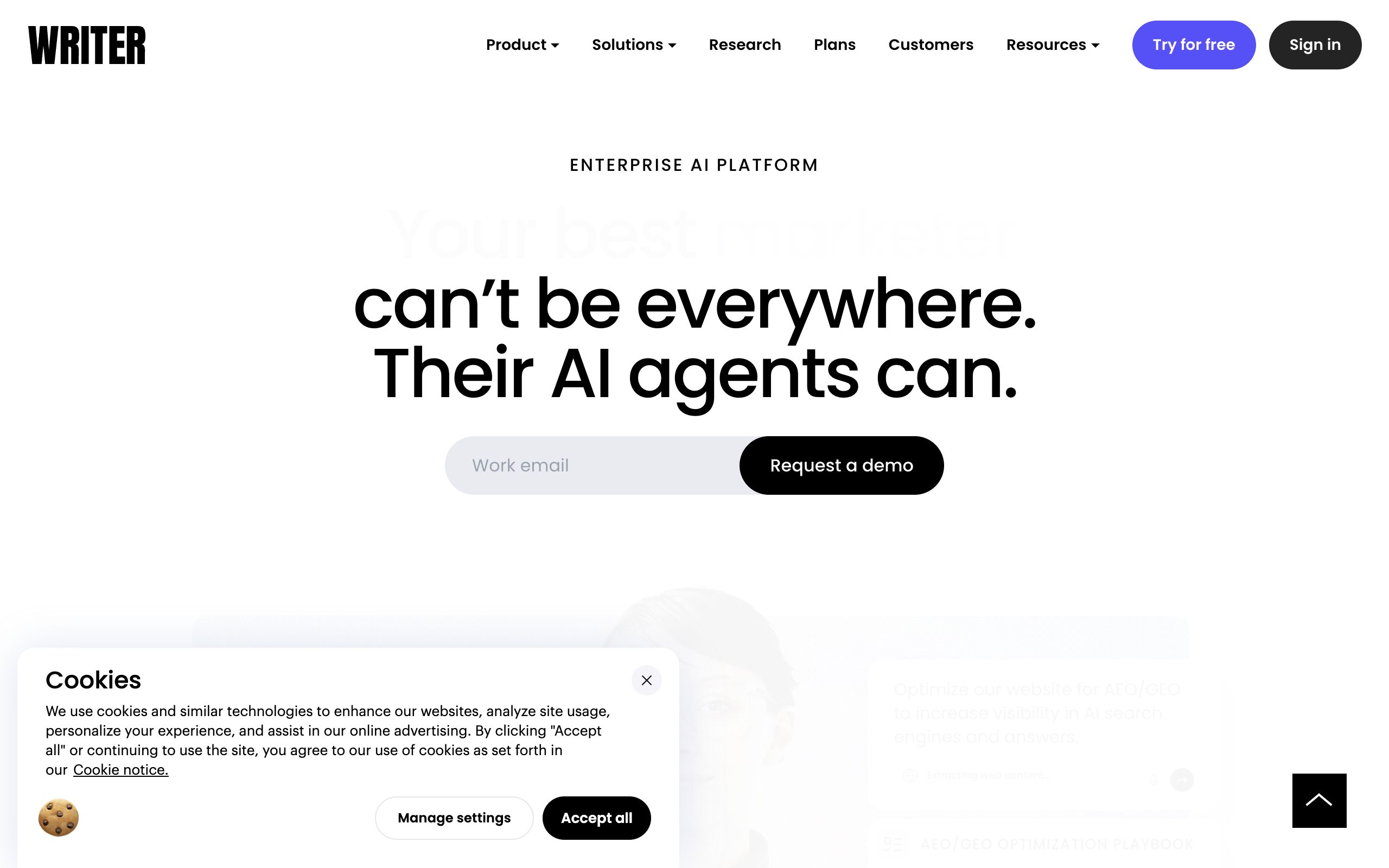
Best for regulated industries and large content organizations that need auditable, on-brand AI at scale. Honest limitation: it is overkill — and over budget — for a small team that just needs blog drafts, and even its Knowledge Graph reflects only the data you load in, not live performance from your ad or analytics platforms.
Honest take: content generation is now a commodity — AI lets teams publish roughly 42% more content per month. The differentiation is no longer "can it write" but "does it know what to write next" — which depends on data the writing tool cannot see.
Category 2: AI for SEO and organic visibility
Semrush is the most complete pick for teams that want traditional SEO and the newer AI-visibility work in one workflow. Its keyword, competitor, and backlink databases are among the largest in the industry, and the consolidated Semrush One bundles fold in an AI Visibility Toolkit that tracks how your brand shows up in ChatGPT, Perplexity, and Google's AI Overviews, plus an AI-readiness site audit. Semrush One starts around $199/month, rising to roughly $299 and $549 for larger teams; the AI Visibility Toolkit can also be added to a classic plan for about $99/user/month. (Soku reads your Semrush data directly through its Semrush integration.)
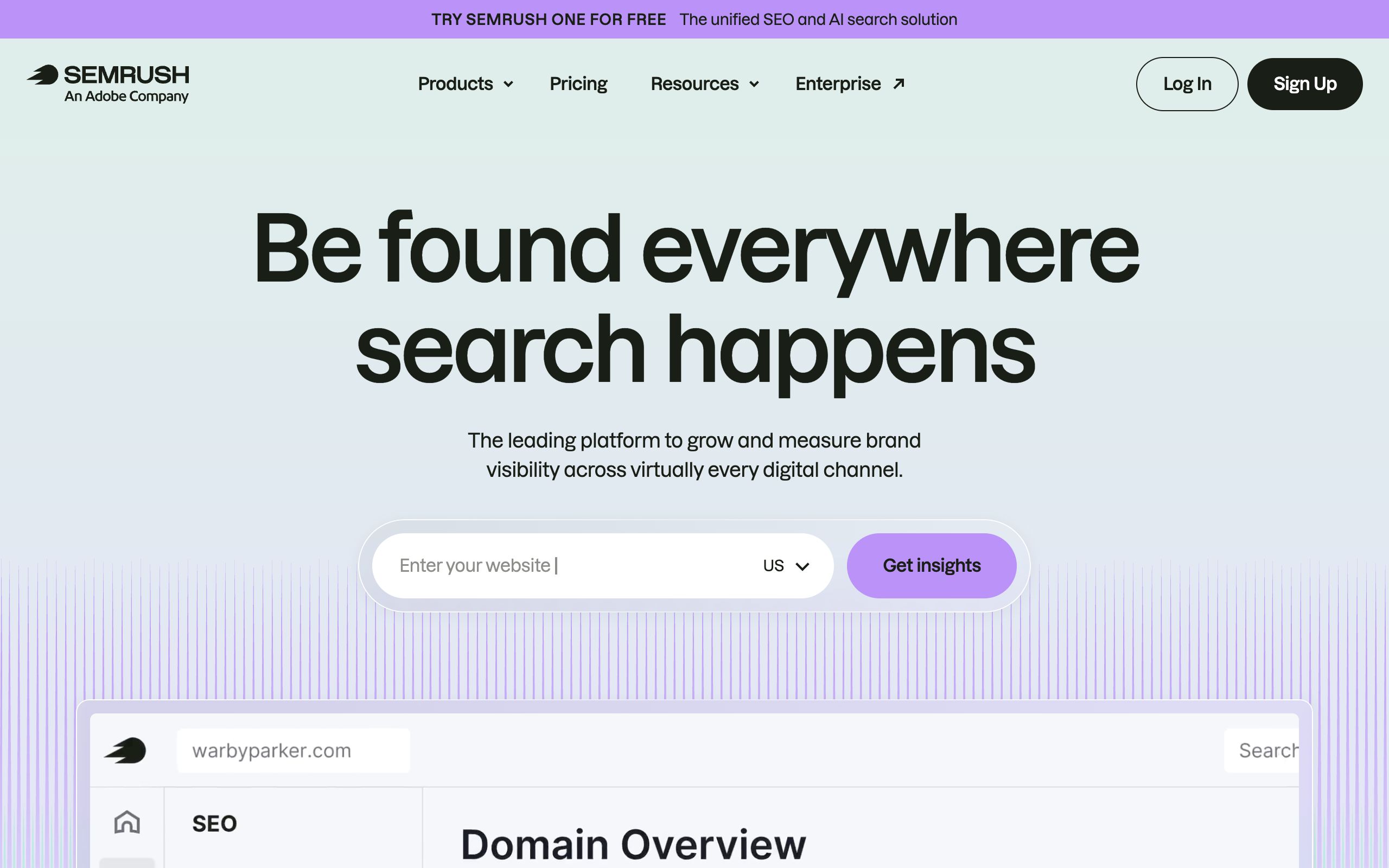
Best for in-house SEO teams and agencies that want one platform for keyword research, rank tracking, competitive analysis, and AI visibility. Honest limitation: it is powerful but priced and structured for specialists, and like every SEO suite it outputs opportunities someone still has to act on and then measure against revenue that lives in another tool.
Surfer SEO is the most practical content-optimization tool: write and score in the same editor, with a real-time content score, on-page term and structure guidance, internal-link suggestions, and an AI Tracker that monitors how your brand surfaces in ChatGPT and Perplexity. It plugs into Google Docs and WordPress so optimization happens where you already write. The Essential plan runs $99/month ($79 annually) for 30 content-editor articles, with a Scale plan around $219 ($175 annually) for 100; the AI Tracker is largely a paid add-on.
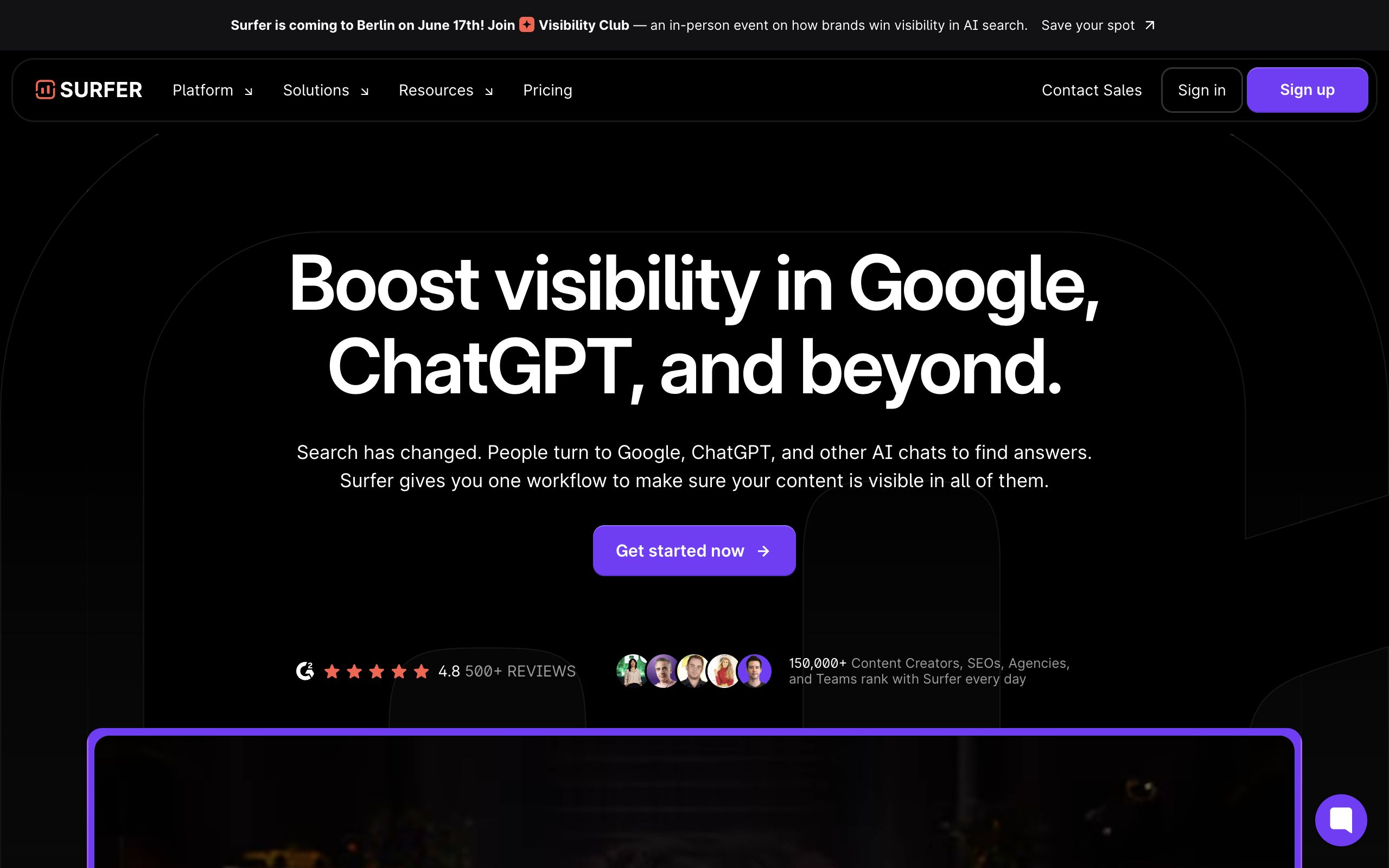
Best for content marketers and writers who want page-level optimization baked into the drafting process. Honest limitation: its scope is the page, not the program — Surfer optimizes individual articles beautifully but does not run keyword strategy, technical SEO, or report on organic revenue, so it lives downstream of decisions made elsewhere.
Honest take: SEO tools have absorbed "GEO" (generative engine optimization) fast — sensible, given that AI Overviews already appear on a large and growing share of search results. But the output is still a list of recommendations someone has to act on and then measure against revenue elsewhere.
Category 3: AI video and creative generation
Synthesia leads avatar-based video for training, demos, and localized content, generating talking-head video from a script in 160+ languages and voices. Its 2026 Express-2 avatars add full-body movement and micro-expressions at 1080p, and one-click AI dubbing translates a finished video into 80+ languages with preserved lip-sync — a real shortcut for scaling explainer content without a film crew. Pricing runs from a Starter plan around $29/month ($18 annually, ~10 minutes) to a Creator plan near $89/month ($67 annually, 30 minutes plus API), with unlimited minutes on custom Enterprise.
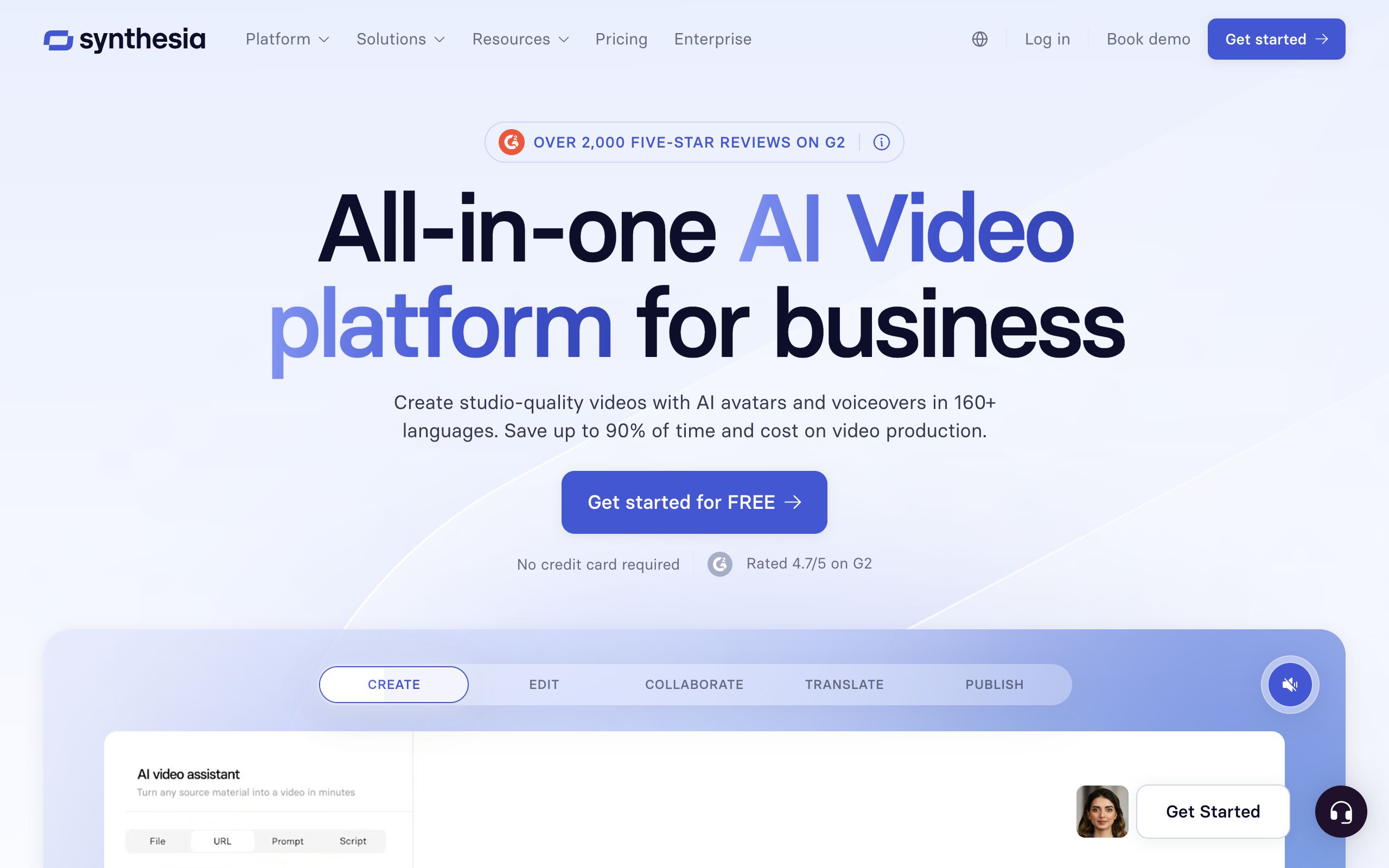
Best for L&D, product, and enablement teams producing structured video at scale across many languages. Honest limitation: avatar video, however polished, still reads as avatar video for top-of-funnel brand work — and it lives in a silo, disconnected from the performance data that should tell you which videos to make more of.
HeyGen competes with a more creator-friendly entry point and a heavier emphasis on volume and personalization. Standouts include voice cloning, video translation into 175+ languages with preserved lip-sync, and a robust API for programmatic generation (think thousands of personalized sales videos). The free tier covers a few watermarked videos; the Creator plan is around $29/month ($24 annually) for watermark-free 1080p, with Pro and Business tiers (~$99 and $149+/month) adding credits, 4K, and custom avatars, plus a separate credit-based API plan.
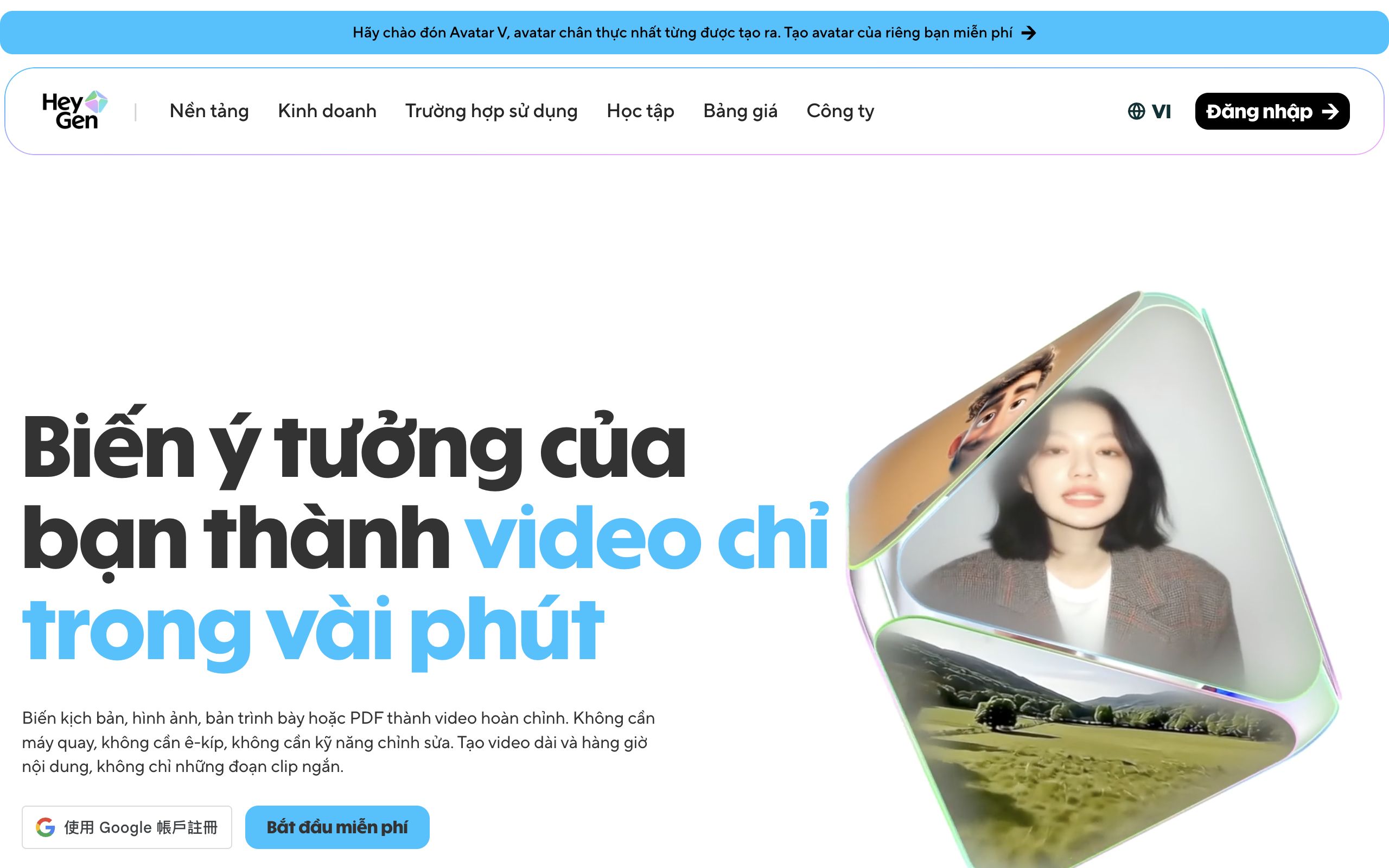
Best for marketers and creators who need high output and personalization, and developers building video in via API. Honest limitation: built for volume, not bespoke brand films; the credit system gets expensive at scale; and like Synthesia, its output is disconnected from the analytics that tell you whether the video moved anyone.
AdCreative.ai focuses specifically on ad creative, generating dozens of scored static and video variations from your brand assets and a product URL. Its signature feature is a Creative Scoring model that predicts performance before launch — the company claims 90%+ accuracy using component analysis (logos, CTAs, hierarchy) and eye-tracking-style saliency models — so you can rank concepts before spending budget. Plans are credit-based, starting around $29/month and scaling to $99 and $149; generations are unlimited but each download costs a credit, and credits do not roll over.
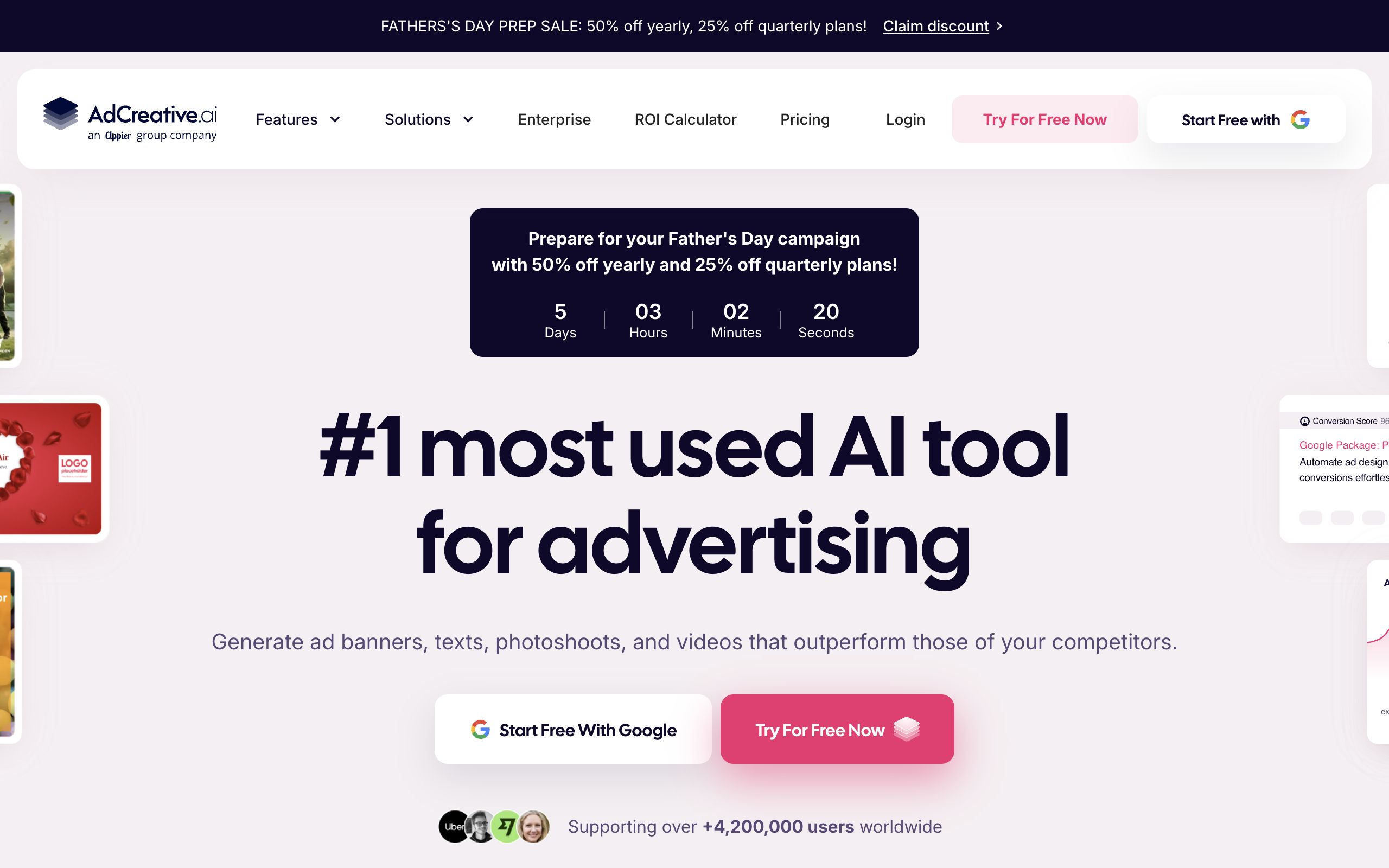
Best for performance and paid-social teams that need a constant supply of fresh creative to test. Honest limitation: its pre-launch scoring is a black box you cannot inspect, and — crucially for this guide — it does not tell you what actually happened after launch, so the loop between real results and the next batch stays open.
Honest take: generation throughput is solved, and better creative pays — AI-optimized ads are associated with meaningfully lower acquisition costs. But knowing which concept to scale is not, because the generator rarely sees post-launch performance data.
Category 4: AI marketing automation and platforms
HubSpot has embedded AI across its CRM and Marketing Hub under the Breeze brand — predictive lead scoring, AI subject lines, content assistants, and a layer of autonomous Breeze Agents that handle whole jobs like prospecting or customer replies. The free CRM is a genuine on-ramp, but the AI comes alive on paid tiers: Marketing Hub Professional starts around $800/month with three seats, Enterprise near $3,600/month. Note the usage model — many Breeze Agent actions run on metered "HubSpot Credits" on top of the subscription, after a 2026 move to outcome-based pricing (e.g. about $0.50 per resolved customer conversation). (Soku can pull from it via its HubSpot integration.)
Best for B2B and mid-market teams that want an all-in-one CRM, marketing, and service hub as their system of record. Honest limitation: the all-in-one promise is also the trap — the AI is only as smart as the data inside HubSpot, so the moment you also run Meta Ads, GA4, or a video tool (almost everyone does), the integration gap reopens around it.
Klaviyo owns AI-assisted email and SMS for e-commerce, built on unified customer profiles that stitch together every order, browse, and click. Its predictive analytics are the standout — modeling lifetime value, churn risk, and predicted next-order date, then powering AI-generated segments and a Marketing Agent that drafts campaigns and flows. Pricing is volume-based: a free tier covers up to 250 profiles, the Email plan starts at $20/month for 500 contacts and scales with list size (~$130/month at 10,000), and Email + SMS bundles add a separate messaging-credit pool. (Soku connects to it via the Klaviyo integration.)
Best for e-commerce and DTC brands that want sophisticated, data-driven lifecycle messaging. Honest limitation: Klaviyo is deep but channel-bound — its predictions come from the purchase and engagement data it holds and stay blind to what your paid-media or search efforts are doing upstream, and the bill climbs steadily as your list grows.
Mailchimp is the SMB default for AI-assisted email, trading Klaviyo's e-commerce depth for approachability — drag-and-drop campaigns, a large template library, and an AI creative assistant (Intuit Assist) that drafts copy and layouts. The 2026 plans run Free (250 contacts, 500 sends), Essentials from $13/month, Standard from $20/month (the cheapest tier with multi-step automation), and Premium at $350/month. Best for small businesses that want simple, fast email marketing without a steep learning curve. Honest limitation: it counts unsubscribed and non-subscribed contacts toward your plan limit, its automation trails specialists like Klaviyo, and it shares the same blind spot — it sees its own email channel and nothing else. (Soku reads from it via the Mailchimp integration.)
Honest take: "platforms" promise to be the one place everything lives. In practice no team runs everything inside one — which is exactly how the integration gap reopens around the system of record.
Category 5: cross-channel intelligence — the connective layer
This is the category most "best AI marketing tools" lists skip, and the one the data above argues is most under-served. The tools in categories 1–4 each produce or optimize within a step. Something has to sit across them: pulling performance from every channel, explaining what changed and why, and turning that into the next action.
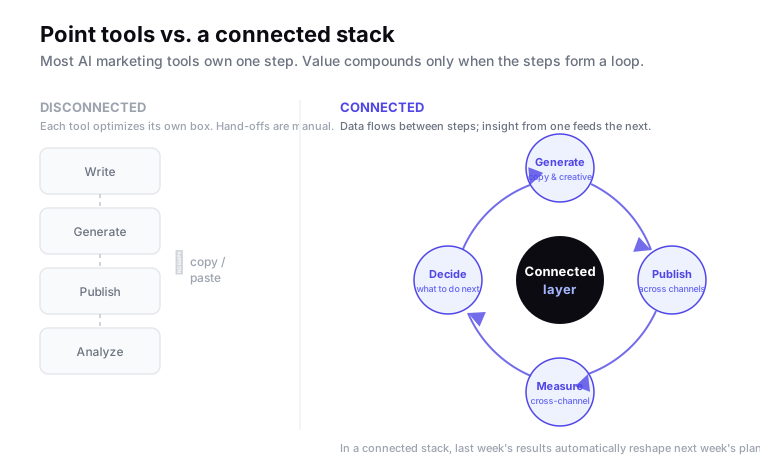
Soku is built for this connective layer. It connects to your existing accounts — Meta Ads, Google Ads, TikTok Ads, GA4, Shopify, Semrush, and more — and acts as an always-on AI agent that analyzes performance across channels, explains it in plain language, and drafts the next move. Rather than another dashboard, it delivers narrative recaps and specific recommendations ("creative A is fatiguing on Meta but driving assisted conversions via search — hold spend, refresh the hook").
Where Soku is strong: cross-channel root-cause analysis, weekly recaps and alerts, and conversational querying of your whole stack. Where it is honestly not the tool: it does not generate ad visuals or write your blog posts — it tells you what to make and why, then you pair it with a generation tool from categories 1–3. Setup runs read-only and takes well under an hour.
The point is not that Soku replaces the others. It is that the connection between them — the loop in the diagram — is where the leaked value lives: last week's measured results automatically reshape next week's plan, instead of dying in a spreadsheet.
Comparison: which tool for which job
| If your bottleneck is… | Best-fit tools | Watch out for |
|---|---|---|
| Producing copy at volume | Jasper, Copy.ai, Writer | Output written blind to performance |
| Ranking in search and AI answers | Semrush, Surfer SEO | Recommendations still need a human to act + measure |
| Scaling video / avatar content | Synthesia, HeyGen | Reads as templated for brand-led work |
| High-volume ad creative testing | AdCreative.ai | Black-box scoring, no post-launch loop |
| CRM, email, and lifecycle automation | HubSpot, Klaviyo, Mailchimp | Best only when all data lives in one platform |
| Understanding performance across all channels | Soku | Does not generate creative or copy itself |
Most high-performing teams in 2026 do not pick one row — they run two or three, plus a connective layer: a writer and a creative generator for production, an SEO platform for organic, a platform as the system of record, and a cross-channel agent (Soku) to keep the loop closed.
How to actually choose
Before comparing any two tools, judge each on four criteria that matter more than feature checklists: output quality (usable as-is, or does every draft need a heavy rewrite?), data connectivity (does it read from and write to the rest of your stack, or trap data in its own walls?), pricing transparency (is the real total — credits, seats, usage fees included — knowable up front, or does it balloon with use?), and learning curve (how long until your team is faster, not slower?). The first two separate tools that compound value from tools that merely add another silo.
With that lens, skip the "top 20" ranking instinct. Instead:
- Find your real bottleneck. Are you output-starved (need more content/creative) or insight-starved (drowning in dashboards, unsure what to do)? Most teams two years into AI are now insight-starved, not output-starved.
- Buy the specialist for that bottleneck from the categories above — the best-in-class tool for the one job that is actually slowing you down.
- Then audit your seams. List every place a human copy-pastes data between tools each week — that is value leaking out of the gaps. Closing them often returns more than buying yet another generator, which is why 71% of leaders who adopted AI report positive ROI within six months once tools are actually connected to outcomes.
- Add a connective layer so the steps form a loop rather than a relay race with dropped batons.
Frequently Asked Questions
What are the best free AI marketing tools?
Most leading tools now offer a usable free tier — the cheapest way to test before committing. Copy.ai has a free plan with limited words and 90+ tools; Mailchimp and Klaviyo both have free tiers for small lists (250 profiles); HubSpot's CRM is free indefinitely; and HeyGen and Synthesia let you make a handful of watermarked videos. The catch: free tiers deliberately omit the connective features — automation, brand voice, API access, integrations — so they are great for evaluation but rarely enough to run a real program.
Do AI marketing tools replace marketers?
No. The clear pattern in 2026 is that AI replaces tasks, not roles — it compresses drafting, variation, and reporting, saving the average marketer more than six hours a week, but the judgment calls (strategy, positioning, deciding what to act on) still sit with people. As output gets cheap, the scarce skill shifts from producing assets to deciding which to make — exactly the insight-starved gap a connective layer is meant to close.
How many AI marketing tools does a team need?
Fewer than the market wants you to buy. The average B2B team already runs 12–15 tools, and beyond a handful the marginal tool adds more integration overhead than value. A lean shape is two to four specialists for your actual bottlenecks (say, a writer, an SEO platform, and a CRM) plus one connective layer that ties their outputs together. What matters is not how many tools you own but how many talk to each other.
What is the best AI tool for content writing?
For brand-consistent copy at volume, Jasper and Copy.ai are the usual front-runners, with Writer leading for regulated enterprises that need governance. But "best" depends on your bottleneck — if you mostly need optimized content that ranks, an SEO-native editor like Surfer SEO may matter more than a pure generator. Generation quality across the leaders is now broadly comparable; differentiation comes from brand-voice control, governance, and whether the tool plugs into your wider stack.
What is the best AI tool for advertising?
For producing ad creative at volume, AdCreative.ai is the category specialist, generating and pre-scoring dozens of variations from your brand assets. For the analysis side — knowing which campaigns and creatives actually work across Meta, Google, and TikTok — you need a cross-channel layer like Soku, because creative generators do not see post-launch performance. The best setup pairs a generator (make the assets) with a connective agent (decide what to scale).
How do I connect my AI marketing tools so they share data?
Three common paths. Native integrations (a built-in connector between two tools) are easiest but rarely cover every pair. Middleware like Zapier or reverse-ETL pipelines moves data between tools, but you maintain the wiring. The third path is a dedicated connective layer such as Soku that reads across your ad platforms, analytics, and content tools and turns the combined picture into recommendations — closing the loop without a human copy-pasting between dashboards. Which you choose depends on how many seams you are closing and whether you want raw data movement or interpreted insight.
The bottom line
The best AI marketing tools of 2026 are genuinely good — Jasper writes, Surfer optimizes, Synthesia produces, HubSpot orchestrates, AdCreative generates. None of that is in dispute. What has changed is where the leverage sits. With 87% of teams already using AI and the average stack pushing past a dozen tools, generating output is no longer the constraint. Connecting it is.
So evaluate any AI marketing tool with one extra question beyond features and price: does this make my stack more connected, or does it add one more box that someone has to manually wire to the rest? The teams that win in 2026 are not the ones with the most tools. They are the ones whose tools talk to each other — and act on what they hear.