Soku AI
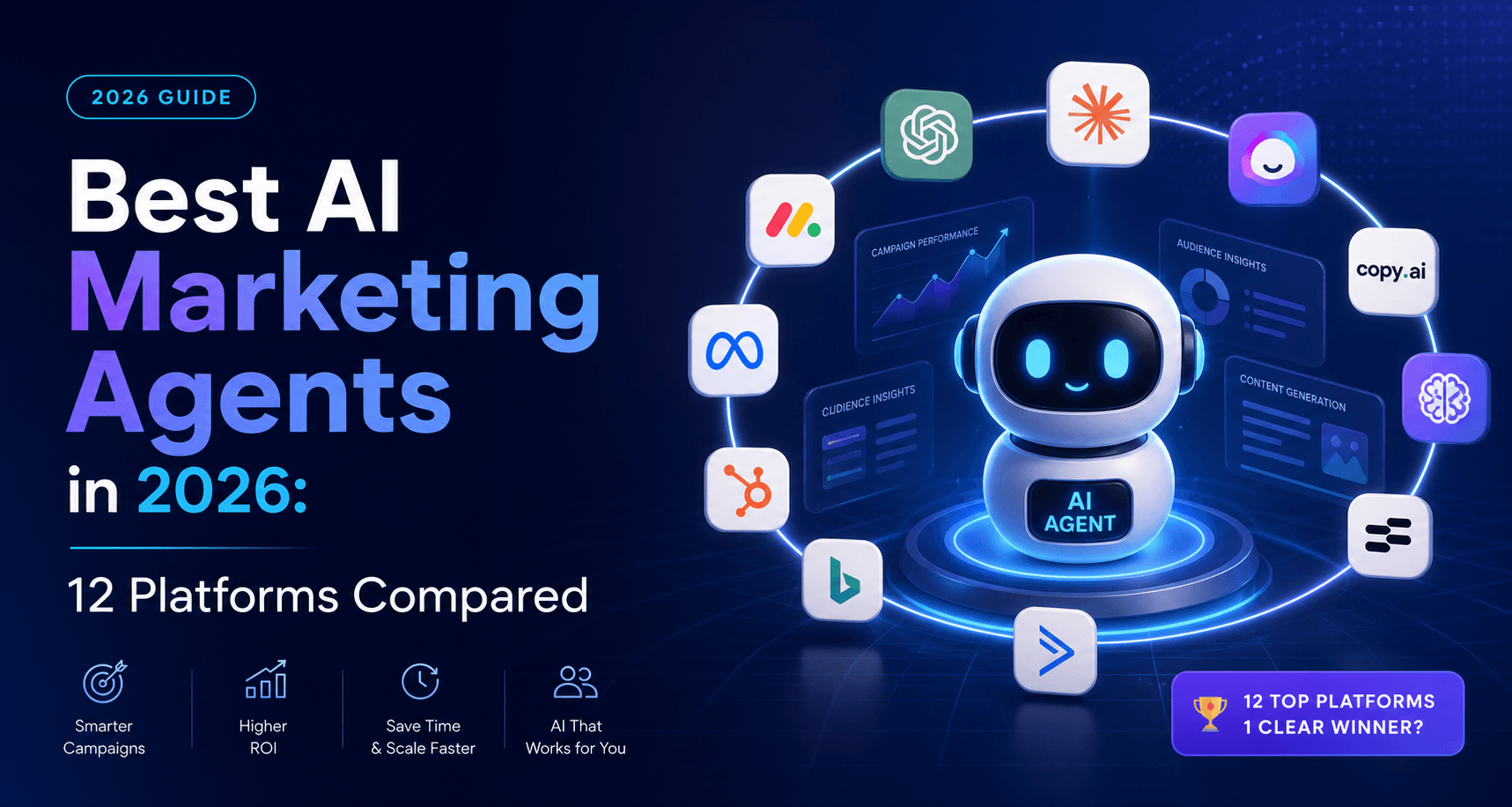
Search "best marketing automation software" and you'll get a hundred listicles that all rank the same eight tools in a slightly different order, quote pricing that's two years stale, and never tell you the one thing you actually need: which of these is right for your team, and what the AI wave is quietly changing about all of them.
This guide is built differently. Every price below was verified against the vendor's live pricing page in 2026. Every recommendation is tied to a specific kind of buyer. And running underneath the whole thing is a thesis most "best of" posts miss entirely: marketing automation is no longer a single product category — it's becoming a three-layer stack, and the layer where the money is moving is the one most of these platforms are weakest at. We'll get to that. First, the lay of the land.
The state of the market in 2026
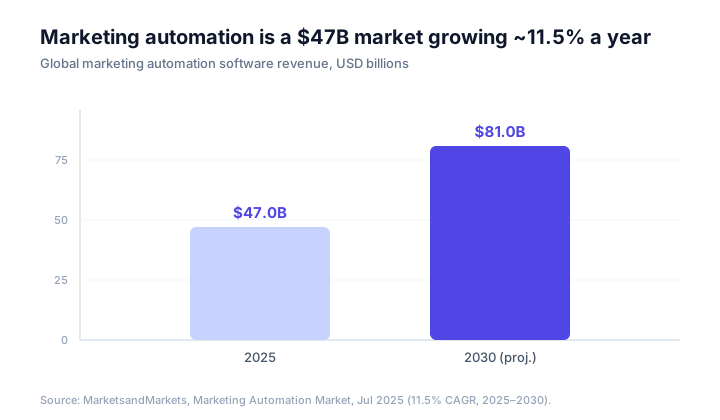
Marketing automation is not a hot new category — it's a mature, large, and still-growing one. The global marketing automation software market is worth roughly $47 billion in 2025 and is projected to reach $81 billion by 2030, an ~11.5% compound annual growth rate. That's not the explosive curve of an emerging technology; it's the steady compounding of infrastructure that nearly every marketing team now considers table stakes.
What is changing fast is the role AI plays inside these tools. Two-thirds of marketers globally (66%) now use AI in their role, rising to 74% in the US — and the primary driver isn't standalone AI apps, it's AI getting baked into the software teams already pay for. Every vendor on this list shipped meaningful AI features in the last 18 months: AI segment suggestions, send-time optimization, generative copy, predictive sending, and increasingly, agent-style assistants that build a campaign from a prompt.
But there's a gap worth naming up front. Generative AI is still mostly used for drafting — 55% of AI users rely on it for writing first drafts, while only a minority have moved to autonomous, goal-driven work. The category is between two eras: the rules-based automation it was built on, and the agentic AI it's growing toward. Where your dollars produce outsized returns is shifting accordingly — and that informs how you should read every "AI" checkbox below.
How to think about the category (the three-layer model)
Here's the framing that makes choosing a tool much easier. A modern marketing automation system isn't one thing — it's three layers stacked on top of each other.
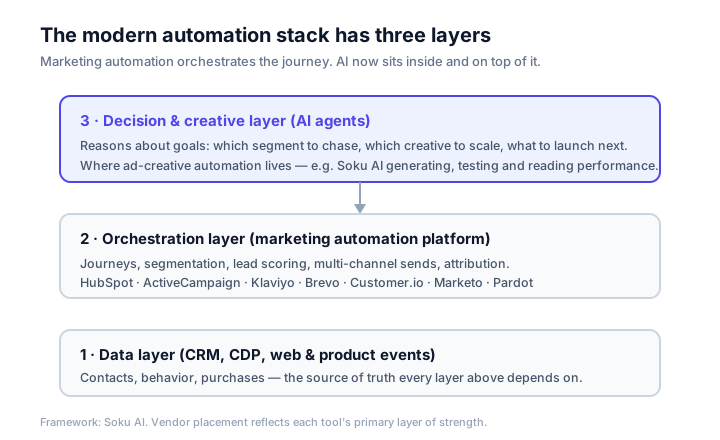
- The data layer — your CRM, CDP, web and product events. The source of truth everything else reads from.
- The orchestration layer — the marketing automation platform itself: journeys, segmentation, lead scoring, multi-channel sends, attribution. This is what the tools in this guide actually are. It's the layer that's mature, well-served, and increasingly commoditized.
- The decision and creative layer — the part that decides what to do next: which segment to pursue, which message to send, which ad creative to scale or kill. Historically this was 100% human. It's the layer AI is now invading, and it's where the highest-variance, highest-value marketing work lives.
The reason this matters for a buying decision: most platforms compete hard on layer 2 and treat layer 3 as a bundle of "AI assistant" features. That's fine for copy drafts and subject lines. It's not where the leverage is for paid acquisition, where the creative itself — and the loop of generating, testing, and reallocating spend toward winners — is the thing that moves performance. Keep that in mind: the best orchestration platform and the best creative-decision layer are often not the same product, and the strongest 2026 stacks run both.
With that lens, here are the eight platforms worth your shortlist.
The 8 best marketing automation platforms in 2026
1. HubSpot Marketing Hub — best all-in-one for SMB and mid-market
HubSpot is the default answer for a reason: it's the most complete, best-documented, easiest-to-adopt platform in the category, and its CRM, marketing, sales, and service tools share one data model so you're not stitching together attribution from four systems.
Pricing (verified): Marketing Hub Starter runs about $9–$20/month per seat depending on billing and edition, including 1,000 marketing contacts. Professional is $800/month (billed annually; $890 monthly) with three seats and 2,000 contacts — plus a required $3,000 one-time onboarding fee. Enterprise is $3,600/month with five seats, 10,000 contacts, and a $7,000 onboarding fee. The critical pricing lever is marketing contacts: cross a tier and your bill jumps automatically (e.g. a Professional account exceeding 2,000 contacts moves to the 5,000 tier, adding ~$250/month).
AI features: Breeze, HubSpot's AI layer, spans content generation, a chat-style copilot, and AI-assisted reporting. Solid for drafting and ops; not a creative-testing engine.
Best for: B2B SMB and mid-market teams (5–50 people) who want one platform to run the whole funnel and value polish over flexibility. The honest trade-off is cost — the contact-tier model and onboarding fees mean the "starts at $9" headline is rarely the real bill.
2. ActiveCampaign — best automation depth for the price
ActiveCampaign punches above its weight on automation: 950+ recipes, a genuinely powerful visual builder, and a lightweight CRM, all at a fraction of HubSpot's cost. It's the pragmatic choice for teams who want serious workflow logic without enterprise pricing.
Pricing (verified, at 1,000 contacts): Starter ~$15/mo, Plus ~$49/mo, Pro ~$79/mo, Enterprise ~$145/mo. Note the same trap as everyone else — pricing scales aggressively with contacts. At 10,000 contacts you're looking at roughly $149 (Starter) to $589 (Enterprise) per month. Its newer AI layer, "Active Intelligence," adds an AI automation builder, content/image generation, and predictive sending on higher tiers.
Best for: SMBs and lean teams that live in their automations and want maximum logic per dollar. The weak spot is reporting depth and the fact that the cheapest plan caps you at five actions per automation.
3. Klaviyo — best for ecommerce (email + SMS)
Klaviyo won ecommerce by going deep where it counts: tight Shopify/BigCommerce integration, behavioral segmentation off real store data, and email + SMS in one place. If you sell physical products online, it's almost the default.
Pricing (verified): genuinely free up to 250 profiles (500 emails, 150 SMS credits/month). Paid email plans are profile-based — roughly $20/mo at 500 profiles, $45 at 1,000, $150 at 10,000; the Email + SMS plans bundle message credits at each tier. Klaviyo has leaned hard into AI with a generative subject-line tool and a "Marketing Agent" that helps build campaigns.
Best for: DTC and ecommerce brands of any size. The trade-off is focus — Klaviyo is exceptional for transactional, behavior-triggered commerce flows and comparatively thin for B2B lead nurturing or complex sales-cycle ABM.
4. Brevo (formerly Sendinblue) — best value for small teams
Brevo is the budget-conscious all-rounder: email, SMS, a basic CRM, landing pages, and automation, with a pricing model based on email volume rather than contact count — which can be dramatically cheaper if you have a big list you email infrequently.
Pricing (verified): a free tier (300 emails/day, up to 100,000 contacts stored), Starter from $9/month (5,000 emails), and Business from ~$18/month, which is where unlimited marketing automation, A/B testing, and predictive send-time AI unlock. The Professional tier (from ~$499/month) adds WhatsApp, contact scoring, and AI segmentation for high-volume senders.
Best for: small businesses, solopreneurs, and anyone with a large but lightly-emailed list who wants real automation without per-contact pricing. The honest caveat: features and deliverability tooling are a step behind HubSpot or Klaviyo, and removing Brevo branding is a paid add-on on the cheapest plan.
5. Customer.io — best for product-led and developer-driven teams
Customer.io is built for messaging triggered by product events, not just list membership — making it the favorite of SaaS and product-led companies who want to message users based on what they actually do in the app. Email, SMS, push, and in-app are all first-class.
Pricing (verified): Essentials starts at $100/month for 5,000 profiles and 1 million monthly emails, including an AI Agent with core execution skills. Premium starts at $1,000/month with custom volumes, elevated agent limits, and HIPAA compliance. Enterprise is custom.
Best for: product-led SaaS and B2C apps with engineering resources who want event-driven, cross-channel lifecycle messaging and predictable (non-per-contact) pricing. Not the right tool for a content-marketing team that just needs newsletters and lead forms.
6. Adobe Marketo Engage — best enterprise B2B engine
Marketo is the enterprise B2B incumbent: deep lead scoring, account-based marketing, multi-touch attribution, and journey analytics built for large marketing-ops teams with dedicated automation architects.
Pricing: custom only — Adobe doesn't publish list prices. Real-world deals typically land in the $1,200–$8,000+/month range depending on database size and edition, with 6–12 month implementations common.
Best for: enterprise B2B orgs (100+ person marketing teams) running sophisticated ABM and demand-gen programs. The trade-off is exactly what you'd expect from enterprise software: power and flexibility bought with cost, complexity, and a long implementation.
7. Salesforce Marketing Cloud Account Engagement (Pardot) — best if you live in Salesforce
If Salesforce Sales Cloud is your CRM, Pardot (now Marketing Cloud Account Engagement) is the natural choice — it's built natively on the Salesforce platform, so lead and opportunity data flow without integration glue.
Pricing (verified): Growth+ $1,250/month, Plus+ $2,750/month, Advanced+ $4,400/month, and Premium+ $15,000/month (all per org, billed annually). The new "+" editions layer in Salesforce's Agentforce AI, native SMS/WhatsApp, and advanced personalization.
Best for: B2B companies already standardized on Salesforce who want one vendor and native CRM depth. The caveat: it's most valuable because of Salesforce — outside that ecosystem, Marketo or HubSpot usually deliver more for the money.
8. Soku AI — best creative-decision and ad-testing layer
Here's where the three-layer model pays off. Every platform above is, fundamentally, an orchestration tool — it executes the journeys and sends you design. None of them owns the creative-decision loop for paid acquisition: generating ad variants, launching them, reading which ones actually perform, and reallocating toward winners.
That's the layer Soku AI is built for. Rather than competing to be your email-journey platform, Soku acts as the AI creative layer that sits on top of the stack you already run — reasoning over real ad performance across platforms, producing and testing creative at volume, and turning what's working into your next campaign. The payoff matters: high-quality creative drives 4.7x more profit than average creative, yet creative testing is exactly the high-variance, high-volume work that orchestration platforms treat as an afterthought.
Best for: performance and growth teams who already have an orchestration platform and want to close the loop on ad creative — the part of the funnel where AI delivers the most measurable lift. It complements HubSpot, Klaviyo, or Marketo; it doesn't replace them.
Side-by-side comparison
| Platform | Starting price (verified 2026) | Pricing model | AI maturity | Best for |
|---|---|---|---|---|
| HubSpot Marketing Hub | ~$9–20/seat (Pro $800/mo) | Marketing contacts | High (Breeze) | All-in-one SMB / mid-market |
| ActiveCampaign | ~$15/mo (1k contacts) | Contacts | Medium-High | Automation depth on a budget |
| Klaviyo | Free → ~$20/mo | Active profiles | Medium-High | Ecommerce (email + SMS) |
| Brevo | Free → $9/mo | Email volume | Medium | Value for small teams |
| Customer.io | $100/mo | Profiles | High (AI Agent) | Product-led / event-driven |
| Marketo Engage | Custom (~$1,200+/mo) | Total contacts | High | Enterprise B2B / ABM |
| Pardot (Account Engagement) | $1,250/mo | Per org | High (Agentforce) | Salesforce-native B2B |
| Soku AI | Creative-layer add-on | — | Agent-native | Ad creative testing & decisions |
How to actually choose
Skip the feature-checklist paralysis and answer these in order:
- B2B or B2C? B2B lead-gen with sales hand-off points to HubSpot (SMB/mid-market) or Marketo/Pardot (enterprise). B2C product engagement points to Klaviyo (ecommerce) or Customer.io (apps/SaaS).
- What's your team size and budget? Under $500/month: HubSpot Starter, ActiveCampaign, Brevo, or Customer.io Essentials. $500–$2,000: HubSpot Professional or Pardot Growth+. $2,000+: Marketo, Pardot's higher tiers, or HubSpot Enterprise.
- What CRM are you on? Already on Salesforce? Pardot's native integration is hard to beat. No strong CRM yet? HubSpot gives you one for free.
- How does each price scale? This is where buyers get burned. HubSpot, ActiveCampaign, and Klaviyo all scale with contacts/profiles — model your bill at next year's list size, not today's. Brevo's email-volume model and Customer.io's flat tiers can be far cheaper for large, lightly-emailed lists.
- Where do you need AI to actually move the needle? If it's drafting copy and optimizing send times, the AI built into your orchestration platform is enough. If it's paid acquisition performance — generating and testing ad creative, then reallocating spend toward winners — that's the creative-decision layer, and it's worth a dedicated tool on top.
The bottom line
The "best marketing automation software" isn't a single product — it's the right combination of layers for your team. For most companies that means one strong orchestration platform (HubSpot, ActiveCampaign, Klaviyo, Brevo, Customer.io, Marketo, or Pardot, picked by the questions above) plus a deliberate plan for the creative-decision layer that those platforms underserve.

The category's center of gravity is moving up the stack — from executing the campaign you designed to deciding what to run next. The orchestration layer is mature and increasingly commoditized; the creative and decision layer is where 2026's marketing leverage actually sits. Choose your platform for the workflow you run today, but build your stack for where the work is going.
If your highest-variance hours go into ad creative — making it, testing it, and figuring out what's working — Soku AI adds that layer on top of whatever orchestration platform you land on, so the creative loop finally gets the same automation everything else already has.