Soku AI
"Best AI media buying tools" is one of the most over-served searches in martech, and almost every page-1 listicle reads the same way: a dozen logos, a paragraph of marketing copy each, every tool "powerful" and "intelligent," and a quiet nudge toward whoever paid for the placement. What none of them give you is the thing you need before spending money — a side-by-side scoring of where each tool is genuinely strong and where it is shallow, black-box, or locked behind an enterprise sales call.
This ranking fixes that. We scored every tool below on the same six dimensions, grouped them into three honest tiers, and called out the weaknesses as plainly as the strengths. Soku is itself an ad-automation agent that drives Google Ads and Meta Ads, so we know this category from the inside — and we have ranked ourselves honestly, not at a fake number one.
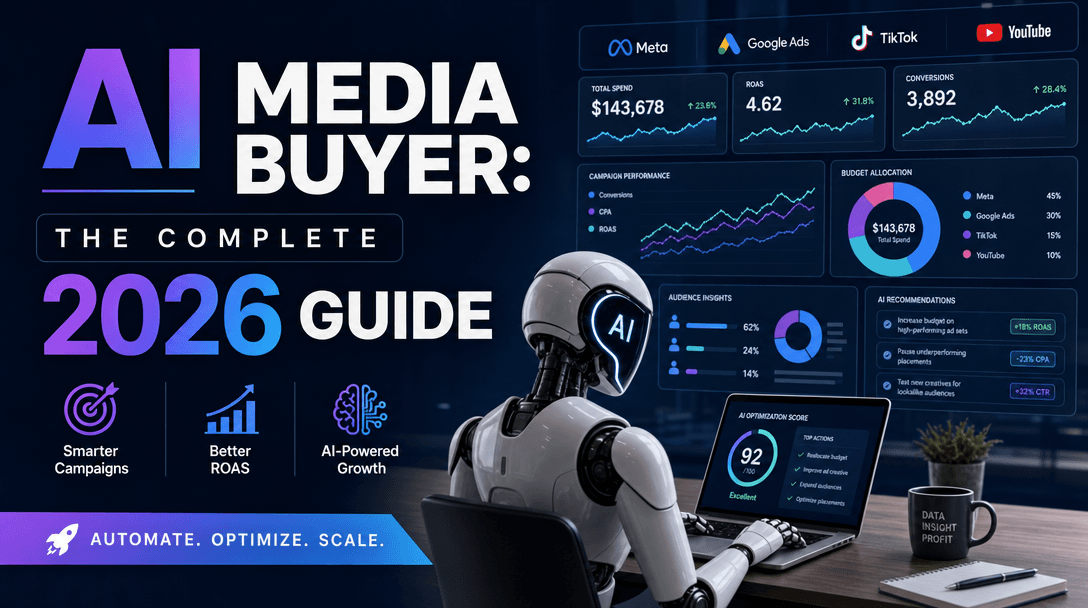
If you want the bigger picture first — what an AI media buyer is, how the operating loop works, and when to keep a human in the seat — start with the pillar: the complete AI media buyer guide. This page is the tool-selection chapter of that story.
Why the category is crowded (and confusing)
The demand is real. As of 2024, 60% of US ad buyers had used or planned to use AI-powered buying products, and programmatic ad spend is on track to reach roughly $725 billion by 2026. When that much money moves toward automation, every vendor in adjacent categories — bid management, creative generation, analytics, DSPs — repositions itself as an "AI media buyer." The label has stopped meaning one thing.
The friction is just as real. The same buyers report two dominant barriers: 62% cite setup complexity and 60% cite a lack of decision transparency. The two things that determine whether a tool earns its place — how fast it gets to value and whether you can see why it does what it does — are exactly the two things the marketing pages skip. So those are two of the columns we score.
To keep the comparison fair, every tool is rated on the same six dimensions:
- Best for — the team and use case it genuinely fits, not the broadest possible claim.
- Channels covered — which ad platforms it can actually operate, versus just report on.
- Automation depth — how much it decides and executes on its own, from suggestions to autonomous changes.
- Setup time-to-value — how long from sign-up to the first real autonomous optimization.
- Transparency — whether you can see and audit the reasoning behind each change.
- Entry price — the real starting cost, including where it is "custom" (read: enterprise sales call).
The three honest tiers
Not every "AI media buying tool" is competing for the same job. Lumping a free platform feature in with a $249/month optimization suite and an autonomous agent is how listicles mislead you. We sort the field into three tiers, and the right answer for most teams is a combination across them.
The first tier is platform-native automation: Meta Advantage+ and Google Performance Max — free features inside the ad platforms where most real "AI media buying" already happens. The second tier is point and cross-channel tools: Revealbot, Optmyzr, Madgicx, AdRoll, Smartly.io, Skai, Marin, and Improvado — third-party layers on top of the platforms that add rules, optimization, or reporting. The third tier is AI agents: tools like Soku (and newer entrants such as Creatify's June 2026 media-buyer feature) that operate your accounts through an open, conversational interface rather than a fixed dashboard.
The chart below plots the top tools on the two dimensions buyers say they care about most — automation depth and how fast a tool reaches live, autonomous optimization.
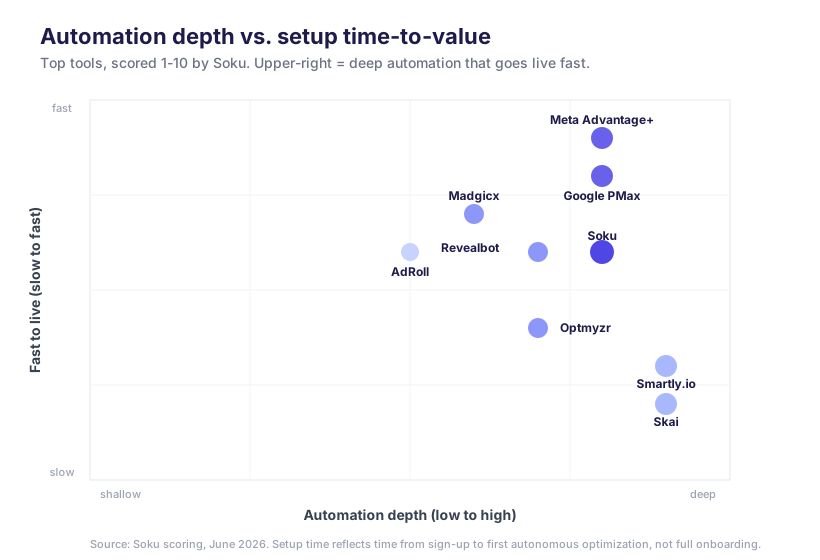
The pattern is the one the SERP never shows you: depth and speed are not the same axis. The deepest enterprise suites (Smartly.io, Skai) are the slowest to go live, while the free platform-native features are both deep and fast — which is why most teams should start there.
The comparison matrix (the one the SERP lacks)
Here is the original scoring. Automation depth and transparency are rated 1-10 by Soku in June 2026, judged on what the tool does by default, not what it can be configured to do with heavy onboarding. Setup time-to-value is the time from sign-up to the first autonomous optimization, not full implementation.
| Tool | Best for | Channels covered | Automation depth | Setup time-to-value | Transparency | Entry price |
|---|---|---|---|---|---|---|
| Meta Advantage+ | Meta-first DTC and ecommerce | Meta only | 8/10 | Minutes | 4/10 (black-box) | Free (inside Meta) |
| Google Performance Max | Google-first lead gen and retail | Google only | 8/10 | Minutes | 3/10 (black-box) | Free (inside Google) |
| Revealbot | Rule-based scaling on Meta/Google/TikTok | Meta, Google, TikTok, Snapchat | 7/10 | Hours-days | 8/10 (rules are visible) | ~$99/mo |
| Optmyzr | Google/Microsoft PPC power users | Google, Microsoft, Amazon | 7/10 | Days | 8/10 (you author the logic) | ~$249/mo |
| Madgicx | Meta-heavy ecommerce on a budget | Meta, Google | 6/10 | Hours | 6/10 | ~$44/mo |
| AdRoll | Retargeting + display for SMBs | Display, social, email | 5/10 | Hours | 6/10 | Free tier; from ~$36/mo |
| Smartly.io | Enterprise creative + media at scale | Meta, Google, TikTok, Pinterest, more | 9/10 | Weeks | 6/10 | Custom (enterprise) |
| Skai (formerly Kenshoo) | Omnichannel enterprise + retail media | Search, social, retail media, apps | 9/10 | Weeks | 6/10 | Custom (enterprise) |
| Marin Software | Large search/social portfolios | Search, social, ecommerce | 7/10 | Weeks | 7/10 | Custom (enterprise) |
| Improvado | Enterprise reporting + AI analytics | Reporting across 500+ sources | 4/10 (analytics, not buying) | Weeks | 8/10 | Custom (enterprise) |
| Creatify (media buyer) | Creative-led teams testing AI buying | Meta, TikTok (early) | 6/10 | Hours | 5/10 (new, evolving) | From ~$33/mo |
| Soku | Cross-channel teams who want to see the reasoning | Google, Meta (via MCP) | 8/10 | Hours | 9/10 (chat-native audit) | Usage-based |
A few honest reads. The free platform-native options score best on the speed-versus-depth tradeoff but worst on transparency — Meta and Google will not tell you why Advantage+ or Performance Max moved budget, and that opacity is the single biggest complaint among the 60% of buyers worried about decision transparency. The enterprise suites score highest on raw automation depth but demand weeks of onboarding and a custom contract. The independent rule engines (Revealbot, Optmyzr) are the most transparent because you author the logic — which is also their ceiling: they automate the rules you already know, not the ones you have not thought of yet.
Tier 1: Platform-native automation
This is where most AI media buying actually happens, and it is free.
Meta Advantage+ is Meta's suite of automated campaign products — Advantage+ Shopping, Advantage+ Audiences, and automated placements. For a Meta-first ecommerce brand it is genuinely strong: it consolidates ad sets, lets the algorithm find buyers across Meta's surfaces, and goes live in minutes. The weakness is transparency. You hand Meta the objective and budget and it returns results, but the "why" behind audience and budget shifts is a black box — when performance dips, you cannot easily tell whether it is creative fatigue, audience saturation, or an auction shift.
Google Performance Max is the equivalent on Google's side — one campaign type spanning Search, Shopping, YouTube, Display, Discover, and Maps. It is powerful, free, and the default now for many advertisers. The same caveat applies, more strongly: PMax is even more opaque than Advantage+, and the lack of channel-level and search-term visibility is a long-standing frustration. To understand PMax rather than just feed it, see our companion piece on how to automate media buying across Meta and Google.
The honest verdict on Tier 1: start here, because it is free and effective, but do not mistake "the platform is optimizing" for "I have visibility and control." Tiers 2 and 3 exist to add the transparency and cross-channel coordination these features lack.
Tier 2: Point and cross-channel tools
These are third-party layers that add automation, optimization, or reporting on top of the ad platforms.
Revealbot (~$99/mo) is the standout for rule-based automation across Meta, Google, TikTok, and Snapchat. You define triggers — pause an ad set when CPA exceeds X, scale a winner by 20% — and Revealbot enforces them around the clock. Its strength is transparency: every rule is visible and editable, so you always know why a change happened. Its limit is that it only automates the rules you write; it does not reason about strategy.
Optmyzr (~$249/mo) is a power-user PPC suite for Google, Microsoft, and Amazon. It is excellent at bid management, budget pacing, and surfacing optimization opportunities, with a strong audit trail. The weaknesses are price and scope: it is the most expensive entry point in this tier, and it is search-centric, so it is not the tool for a social-first brand.
Madgicx (~$44/mo) is the budget-friendly, Meta-heavy option for ecommerce, bundling automation, creative analytics, and audience tools. The low entry price is real, but features tier up quickly, and its depth on non-Meta channels is thin.
AdRoll (free tier; from ~$36/mo) remains a solid choice for SMB retargeting and display across web, social, and email. Its automation is shallower than the others here — it is more a unified ad manager than an autonomous optimizer — but the free tier and low entry price make it an easy on-ramp.
Smartly.io, Skai, and Marin are the enterprise heavyweights. Smartly.io fuses creative production with media buying across Meta, Google, TikTok, and Pinterest; Skai (formerly Kenshoo) spans search, social, retail media, and apps; Marin manages large search and social portfolios. All three have the deepest automation here — and all three are custom-priced, sales-gated, and measured in weeks of onboarding, overkill for any team under serious scale.
Improvado belongs here with an asterisk. It is often listed as an "AI media buying" tool, but it is really an enterprise marketing-data and AI-analytics platform: it tells you what is happening across 500+ sources, it does not buy media. Excellent for reporting, miscategorized as a buyer.
Tier 3: AI agents
This is the newest and fastest-moving tier — tools that operate your accounts through an open, conversational interface instead of a fixed dashboard.
Creatify shipped an AI "media buyer" feature in June 2026, extending its creative-generation roots into launching and managing campaigns on Meta and TikTok. It is early and worth watching, especially for creative-led teams that want generation and buying in one place. Being new, its automation depth and transparency are still evolving and channel coverage is limited — score it promising rather than proven.
Soku is the agent we build, and we will rate it the way we rate everyone else. Soku drives Google Ads and Meta Ads through MCP and operates as a conversational agent: you ask it to audit an account, diagnose a CPA spike, or reallocate budget, and it executes — then explains its reasoning in plain language. Its genuine strengths are cross-channel coordination (it sees Google and Meta in one context, plus analytics) and transparency: because it works through chat, every decision comes with an auditable rationale you can interrogate and override. That directly addresses the 62% setup-complexity and 60% transparency barriers that hold the category back.
Where is Soku weak? It is newer and smaller than the enterprise suites — it does not match the omnichannel breadth of a Skai or the scaled creative pipeline of a Smartly.io, and it focuses on Google and Meta rather than every retail-media and app network. If your buying lives mostly on TikTok or Amazon today, Soku is not yet your primary tool — we would rather say that than oversell. The honest fit: teams that want deep automation on Google and Meta with visibility into every decision, without an enterprise contract.
How to choose (a decision shortcut)
The right stack is almost always a combination, not a single winner:
- If you run on one platform and want results fast and free — use the native automation (Meta Advantage+ or Google Performance Max) and accept the transparency tradeoff.
- If you want enforced rules and an audit trail on a budget — add Revealbot (multi-channel) or Madgicx (Meta-heavy) on top.
- If you are a search-heavy PPC team — Optmyzr is the most capable, if you can justify the price.
- If you are enterprise with weeks to onboard and a custom budget — Smartly.io, Skai, or Marin.
- If you want cross-channel automation on Google and Meta with full visibility into the reasoning — an agent like Soku, which is built to make the "why" auditable rather than hidden.
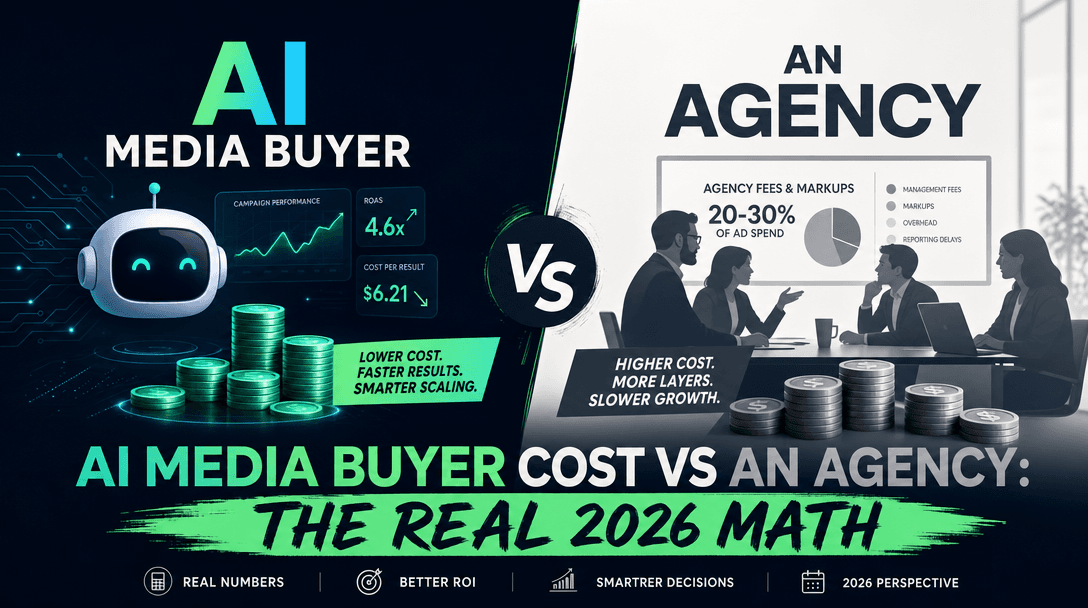
For the cost math behind this decision — tool fees versus agency retainers versus in-house — see AI media buyer cost versus agency. And if creative is your bottleneck rather than buying, our roundup of the best AI tools for Meta ad creatives covers the adjacent half of the stack.
FAQ
What is the difference between an AI media buying tool and platform-native automation?
Platform-native automation (Advantage+, Performance Max) lives inside a single ad platform, is free, and optimizes within that platform's walls. An AI media buying tool sits on top of one or more platforms to add rules, cross-channel coordination, reporting, or autonomous decision-making — and, in the case of agents, to make the reasoning visible. Most teams use both.
Which AI media buying tool is cheapest?
The cheapest real option is platform-native automation, which is free. Among third-party tools, Madgicx (~$44/mo) and AdRoll (free tier, from ~$36/mo) have the lowest entry points, with Revealbot at ~$99/mo. The enterprise suites (Smartly.io, Skai, Marin, Improvado) are custom-priced and almost always the most expensive.
Are these tools transparent about why they make changes?
It varies widely, which is why we scored it. Rule engines like Revealbot and Optmyzr are most transparent because you author the logic. Platform-native features are least transparent — Meta and Google rarely explain budget and audience shifts. Agents like Soku aim for the top of the scale by surfacing a plain-language rationale for every change. The gap matters: 60% of ad buyers cite transparency as a top barrier to trusting AI buying.
Can an AI tool fully replace a human media buyer?
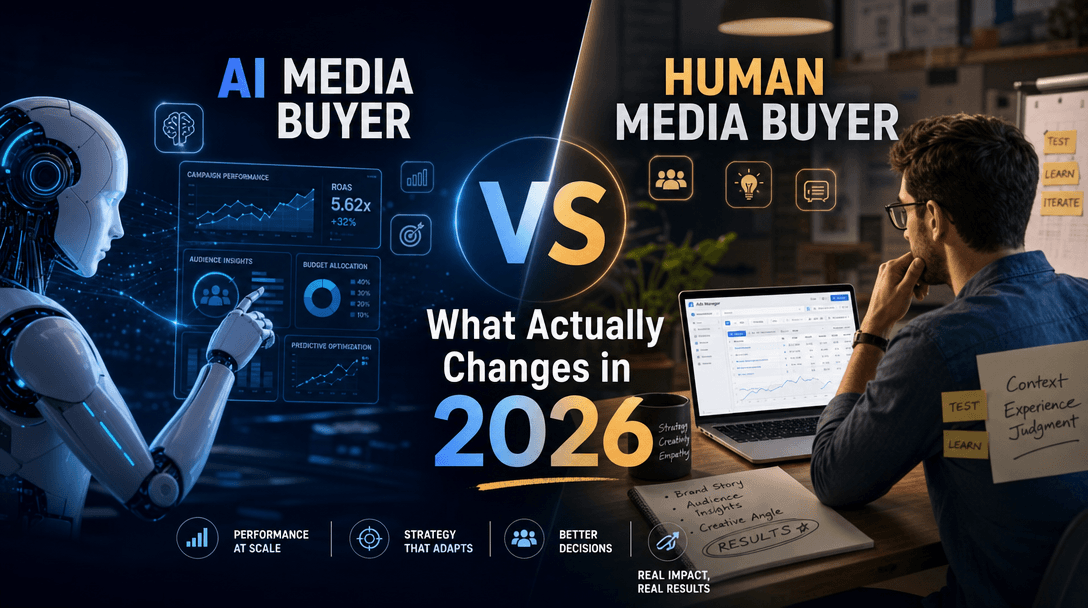
No — and any tool that claims it can is overselling. AI is strong at the high-frequency execution layer (bid and budget changes, anomaly detection, pacing) and weak at strategy, brand judgment, and accountability. The realistic model is human-set strategy with AI execution. The pillar guide covers where to keep a human in the loop in detail.
How long do these tools take to set up?
It ranges from minutes (platform-native features) to hours (Madgicx, Revealbot, agents like Soku) to weeks (enterprise suites like Smartly.io and Skai). Since 62% of buyers cite setup complexity as a barrier, time-to-value should weigh heavily in your choice — a deep tool you never finish configuring delivers less than a simpler one running today.
Related reading
- Supermetrics alternatives, ranked — the reporting-connector layer that feeds these tools, and what it costs
- Server-side tracking is now an AI bidding input — why signal quality decides how well any of this optimises
- AI Max vs PMax — the two Google automation surfaces these tools sit alongside
The bottom line
The "best" AI media buying tool depends on which job you are hiring it for. Start with free platform-native automation, add a transparent rule engine or an agent for the visibility and cross-channel coordination the platforms lack, and reserve the enterprise suites for genuine scale. Soku fits the teams that want deep automation on Google and Meta with an auditable reason behind every move — strong where it counts, honest about where it is still growing. Whatever you pick, judge it on the two things the listicles hide: how fast it gets to value, and whether you can see why it does what it does.