 Soku AI
Search has quietly split into two channels. The first is the one you know: ten blue links, a ranking, a click. The second answers the question before the user ever leaves the page. Google AI Overviews now reaches over 2 billion monthly users, ChatGPT serves 800 million people every week, and Gartner projects a 25% drop in traditional search volume by the end of 2026. When the answer engine does the summarizing, one question decides whether your brand exists in that channel at all: is your content the source it cites?
Generative Engine Optimization (GEO) is the discipline of earning that citation. This is the pillar guide — it maps the whole field, gives you the tactics that actually move citations, and points you to the deep dives when you want to go further. Where a traditional results page shows ten links, an AI answer typically names two to seven sources. GEO is the fight for those slots, and it is far more winnable than it looks — because most brands are still optimizing for a results page the AI never shows the user.

What Generative Engine Optimization Actually Is
Generative Engine Optimization is the practice of structuring your content, data, and brand presence so that AI answer engines — ChatGPT, Google AI Overviews, Perplexity, Claude, and Copilot — retrieve you, trust you, and cite you when they generate a response.
The mechanics come down to how these systems work. Most run on Retrieval-Augmented Generation (RAG): given a query, the engine retrieves candidate passages from the live web (or its index), then the language model writes an answer grounded in a few of them and attaches citations. Two independent decisions gate your visibility:
- Retrieval — does the engine pull your page into the candidate set at all? This is where classic SEO signals (indexation, relevance, authority) still matter.
- Citation — of the passages it retrieved, does the model choose yours to quote and attribute? This is the new, GEO-specific fight, and it is won at the passage level, not the page level.
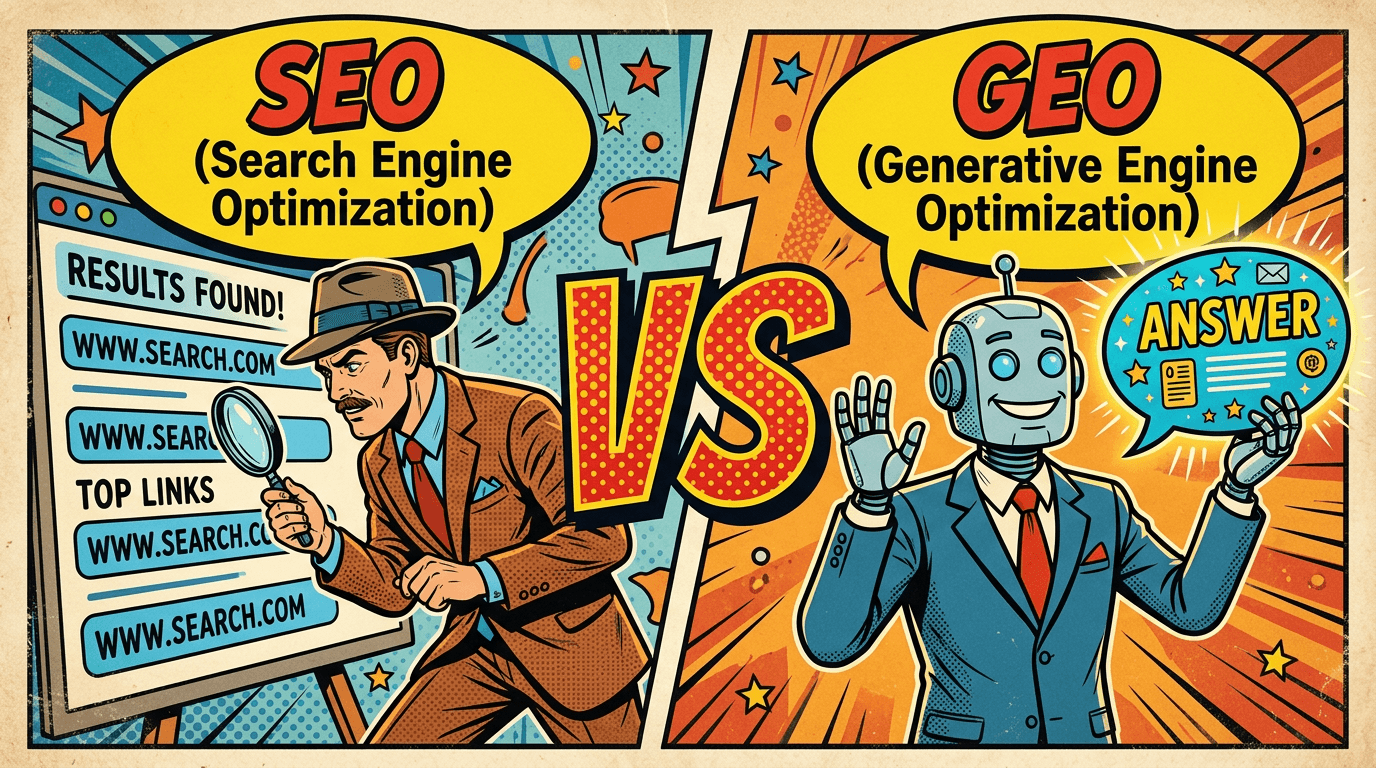
The practical consequence is that GEO is not "SEO with a new name." SEO optimizes a page to rank in a list. GEO optimizes passages to be extracted into an answer. A page can rank #3 on Google and never get cited by Perplexity, because the paragraph the model wanted to quote lived on a competitor's site in a cleaner, more self-contained form. For the full side-by-side, see our deep dive on GEO vs SEO — this guide assumes you know the difference and focuses on earning the citation.
How AI Engines Decide Which Sources to Cite
Before the tactics, you need the model's point of view. Analyses of what actually gets cited converge on a consistent picture:
- Direct answers win. Search Engine Land found that 72.4% of pages cited by ChatGPT contained a short, direct answer immediately after a question-style heading. The model extracts a chunk, not a page — the chunk has to stand on its own.
- Original information wins. An Ahrefs analysis found that a large majority of ChatGPT's most-cited pages lead with original research, first-hand data, or primary sources rather than rehashed summaries. Restating the consensus gives the model no reason to pick you over the ten identical pages next to you.
- Earned reputation wins. Ahrefs also found web mentions outperform backlinks roughly 3:1 as a predictor of AI Overview presence. The engine cares that authoritative sources talk about you, not just that they link to you.
- Fan-out coverage wins. AI engines decompose a question into sub-queries and answer each. Pages that rank for both the head query and its fan-out sub-queries are reported to be far more likely to appear in the final synthesized answer.
- Index presence gates everything. ChatGPT's web tool leans heavily on Bing's index; if you are absent there, you are invisible to a large share of citations regardless of how good the passage is.
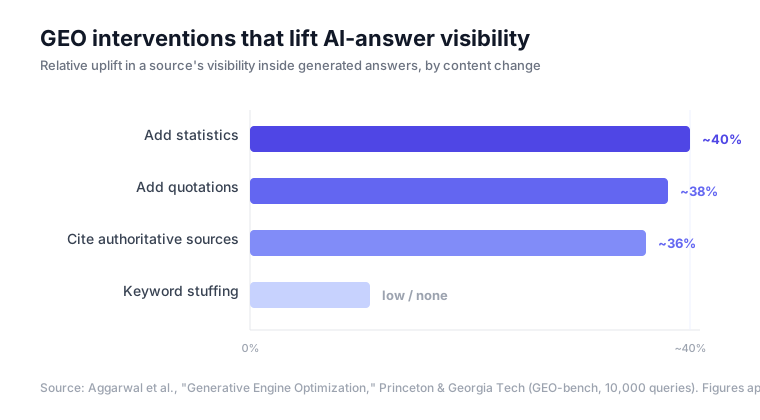
The single most cited piece of GEO research, the Princeton and Georgia Tech "Generative Engine Optimization" study (Aggarwal et al.), built a 10,000-query benchmark and tested nine optimization methods on real answer engines. Three interventions moved the needle hardest: adding relevant statistics, adding direct quotations, and citing authoritative sources — each lifting a source's visibility in generated answers by up to ~40%, and disproportionately helping pages that were not already the top organic result. That last detail is the whole opportunity: GEO lets a page that would never crack Google's top three still earn the citation.
The GEO Citation Stack: Seven Levers That Move Citations
Everything below is a lever on either retrieval or citation. Rank them by effort-to-impact for your situation; you do not need all seven on day one.
| Lever | Moves | Effort | First-order tactic |
|---|---|---|---|
| Answer-first passages | Citation | Low | 40–80 word answer capsules under question headings |
| FAQ + schema | Citation | Low | FAQPage JSON-LD on real Q&A, answer-first |
| Fact & quote density | Citation | Medium | ≥1 cited statistic per ~100 words |
| Entity authority | Retrieval | High | Consistent brand story across G2, LinkedIn, Wikipedia |
| Earned mentions | Retrieval | High | Digital PR, original data others cite |
| Product/enablement content | Citation | Medium | Docs & comparisons written to be quoted verbatim |
| Crawler + index access | Retrieval | Low | Allow GPTBot/PerplexityBot/ClaudeBot; be in Bing |
The rest of this guide goes deep on the three levers that most teams get wrong: formatting answers and FAQs to be quoted, writing product content AI assistants recommend, and detecting when the engine cites a competitor instead of you.
Lever 1: Format Answers and FAQs So AI Engines Quote Them
This is the highest-ROI, lowest-effort work in GEO, and almost nobody does it deliberately.
AI engines extract discrete text chunks, not whole pages. So the unit of GEO is not the article — it is the "answer capsule": a self-contained block, roughly 40 to 80 words, that leads with the answer and then adds the supporting context. If the model can lift your capsule and drop it into its response without editing, you are far more likely to be the citation.
The answer-capsule pattern:
- Open the section with the exact question a user would ask, phrased as an
H2/H3heading. - Immediately follow it with a one- to two-sentence direct answer — no throat-clearing, no "in today's fast-moving landscape."
- Then expand: the mechanism, a number, a caveat.
- Keep it extractable. If a sentence only makes sense after reading the previous paragraph, it fails as a capsule.
FAQ sections are answer capsules in their purest form, which is why they punch above their weight. Two rules make FAQs work for GEO rather than just for humans:
- Write real questions in the user's words. Pull them from People Also Ask, from Perplexity's related questions, and from your sales team's inbox — not invented marketing questions.
- Add
FAQPagestructured data (JSON-LD). Schema tells the engine "these are discrete Q&A pairs" and raises the odds your capsule is parsed as an extractable unit. Structured, marked-up Q&A is among the most consistently cited formats across ChatGPT, Perplexity, and AI Overviews.
One nuance worth stating plainly: schema is an amplifier, not a magic switch. It makes a genuinely good answer easier to extract; it will not rescue a vague one. The answer text carries the weight — the markup just removes friction. Formatted well, structural changes like these show up fast: Perplexity often reflects a rewrite within days, ChatGPT within a few weeks, and slower-moving surfaces like AI Overviews over a month or so.
Lever 2: Build Entity Authority and Earn Mentions
Retrieval is gated by whether the engine believes your brand is a thing in its category. That belief is assembled from signals scattered across the web, and consistency is the multiplier.
- Tell one story everywhere. Your one-line description, category, and value proposition should read the same on your site, LinkedIn, Crunchbase, G2, and Wikipedia. Contradictory descriptions make you a low-confidence entity the model hedges away from.
- Get on the review platforms the models trust. Brands with active, populated profiles on Trustpilot, G2, and Capterra are reported to be roughly 3× more likely to be cited by ChatGPT — these sites are dense, structured, and heavily crawled.
- Earn mentions, not just links. Because mentions beat backlinks ~3:1 for AI visibility, digital PR and original data that others reference is now a retrieval strategy, not just a brand one. A cited stat that spreads across ten industry articles teaches every engine that you are the primary source.
This is slower work, and it overlaps heavily with what you already do for SEO and PR. The GEO-specific addition is auditing for consistency and treating your review-platform presence as owned GEO real estate.
Lever 3: Write Product Content AI Assistants Recommend
Here is where GEO stops being a content-team abstraction and starts touching revenue. When a buyer asks Perplexity "what's the best tool to automate Google and Meta ads," the model answers from whatever product content it can quote. If your docs, comparison pages, and category explainers are written to be extracted, you get named in the recommendation. If they are marketing fluff, a competitor with cleaner enablement content gets named instead.
Practical rules for product content that gets quoted:
- State what you do in one extractable sentence, on every relevant page. "Soku is an AI marketing agent that connects to Google Ads, Meta, GA4, and Search Console and runs analysis, audits, and optimizations from one chat interface." The model can lift that verbatim. A hero headline like "Marketing, reimagined" cannot be.
- Publish honest, specific comparisons. Feature-by-feature tables ("supports X: yes/no", "setup time", "pricing model") are ideal extraction fodder — and when a comparison is even-handed, engines trust it more. Our ranked comparison of AI media-buying tools and the AI marketing tools overview are built this way on purpose.
- Answer "how does X work" and "how do I do Y" as standalone capsules. Buyers increasingly ask assistants these questions before visiting your site; the answer they get shapes the shortlist. Make the canonical answer yours.
- Cover the fan-out. A category has a head question and dozens of sub-questions (integrations, pricing, security, "vs" queries, use cases). Ranking for the sub-queries is what makes you show up in the head-query answer — this is the cluster strategy applied to product intent.
Ad and creative teams have a specific version of this: when you measure AI ad-creative ROI or publish original performance data, that first-hand data is exactly the "original information" AI engines prefer to cite. Proprietary numbers are a GEO asset, not just a case-study asset.
Detecting When AI Cites a Competitor Instead of You
You cannot optimize what you cannot see, and GEO's hardest problem is that the "SERP" is now generated fresh per user and per model. The failure mode is silent: an answer engine confidently recommends three competitors by name in response to a query you should own, and no dashboard tells you it happened.
Closing that blind spot is a four-step loop:
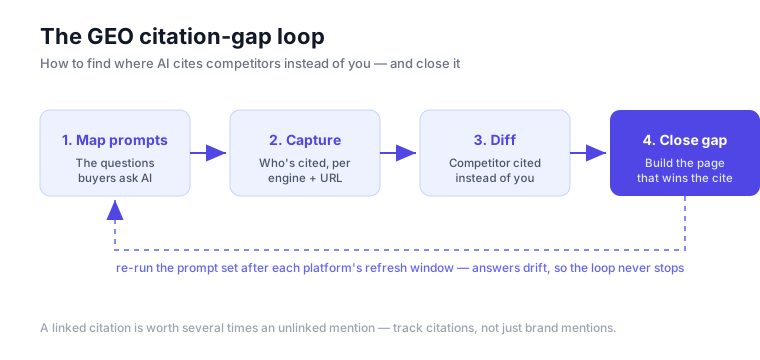
- Map the prompts that matter. Enumerate the real questions your buyers ask assistants across the journey — category ("best X for Y"), comparison ("A vs B"), and problem ("how do I fix Z"). This prompt set is your GEO keyword list.
- Capture the answers, per engine. Run each prompt through ChatGPT, Perplexity, Google AI Mode, and Claude and record who gets cited, which URL is the source, and the sentiment. Do it on a schedule — answers drift as indexes and models update. A growing category of citation-tracking tools automates this monitoring.
- Diff against competitors. For each prompt, the useful signal is not "am I mentioned" but "who is cited instead of me, and from which page." A competitor cited from a specific FAQ or comparison page is a precise, copyable target — you now know the exact content gap and the exact format that won.
- Close the gap, then re-check. Create or restructure the page that should have been cited (answer capsule, schema, a stat the competitor lacked), wait out the platform's refresh window, and re-run the prompt to confirm the citation moved.
Two measurement notes keep this honest. First, a linked citation is worth far more than an unlinked mention — click-through from a linked source is several times higher — so track citations, not just mentions. Second, because a large share of AI-search sessions end without any external click, citation share is often a truer scoreboard than referral traffic. You can be winning the answer and see little traffic; that is still winning.
Technical GEO Foundations (Don't Skip These)
None of the content work matters if the engines can't crawl or index you.
- Allow the AI crawlers. Check
robots.txtdoes not blockGPTBot,PerplexityBot,ClaudeBot, orGoogle-Extendedunless you have a deliberate reason. A single stray disallow line can erase you from a whole engine. - Ship the right schema.
Article,Organization,FAQPage, andHowToin JSON-LD help engines parse structure and extract capsules; pages carrying several complementary schema types are cited at meaningfully higher rates. - Be in Bing's index. ChatGPT's browsing leans on it. Verify coverage in Bing Webmaster Tools, not just Google Search Console.
- Consider
llms.txt. An emerging convention: a root-level file that points AI systems to your most important, canonical content. Low cost, plausibly upside, no downside. - Keep it fresh. Engines weight recency. Update cornerstone pages on a cadence and show a visible "last updated" date — quarterly is a reasonable default for competitive topics.
Measuring GEO: The KPIs That Matter
Traditional analytics under-count AI's impact because so much of it is zero-click. Track a GEO-specific layer alongside your SEO KPIs:
| Metric | What it tells you | How to get it |
|---|---|---|
| Citation frequency | How often each engine cites you | Prompt monitoring, per platform |
| Share of voice | Your citations vs. named competitors | Diff of the prompt-set results |
| Citation source pages | Which of your URLs earn citations | The source links in captured answers |
| Answer accuracy / sentiment | Whether the engine represents you correctly | Manual review of captured answers |
| AI-referred traffic & conversion | Downstream value of the citations you do win | GA4 with AI-source segmentation |
The mindset shift: in a zero-click channel, being the cited source is the win, even when the click never comes. Measure the citation first, the traffic second.
The GEO Operating Loop — and How Soku Fits
GEO is not a project you finish; it is a loop you run: map prompts → structure content → earn mentions → measure citations → find the competitor gaps → repeat. The teams that win treat it like paid media — always-on, always measured, always reallocating effort to what's working.
That measurement layer is where most teams stall, because AI visibility, organic performance, and paid results live in separate tools. This is exactly the seam Soku sits on. Soku's AI marketing agent connects to your full stack and gives you the cross-channel picture GEO needs:
- See AI-referred traffic in context alongside organic, paid, and social, inside one attribution view.
- Spot the citation gaps — where answer engines recommend competitors on queries you should own — so you know exactly which page to build next.
- Turn data into next steps, not just charts: "three competitors are cited on this topic and you have no page addressing it." The same audit-with-an-AI-agent muscle that finds waste in an ad account finds gaps in your AI-search coverage.
The brands winning AI search are the ones who can see the whole board. GEO is how you earn the citation; a connected data layer is how you know whether you did.
Where to Go Next (Deep Dives)
This pillar is the map. Follow the spoke that matches your intent:
- Understand the discipline vs. classic search → GEO vs SEO: How to Get Your Brand Into AI Answers — the full tactical comparison and 7-strategy playbook.
- Monetize the AI-search channel → ChatGPT Ads: Everything You Need to Know — how paid placements work inside the assistant.
- Pick tools that produce quotable data → Best AI Media-Buying Tools and AI Marketing Tools.
- Run the loop with an agent → Marketing AI Agents and Google Ads Audit with an AI Agent.
Frequently Asked Questions
What is Generative Engine Optimization (GEO)?
GEO is the practice of structuring your content, data, and brand presence so AI answer engines — ChatGPT, Google AI Overviews, Perplexity, and Claude — retrieve and cite you when generating answers. Where SEO optimizes a page to rank in a list of links, GEO optimizes passages to be extracted into the answer itself, competing for the two to seven sources an engine typically cites.
Is GEO replacing SEO?
No. GEO adds a layer; it does not remove one. Retrieval by AI engines still depends on classic SEO signals like indexation and authority, and most GEO best practices — structured content, E-E-A-T, freshness — reinforce your SEO at the same time. The GEO-specific additions are answer-capsule formatting, earned mentions over backlinks, AI-crawler access, and citation tracking as a KPI. See GEO vs SEO for the full comparison.
How do I get cited by ChatGPT and Perplexity?
Lead sections with a direct 40–80 word answer under a question heading, add FAQPage schema, back claims with cited statistics (the highest-impact single intervention in the Princeton GEO study), earn brand mentions across authoritative sites, and make sure GPTBot and PerplexityBot can crawl you. Structural fixes tend to surface in Perplexity within days and ChatGPT within a few weeks.
How do I know if AI is citing my competitors instead of me?
Build a set of the prompts your buyers actually ask, run them through each engine on a schedule, and record who gets cited and from which URL. The signal that matters is who is cited instead of you and from what page — that names the exact content gap. Citation-tracking tools automate the monitoring, but the loop (map prompts → capture answers → diff → close the gap) is the durable part.
Does FAQ schema actually help you get cited?
Yes, but as an amplifier, not a magic switch. FAQPage schema tells engines your content is discrete, extractable Q&A, which is one of the most consistently cited formats — but the answer text still has to be a genuinely good, self-contained capsule. Schema makes a strong answer easier to extract; it will not rescue a vague one.
How do I measure GEO if AI answers don't drive clicks?
Measure the citation, not just the click. Track citation frequency per engine, your share of voice versus named competitors, which of your URLs earn citations, and answer sentiment — alongside AI-referred traffic in GA4. Because many AI-search sessions end without an external visit, citation share is often a truer scoreboard than referral traffic alone.
Key Takeaways
- GEO is the fight for the 2–7 sources an AI answer cites — a far more winnable contest than page-one Google, and one most brands aren't yet playing.
- The unit of GEO is the answer capsule, not the article: a 40–80 word, answer-first block the model can lift verbatim. FAQ +
FAQPageschema is the purest form. - Original information and cited statistics win — the Princeton GEO study found adding stats, quotes, and citations each lifted visibility by up to ~40%, especially for non-top-ranked pages.
- Mentions beat backlinks ~3:1 for AI visibility; entity consistency and review-platform presence are retrieval levers.
- Product content is a GEO surface — write docs and comparisons to be quoted, and you get named in the recommendation.
- Detect the competitor citation gap by monitoring your prompt set per engine; who's cited instead of you, and from what page, is your content roadmap.
- Measure citations, not just clicks — in a zero-click channel, being the cited source is the win.
The answer engines are already deciding which brands exist in their responses. GEO is how you make sure yours is one of them — and the sooner you run the loop, the more of those scarce citation slots you claim before the field fills in.