 Soku AI
Almost every guide on agency pricing does the same trick: it lists the models — retainer, percentage of spend, performance — explains them in the abstract, and then refuses to tell you a single number. "It depends" is technically true and completely useless when you're staring at a blank proposal trying to decide whether to write $1,500 or $5,000.
This guide gives you the numbers. They're typical ranges drawn from how paid-media agencies actually price in 2026 — defensible starting points, not guarantees — and a framework for moving inside those ranges with confidence. If you're earlier in the journey and want the whole picture first, for the complete overview, see How to Start an AI Ads Agency; this post is the pricing deep-dive that pillar points to.
The one mistake that makes pricing impossible
Before the models, the principle. The agencies that struggle to price are pricing against the wrong thing: their cost (what does it take me to deliver this?) or their hours (how long will it take?). Both anchor your fee to your effort, which is exactly backwards — and it's especially backwards for an AI-agent agency, where your effort and your cost are both low.
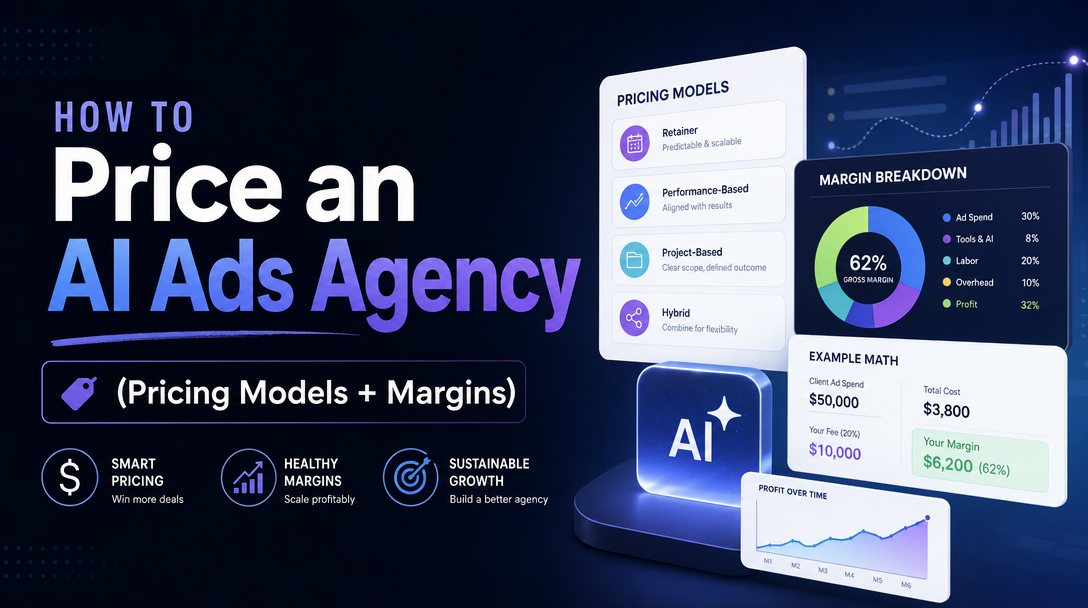
Price against the value of the spend you improve. A client running $50,000/month through paid channels and getting a 20% lift in ROAS is $10,000/month better off because of you. Against that, a $2,500 fee is a rounding error — and a $4,000 fee is still an easy yes. Now run the same logic on a client spending $3,000/month: the value you can create is small, so the fee has to be small, and the account may not be worth taking. The math tells you both your price and which clients to chase. This is the core of value-based pricing: you assess the business impact you'll create and price as a fraction of it, not as a multiple of your hours.
With that anchor set, here are the three core models.
Model 1 — The flat retainer
A fixed monthly fee for a defined scope. It's the most common model in the market — by one 2026 industry survey roughly 78% of digital agencies use retainers as their primary structure — because it's predictable for both sides. The client budgets one line item; you get recurring revenue you can forecast.
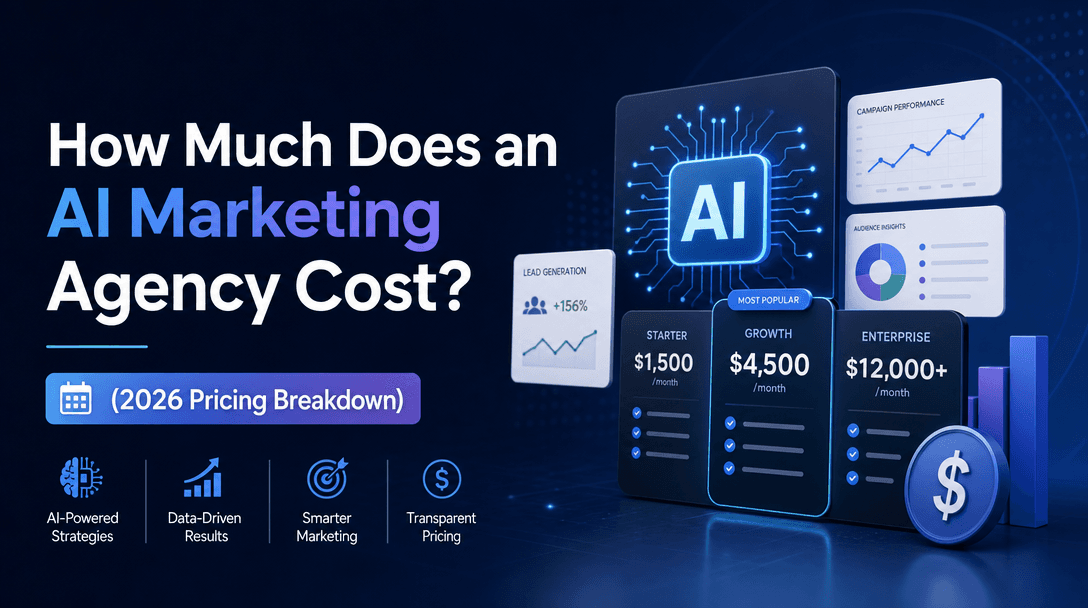
Typical ranges for a paid-media retainer in 2026:
- SMB / single channel: $1,500–$3,000/month. One platform (Meta or Google), modest spend, a focused scope — creative refreshes, campaign management, monthly reporting.
- SMB-to-mid / multi-channel: $3,000–$5,000/month. Two or more platforms, higher spend under management, weekly optimization and reporting, a real strategy cadence.
- Mid-market and up: $5,000–$15,000+/month. Significant spend, full-funnel work, dedicated creative volume, and a service level that justifies the premium.
What justifies the higher end of any band: more spend under management (more value at stake), more channels (Meta + Google + ChatGPT Ads is three surfaces to run and reconcile), creative volume (the platforms now demand a constant stream of new assets), reporting depth (a board-ready dashboard vs. a screenshot), and response time (a same-day SLA is worth more than "we'll get to it"). When a prospect pushes on price, you don't discount — you move them down to a lighter scope at a lower band, or you justify the number with the value at stake.
The retainer's weakness is that it doesn't move when the account does. If their spend triples, your fee is flat — you've capped your own upside. That's the gap the next model closes.
Model 2 — Percentage of ad spend
Instead of a fixed fee, you charge a percentage of the media budget you manage. The industry-standard band is 10–20% of monthly ad spend, with the rate sliding down as budgets rise — bigger accounts negotiate lower percentages because the absolute dollars are still large. HawkSEM and other 2026 pricing guides put most performance agencies at 15–20%, dropping toward 10% on larger spend.
The math is simple, which is why clients like it:
| Monthly ad spend | At 15% | At 12% (volume rate) |
|---|---|---|
| $10,000 | $1,500 | $1,200 |
| $25,000 | $3,750 | $3,000 |
| $50,000 | $7,500 | $6,000 |
| $100,000 | — | $12,000 |
The pro: you're aligned with scale. When the account grows, your fee grows with it automatically — no renegotiation. It also frames your fee as a fraction of their budget rather than a standalone cost, which is psychologically easier to approve.
The con — and the trap: percentage of spend caps you to the client's budget and can misalign incentives. You earn more when they spend more, not necessarily when they spend better — and a client who notices this will ask why you'd ever recommend cutting an inefficient campaign. On small accounts it also under-prices the real work: managing $8,000/month at 15% pays $1,200, often below what the account actually costs you in attention. That's why most operators put a floor under the percentage ("15% of spend, minimum $2,000/month"), which quietly turns this into a hybrid.
Model 3 — Hybrid (base retainer + performance bonus)
The model most sophisticated agencies converge on. A base retainer covers strategy, account management, and the floor of guaranteed work; a percentage of spend or a performance bonus rides on top and rewards growth. A common shape:
$2,000/month base + 10% of ad spend above $20,000 + a 10% bonus on incremental revenue over an agreed baseline.
The base keeps your lights on regardless of how the month goes; the variable layer aligns you with the client's outcome and gives you uncapped upside if you perform. It's the fairest model on paper and the one clients trust most once they understand it — we both win when the account wins.
The cost of the hybrid is complexity. It only works when attribution is clean: a performance bonus tied to "incremental revenue over baseline" requires both sides to agree on the baseline and trust the tracking. Don't offer a results-based layer until your conversion tracking is solid — a bonus you can't measure is a fight you'll have in month three. Start clients on a clean base + percentage, and add the revenue bonus once you've earned the data access and the trust.
The three models, side by side
| Model | How you charge | Best when | Main risk |
|---|---|---|---|
| Flat retainer | Fixed monthly fee for a set scope ($1,500–$5,000+ for SMB-to-mid) | Predictable scope; client wants budget certainty; you're newer and need forecastable revenue | Fee stays flat while the account grows — you cap your own upside |
| Percentage of spend | 10–20% of managed media budget, sliding down as spend rises | Larger accounts where spend (and value) scales; you want automatic upside | Misaligned incentives; under-prices small accounts; needs a fee floor |
| Hybrid (base + bonus) | Base retainer + % of spend and/or bonus on incremental revenue | Mature relationship, clean attribution, both sides want shared upside | Complexity; a results bonus is only as trustworthy as the tracking behind it |
There's no single right answer — the right model depends on the account's spend level, your trust with the client, and how confident you are in the data. A practical default: start most clients on a flat retainer or base-plus-percentage, and graduate your best accounts to a hybrid with a revenue bonus once you've proven the numbers.
The margin advantage: why an AI-agent agency can win on price
Here's where an AI ads agency breaks the old rules — and the reason pricing is a strategic lever for you, not just an admin task.
In a traditional agency, delivery is labor. Every handful of accounts needs another media buyer, designer, or analyst, so your cost of goods rises with your revenue and gross margins stay thin — service firms generally treat a 50% gross margin as a healthy baseline. In an AI-agent agency, the execution — creative generation, campaign launch, optimization, reporting — runs on software. Your marginal cost to serve one more client is mostly the tooling, not another hire. That collapses your delivery cost and pushes your gross margin well above the traditional band.

That single structural fact gives you a pricing wedge most incumbents can't match. You can price at or below a traditional agency — undercutting their retainer to win the account — and still keep a far larger share of each dollar, because your delivery cost is a fraction of theirs. The incumbent can't follow you down without going underwater, because their costs are people. AI-first agencies routinely deliver more output at meaningfully lower cost than human-only teams — and that surplus is yours to spend on margin, on more clients, or on a sharper price.
The discipline this demands: do not price to your cost. Your software cost is low — that's your margin, not a reason to charge $400/month. Price to the value you create and the market you compete against; let the low delivery cost show up as the margin you keep, not as a discount you give away for free.
How to package this into tiers
Three tiers convert better than one price, because they let the buyer self-select and they anchor your real offer in the middle. A clean structure for a paid-media agency:
| Tier | Scope | Indicative price |
|---|---|---|
| Launch | One platform, core campaign management, monthly creative refresh, monthly report | $1,500–$2,500/month |
| Growth (most popular) | Two-plus platforms, weekly optimization, ongoing creative volume, weekly reporting, strategy cadence | $3,000–$5,000/month |
| Scale | Full-funnel across all surfaces, high creative throughput, performance bonus on results, priority SLA | $5,000+/month or base + % of spend |
Mark the middle tier "most popular." Most buyers avoid the cheapest option (they read it as risky) and the most expensive (it reads as overkill), so a well-built middle tier is where the majority land — and you've designed it to be your best-margin offer. Each tier should map to a clear jump in value, not just in hours: more channels, more creative, deeper reporting, faster response.
How to present price to a client
Pricing is half the number and half how you frame it. A few rules that hold across every model:
- Lead with value, then price. Open the conversation with the outcome — "here's the CPA we think we can hit and what that's worth to you" — before the number. The fee should land after the prospect already believes the value, so it reads as a fraction of upside, not a standalone cost.
- Anchor against their spend, not your effort. "You're putting $50k/month into ads; our fee is 6% of that to make the other 94% work harder" beats any breakdown of your hours.
- Offer tiers, not a single take-it-or-leave-it price. A choice between three options changes the question from "yes or no" to "which one," and that's a far better conversation to be in.
- Never discount the number — adjust the scope. When a prospect says it's too expensive, move them to a lighter tier. Cutting price for the same scope teaches them your number was never real.
- Don't promise a result you haven't earned. Quote what you'll do and the value at stake, not a guaranteed ROAS you haven't seen the account to support. Honesty is part of the moat.
A simple decision rule
If you want a default to start from:
- New agency, SMB clients, want predictability → flat retainer in the $1,500–$3,000 band, scoped tightly.
- Larger accounts, spend that scales → percentage of spend (10–20%) with a minimum fee floor.
- Mature relationship, clean tracking, want shared upside → hybrid: base retainer + percentage and/or a revenue bonus.
Whatever you pick, set it against the value of the spend you improve, package it into three tiers, and let your low delivery cost show up as margin — not as a discount. That's the whole game.
Where to go next
- How to Start an AI Ads Agency — the pillar playbook: niche, offer, stack, pricing, and first clients.
- How to get your first clients for an AI ads agency — the outbound and paid-audit-to-retainer motion that fills the pipeline you just priced.
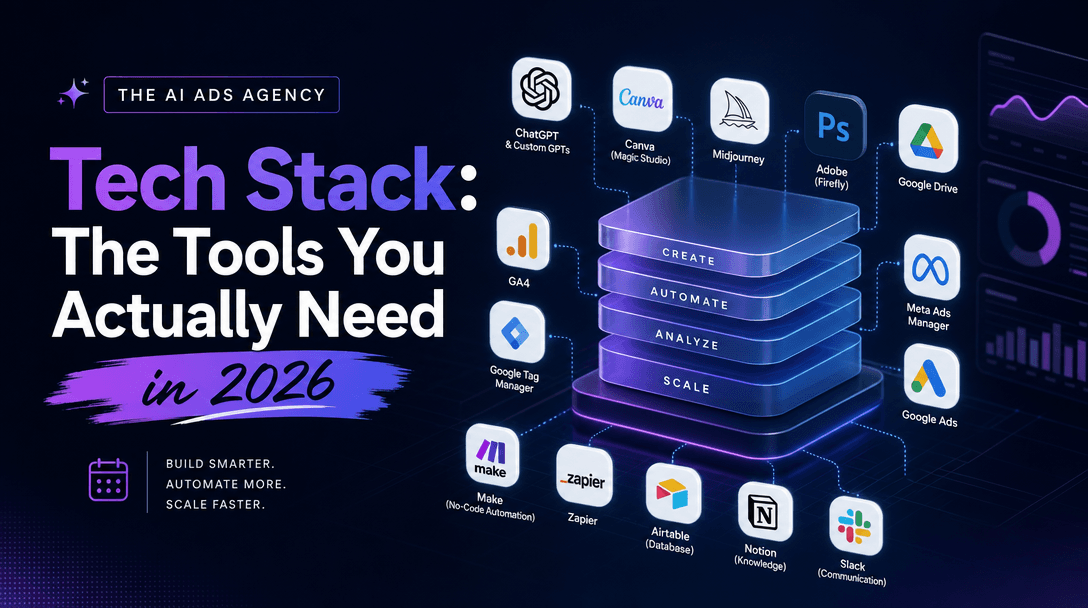
- The AI ads agency tech stack — the four-layer stack, including the clean conversion tracking a performance bonus depends on.
- How to start a ChatGPT ads agency — operating on OpenAI's new ad surface, the highest-opportunity platform to price into right now.
How Soku fits
Soku is the AI ads agent that makes this margin model real. It connects to your ad platforms, generates and iterates creative, launches and optimizes campaigns, and produces client-ready reporting — across every account you run, from one workspace. That's what keeps your delivery cost a fraction of an incumbent's, which is exactly what lets you price below them and still keep more. It's free to start, so your first retainer is close to pure margin.
FAQ
What should I charge my first client?
For an SMB account, a $1,500–$3,000/month flat retainer is a defensible starting range. Scope it tightly to one platform and a clear deliverable, and tie the number to the value of their ad spend rather than to your hours.
Is percentage of spend or a flat retainer better?
Flat retainers are more predictable and better when you're new or the scope is fixed. Percentage of spend (10–20%) aligns you with growth and is better on larger accounts — but add a minimum fee floor so small accounts don't under-pay. Many agencies end up with a hybrid of both.
How much should an AI ads agency charge versus a traditional one?
You can charge at or below a traditional agency and still keep more, because your delivery runs on software rather than headcount. The discipline is to price to the client's value and the competitive market — not down to your low cost, which would give your margin away for free.
What gross margin should I expect?
Traditional service agencies target around a 50% gross margin. Because an AI-agent agency's delivery cost is mostly tooling, margins can run materially higher — the illustrative model above shows roughly 70% at a $3,000 retainer. Treat that as a typical shape, not a promise; your real margin depends on niche, spend levels, and how much you automate.
When should I add a performance bonus?
Only once your conversion tracking is clean and both sides agree on the baseline. A results bonus you can't measure cleanly becomes an attribution dispute. Start on a base retainer or base-plus-percentage, then graduate your best, best-instrumented accounts to a revenue bonus.