Soku AI
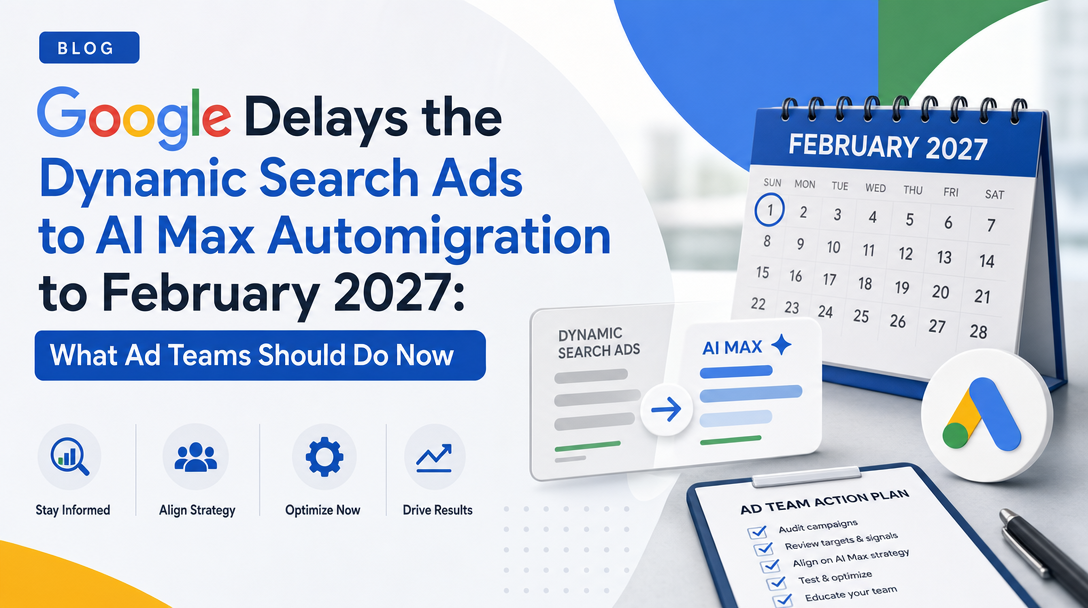
Google just handed every search advertiser five extra months. On June 11, the company confirmed it is pushing the automatic migration of Dynamic Search Ads (DSA) campaigns to AI Max for Search from September 2026 to February 2027 — and, in a reversal of the earlier phase-out, it is restoring the ability to create new DSA campaigns on June 15, 2026.
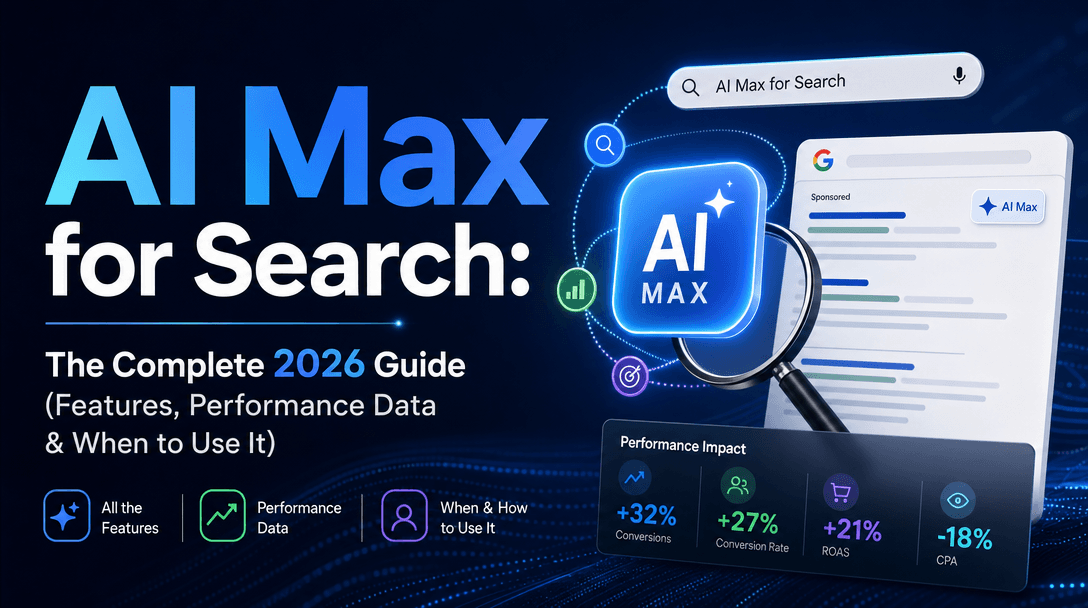
If you run Google Ads at any scale, this is not a footnote. AI Max is becoming the default surface for Search, and the DSA to AI Max migration was set to be automatic. The delay buys you a real testing window - but only if you use it deliberately instead of waiting for the deadline to make the decision for you. New to AI Max? Start with our complete AI Max for Search guide, follow the AI Max setup checklist, then use the Google Ads MCP guide to monitor DSA-vs-AI-Max experiments with an agent.
Here's the new timeline, the performance data that explains why advertisers pushed back, and a concrete plan for the runway.
The new timeline
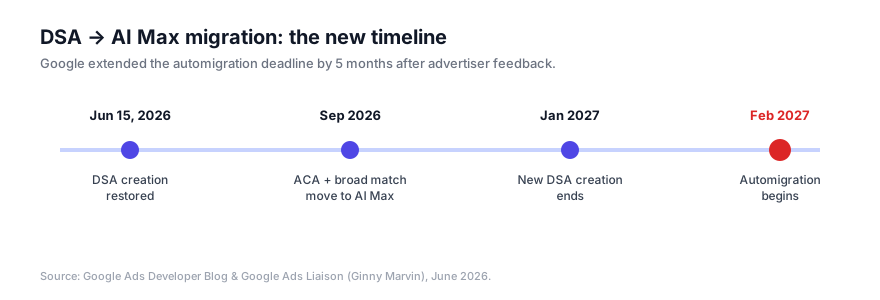
Four dates matter now:
- June 15, 2026 — DSA campaign creation and editing are restored after being curtailed earlier this year. You can build and run DSAs again.
- September 2026 — Unchanged: Automatically Created Assets (ACA) and campaign-level broad match settings still transition to AI Max as originally planned.
- January 2027 — The ability to create _new_ DSA campaigns ends permanently.
- February 2027 — Automigration begins for any remaining active DSA campaigns; they are upgraded automatically to Performance Max or AI-powered Search.
Google Ads Liaison Ginny Marvin framed the move as a direct response to feedback: _"We've heard your feedback loud and clear: you need more time to transition from Dynamic Search Ads (DSA) to AI Max. To give advertisers plenty of runway and not interfere with the busy Q4 period, we are shifting the DSA automigration deadline to February 2027."_ The Q4 detail matters — the original September date would have forced a migration straight into peak holiday spend.
What AI Max for Search actually is
AI Max for Search is Google's bundle of AI-driven targeting and creative features layered onto Search campaigns. It combines landing-page signals with real-time intent signals, ad copy, and audience data, and ships with search term matching, text customization, and final URL expansion enabled by default. It is now the default for new Search campaigns.
In other words, it is DSA's logic — match queries to your site, generate headlines dynamically — pushed further toward full automation, with the manual controls advertisers relied on either removed or on by default. That shift is exactly what the extra runway is for.
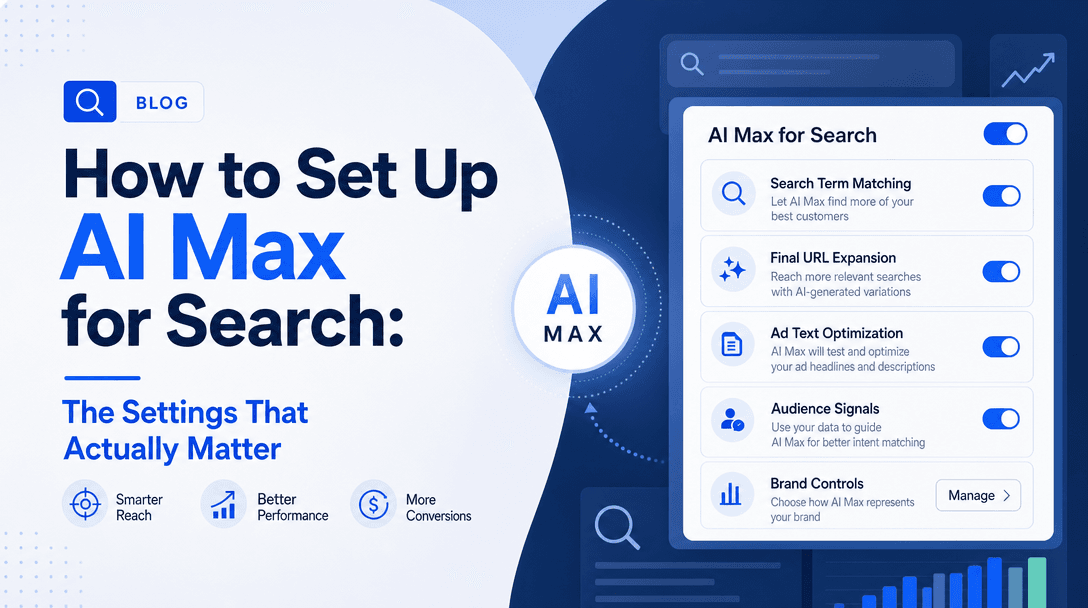
If you are still deciding which automated campaign type should inherit your DSA spend, the fuller comparison lives in AI Max vs Performance Max, and the hands-on configuration walkthrough is in How to Set Up AI Max for Search.
Why advertisers wanted more time
The pushback wasn't reflexive. Independent testing through late 2025 raised real performance questions about AI Max in its current form.
In a widely cited November 2025 test, analyst Xavier Mantica measured AI Max cost per conversion at $100.37 versus $43.97 for phrase match — more than double. Other independent tests reported roughly 35% lower ROAS for AI Max against traditional match types. Notably, Google itself revised its own headline claim down from "14% more conversions" to 7% — still positive, but a meaningful walk-back.
None of this means AI Max is bad. It means AI Max is uneven — strong on some accounts and query mixes, expensive on others — and that handing it your entire DSA footprint sight-unseen is a real risk. That is the case for testing before February 2027, not after.
What ad teams should do with the runway
The delay is only valuable if you treat it as a structured test window. A practical plan:
- Audit your DSA footprint now. Inventory which campaigns, ad groups, and spend currently sit in DSA. That's the surface that will migrate automatically if you do nothing.
- Run side-by-side, not all-in. With DSA creation restored, you can run controlled experiments — duplicate a DSA campaign as AI Max and split traffic — instead of betting the whole account on the automatic switch.
- Benchmark on YOUR metrics. CPA, ROAS, and conversion quality on your own data beat any vendor headline. The independent numbers above are a reason to test, not a verdict for your account.
- Migrate voluntarily where it wins. Google's one-click migration tools preserve historical reporting and campaign learnings — so where AI Max actually performs, move on your schedule, before the forced February date.
- Fix API and automation workflows before January 2027. If you create DSA campaigns programmatically (or via the Google Ads API and MCP tooling), those paths stop working when new DSA creation ends. Update them now, not in the last week.
- Watch the September 2026 date too. ACA and broad-match settings move to AI Max regardless of the delay — that change is _not_ postponed.
This is the same discipline that wins on Performance Max creative testing: treat the algorithm as something you measure and feed, not something you flip a switch on and hope.
How Soku fits
The hard part of an eight-month testing window isn't knowing you should test — it's actually running the experiments, week after week, across every campaign, while the rest of the account keeps moving. That's where an ad-automation agent earns its place.
Soku connects to your Google Ads account through the Google Ads MCP and can stand up DSA-vs-AI-Max experiments, pull the side-by-side CPA and ROAS on your own data, and flag which campaigns are safe to migrate early versus which need the full runway. Instead of one rushed audit before the deadline, you get a continuous read on where AI Max actually performs for _your_ account — so February 2027 arrives as a confirmation, not a surprise.
FAQ
Is DSA going away? Yes. New DSA creation ends in January 2027, and remaining DSA campaigns are automatically migrated to AI Max or Performance Max starting February 2027. The delay extends the runway; it does not cancel the migration.
Can I create new DSA campaigns right now? Yes — creation and editing were restored on June 15, 2026, and remain available until January 2027.
Did anything _not_ get delayed? Correct: the September 2026 transition of Automatically Created Assets and campaign-level broad match settings to AI Max is unchanged.
Should I just wait for the automigration? Only if you're comfortable letting Google migrate your spend with no testing. Given the independent performance data, running side-by-side experiments before the deadline is the lower-risk path.
_Sources: Google Ads Developer Blog, Search Engine Land, PPC Land._