 Soku AI
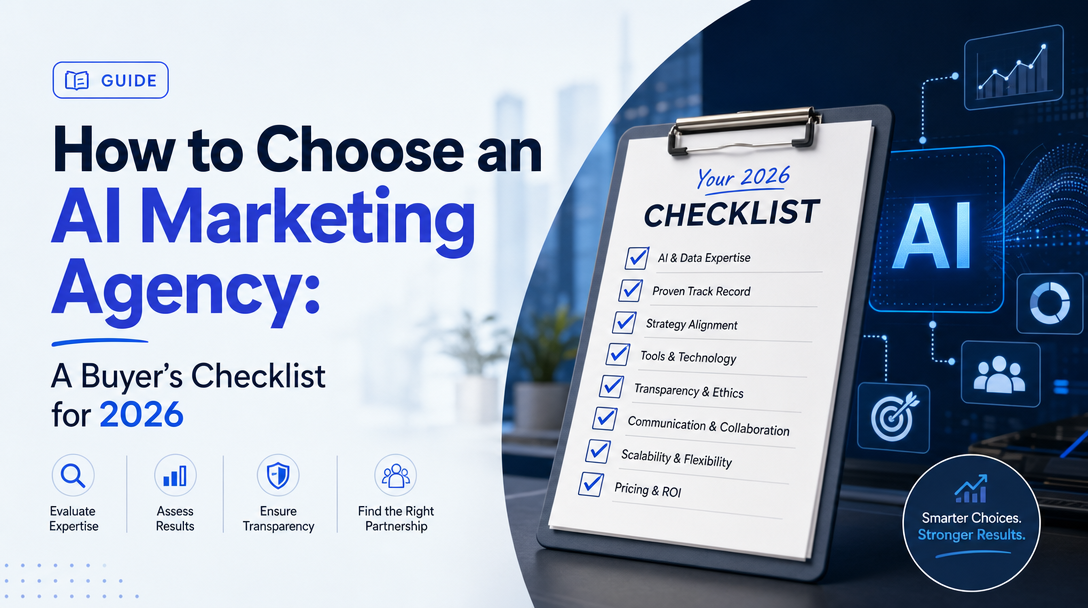
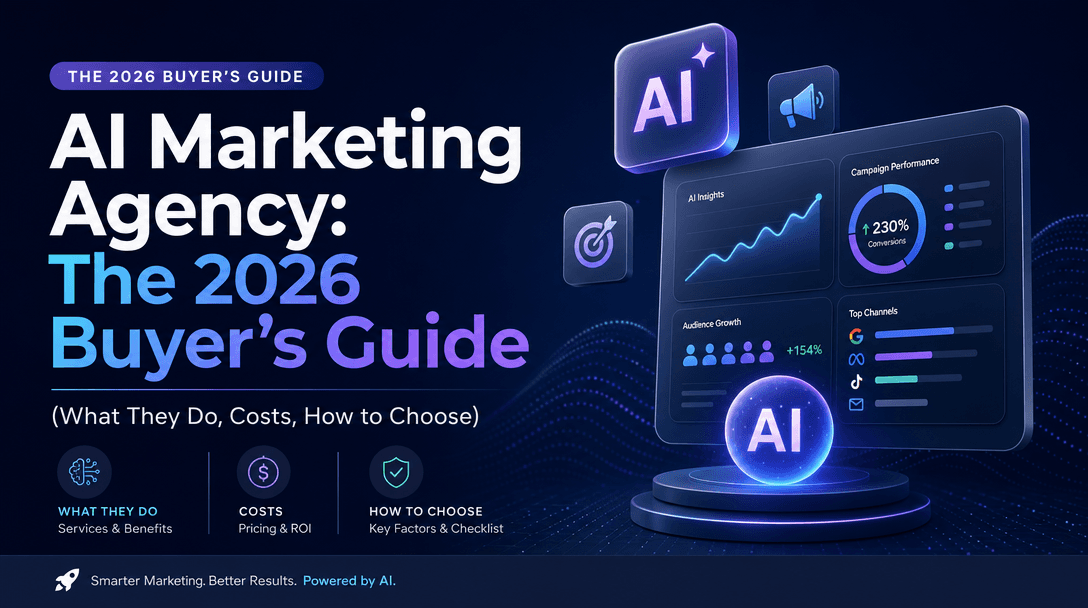
The hard part of hiring an AI marketing agency in 2026 isn't finding one — it's that they all sound identical. Every landing page promises AI-powered results, 24/7 optimization, and a fraction of the cost. This post gives you a repeatable way to cut through that: a weighted scorecard across the six criteria that actually predict a good engagement, plus the green and red flags that separate a real AI agency from a traditional shop with an AI sticker on it.
This is the vetting spoke of our AI Marketing Agency buyer's guide — start there for the full overview of the model. It targets "how to choose an ai marketing agency" (vendor selection). If you're still deciding whether AI is right at all, read AI Marketing Agency vs Traditional Agency first; if you're building the budget, see How Much Does an AI Marketing Agency Cost?.
Disclosure: Soku is an AI ad-automation agent, so we're describing the criteria we'd want a buyer to hold us to. The scorecard below is the one we'd use.

The weighted scorecard
Choosing well isn't about the cheapest quote or the slickest deck. It's about scoring the things that predict whether the engagement actually works — and weighting them by how much they matter. Here's the rubric we'd apply, with weights that sum to 100%:
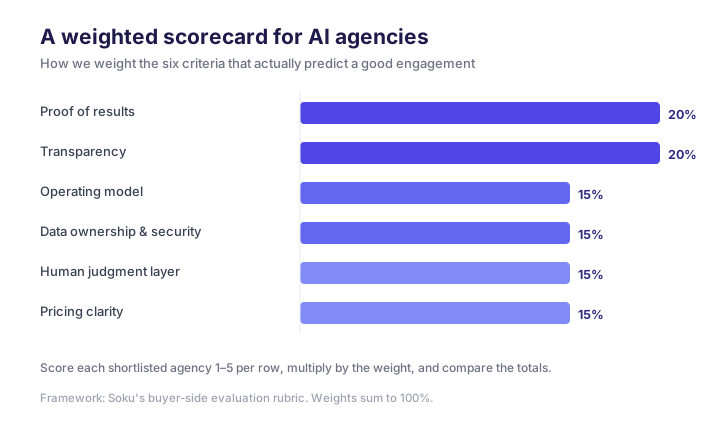
Score each shortlisted agency 1–5 on every row, multiply by the weight, and total it. The highest number wins — not the loudest pitch. The six criteria:
1. Proof of results (weight: 20%)
The single most predictive signal, and the easiest to fake. You want real case studies with real, tracked numbers — spend, CPA, ROAS, growth over a defined period — ideally in your vertical or a comparable one. Screenshots of a dashboard mean nothing without context; "we grew a client 300%" means nothing without the baseline. Ask: Can you show me a result you can attribute, on an account like mine, with the before-and-after? An agency that has done the work can. One that's reselling generic automation will get vague.
2. Transparency (weight: 20%)
A real AI agency can tell you exactly how it works: which models and platforms it runs, how much of the work is automated versus human, and how the two hand off. This matters because "it's all AI" is the most common overstatement in the category, and because the Salesforce State of Marketing 2026 survey found 84% of marketers still run generic campaigns — automation applied opaquely tends to produce exactly that. If a vendor can't or won't show you the stack, you can't tell whether you're buying an agent or a black box.
3. Operating model (weight: 15%)
There's a real difference between an agency where agents run the execution and one where humans use AI tools to work a bit faster. Both are legitimate, but they scale — and price — differently, and only the first delivers the always-on cadence that makes AI worth it. Ask what actually runs autonomously versus what a person does by hand. The tell is cadence: an agent runs the optimization loop every 15 to 60 minutes; a human-with-tools model still checks once or twice a day. We break down the full loop in the buyer's guide.
4. Data ownership and security (weight: 15%)
You are handing an agency access to your ad accounts, analytics, customer data, and often your CRM. Two non-negotiables: you keep ownership of the accounts, pixels, and data (so you can walk away with your history intact), and the agency has a clear answer on how it protects that data — where it's processed, who can see it, and how it's handled by any models. With AI now in regular use across most marketing organizations, data-handling questions are table stakes; an agency that dodges them is a hard pass regardless of results.
5. Human judgment layer (weight: 15%)
The best AI agencies aren't fully autonomous — they pair the agent with a named human who owns your account, sets strategy, and is accountable for outcomes. This is the antidote to the black-box risk: you get the cadence of automation and someone to call. Ask who your point of contact is, what they decide versus what the agent decides, and who is on the hook if a campaign goes sideways. "No human is responsible" is not a feature.
6. Pricing clarity (weight: 15%)
A trustworthy agency separates its strategy/management fee from platform and token costs, and can put a quote into a clean shape: management fee + itemized platform fees + one-time setup + contract term. Fuzzy all-in flat quotes hide where the money goes, and long lock-ins before any proof shift all the risk to you. For how to read and normalize a quote, see How Much Does an AI Marketing Agency Cost?.
Green flags and red flags
Once you've scored the shortlist, use this as a fast sanity check. Most bad fits fail on the same handful of signals — and transparency and ownership are the fastest disqualifiers.
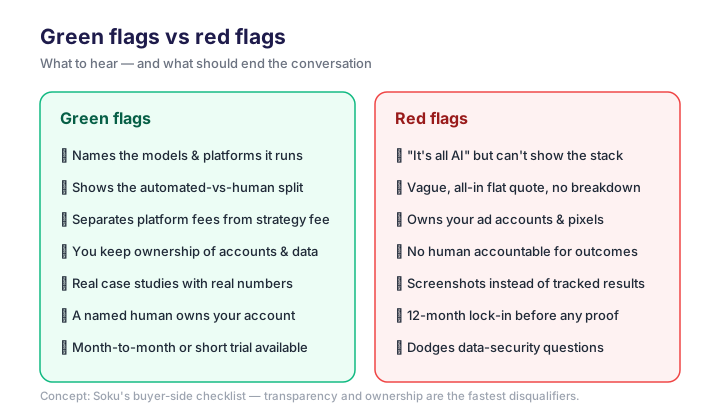
The green flags are what a real AI marketing agency does without being pushed: it names its models and platforms, shows you the automated-versus-human split, itemizes platform fees, lets you keep ownership, shows tracked results, assigns a named human, and will start you on a short trial or month-to-month term.
The red flags are the inverse, and any one of them should slow you down: "it's all AI" with no stack to show, a vague flat quote with no breakdown, an agency that wants to own your ad accounts and pixels, no human accountable for outcomes, results shown as screenshots rather than attributable numbers, a long lock-in demanded before any proof, and evasiveness on data security.
A simple selection process
Put the scorecard to work in four steps:
- Shortlist three. More than that and you'll drown in decks; fewer and you have no comparison.
- Run the same questions past each. Use the six criteria as your interview script so you're scoring like for like.
- Ask for a small paid pilot. A 30–60 day scoped engagement tells you more than any case study. A confident AI agency will offer one; a lock-in-first vendor is telling you something.
- Score, then decide. Total the weighted scorecard. Let the number break ties the sales process tried to muddy.
Where Soku fits
If you build a scorecard like this, you'll notice it rewards exactly the things an agent-native platform is built to prove: a transparent operating model, an auditable automated-versus-human split, retained account and data ownership, and pricing that separates software cost from the work. Soku is an AI ad-automation agent designed to be held to that standard — it connects to your Google, Meta, and TikTok accounts and GA4, runs the campaign and optimization loop continuously, and produces creative variants at volume, while you own strategy and approvals. Start with the AI Marketing Agency buyer's guide for the full picture, or compare the platform options on our marketing agency software page.
Frequently asked questions
What's the most important thing to check?
Proof of results and transparency — they carry the most weight because they're the hardest to fake and the most predictive. An agency that shows tracked results on an account like yours and openly explains its stack clears most of the bar.
How do I know if it's a real AI agency or just an agency using AI tools?
Ask what runs autonomously versus what a human does by hand, and check the cadence. A genuine AI agency runs a continuous optimization loop and can show the automated-versus-human split; a traditional shop with AI tools still works on a human review schedule.
Should I sign an annual contract?
Not before you have proof. Prefer a short paid pilot or month-to-month to start. A demand for a 12-month lock-in before any results shifts all the risk onto you.
Who should own my ad accounts and data?
You should — always. Keep ownership of your accounts, pixels, and analytics so your history stays with you if you switch. An agency that wants to own them is a red flag.
Do I still need a human on the account?
Yes. The strongest setup pairs the agent's cadence with a named human who owns strategy and is accountable for outcomes. Full autonomy with no one responsible is a risk, not a selling point.