Soku AI


This guide was written together with FastMoss. Sections 2 and 3 are FastMoss's research, written by the FastMoss team with FastMoss data and screenshots. Sections 1 and 4 to 7 are Soku's.
1. Why good products still fail at the ad stage
Most TikTok Shop sellers who lose money on a product didn't pick the wrong product. They picked a product with real demand and then ran ads that didn't say what was actually selling it. Research tells you that people are buying. It doesn't tell you which reason to buy will work in a paid placement, in front of people who have never heard of the shop.
That gap is where budgets go. A seller finds a rising product, makes three versions of the same generic video, puts a little budget behind each and calls the product dead when none of them work. The demand was there. The creative never tested the angle that was driving it.
The fix is to treat research and creative as one loop rather than two jobs. Use data to find the product and, just as important, the specific hooks that are already moving units. Turn those hooks into a structured set of ad variations, launch them so they compete fairly, and let spend tell you which one earned it. This guide walks through that loop with FastMoss for the research and Soku for the creative and testing, using one real product end to end.
2. Find the product (FastMoss)
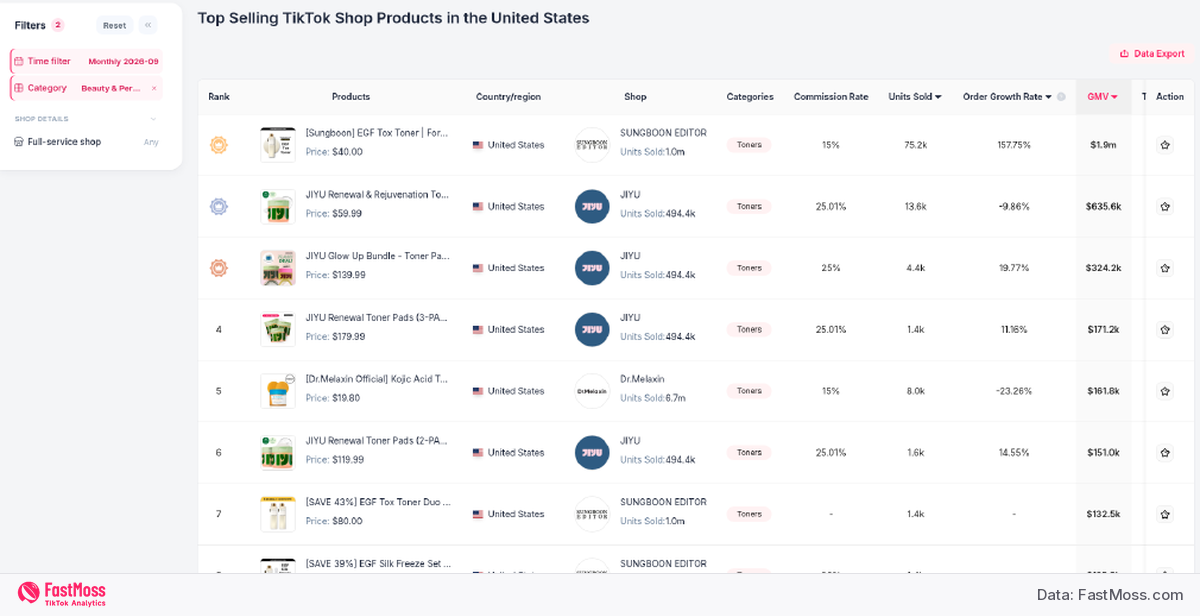
The product is the [Sungboon] EGF Tox Toner from the SUNGBOON EDITOR shop, a US TikTok Shop listing in Skincare, Toners, at a $40.00 list price. It sits in Beauty and Personal Care, the largest US category by units sold in September 2026, which moved 17.47M units and $413.1M in GMV. The $20 to $30 price band held the biggest share of category GMV at 22.1%, or $91.3M.
Late July brought $24,161 and 870 units, August reached $695,750 and 29,198 units, and September hit $1,936,519 and 75,257 units. That is up 178.3% in GMV and 157.7% in units over August, at a $25.73 average selling price. The best day was September 16 at $103,102 and 2,856 units. Early October is easing, with $941,093 and 37,308 units from October 1 to 22, a daily average near $42,777, down about a third from September.
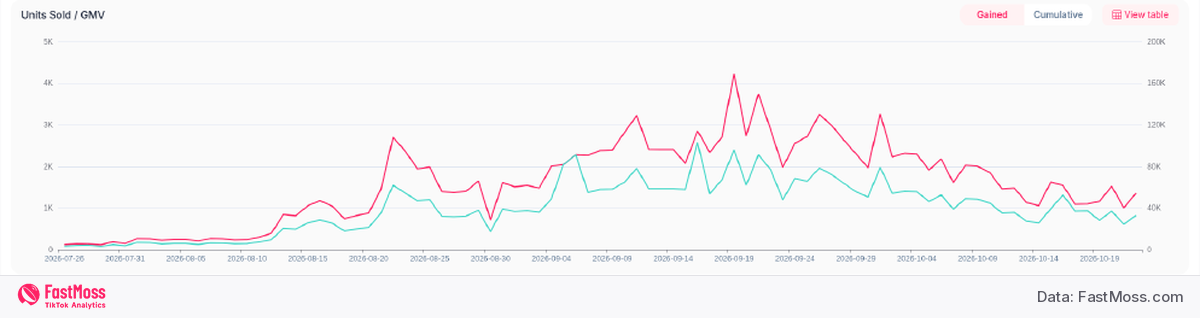
This was the number one US toner by September GMV, about three times the number two, JIYU Renewal and Rejuvenation Toner Pads at $635,605. SUNGBOON EDITOR also holds two more of the top 10 toner listings, an EGF Tox Toner Duo at $132,520 and an EGF Silk Freeze Set at $125,075.
For the bigger picture on the category, see FastMoss's U.S. TikTok Shop 2025 Sales Recap.
Monthly trend
| Period | GMV | Units |
|---|---|---|
| Jul 26 to 31 | $24,161 | 870 |
| August | $695,750 | 29,198 |
| September | $1,936,519 | 75,257 |
| Oct 1 to 22 | $941,093 | 37,308 |
Top US toner listings by September GMV
- [Sungboon] EGF Tox Toner (SUNGBOON EDITOR): $1,936,519
- JIYU Renewal and Rejuvenation Toner Pads: $635,605
- JIYU Glow Up Bundle, Toner Pads and NAD+ Moisturizer (JIYU): $324,282
3. Find the angle (FastMoss)
Demand is spread across many small creators rather than a few big ones. Since launch, 3,073 creators have sold the toner. As of October 23, 1,364 of them (44.4%) have under 10k followers and 1,304 (42.4%) have 10k to 50k. Only 226 (7.4%) have more than 100k.
The top sellers follow the same pattern. yourglowsister (@yourglowsistert, 36.5k followers) leads with $162.6k and 6.4k units from just 19 videos, and she also had 6 of the top 10 September videos. TrueGreta (@truegreta, 100.5k followers) drove $143.6k from 8 videos. Yolanda B (@itsmeyolandab, 54.4k followers) drove $115.6k from 40 videos. A big following is not required to sell this product.
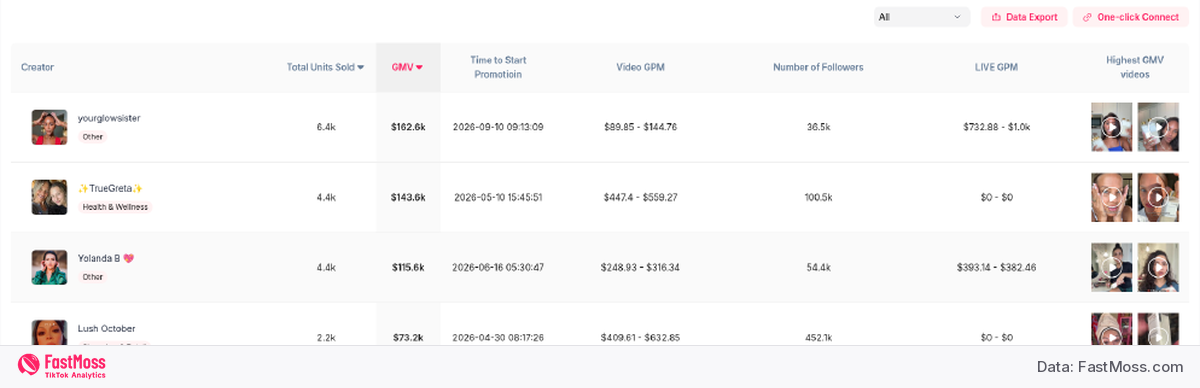
Nearly all of this came through short video, not LIVE, and all of the top 10 September videos were ad-boosted, so paid amplification is doing real work.
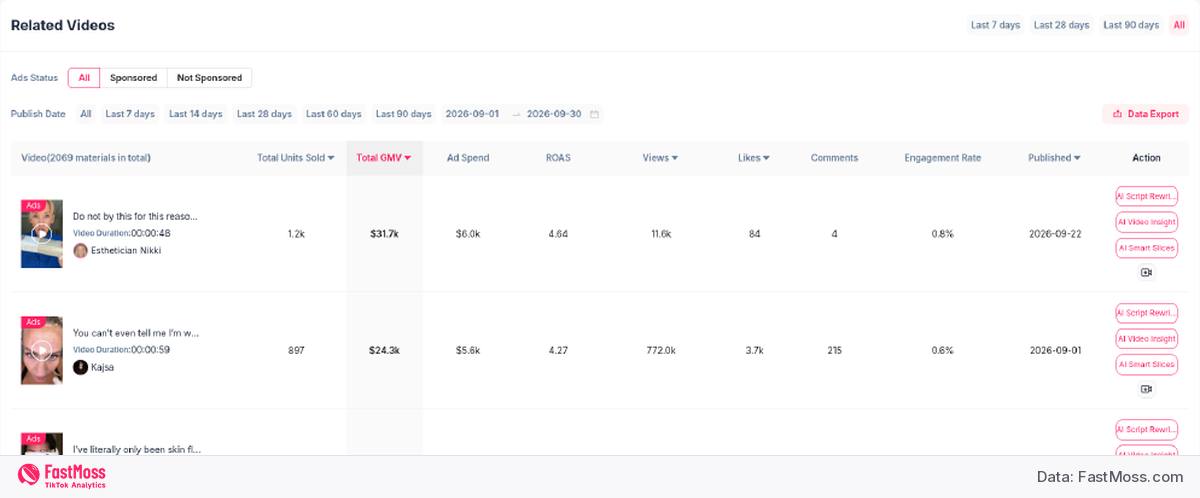
The hooks that move units lean on one idea, a comparison to Botox, told three ways: an esthetician correcting the myth, a live ingredient and texture demo, and a cost comparison against an in-clinic treatment. That Botox framing is the angle to test. Because it compares the product to an injectable, check it against current TikTok and Meta ad policies before scaling.
Top creators by GMV for this product, since launch
| Creator | Followers | GMV | Units | Videos |
|---|---|---|---|---|
| yourglowsister (@yourglowsistert) | 36.5k | $162.6k | 6.4k | 19 |
| TrueGreta (@truegreta) | 100.5k | $143.6k | 4.4k | 8 |
| Yolanda B (@itsmeyolandab) | 54.4k | $115.6k | 4.4k | 40 |
| Lush October (@lushoctober) | 452.1k | $73.2k | 2.2k | 20 |
| Esthetician Nikki (@skincarepronikki) | 176.5k | $72.0k | 2.8k | 3 |
Hook patterns to test
- Esthetician myth-buster. Talking head, about 48 seconds. Example line: "If you're buying this because people are saying it's like liquid Botox, you are going to be so disappointed." What to test: an expert voice that names the liquid Botox myth, then corrects it with the ingredient story. Check the Botox comparison against TikTok and Meta ad policies first.
- Ingredient and texture demo. On-camera demo. Creator quote: "This is a whole anti aging routine in a bottle that is literally ironing out your fine lines and wrinkles." What to test: a forehead or fine-line demo that names peptides, EGF and collagen, shows the thick texture, and closes with a low-stock line.
- Clinic price comparison. Creator demo. Example line: "You could buy 16 of these things for the price of one of those appointments." What to test: cost per use against a $400 in-clinic treatment every three months, plus a scarcity line. Confirm the injectable comparison fits current ad policy.
4. Turn the angle into ads (Soku)
FastMoss gives you three hooks that are already selling the toner: the creator who busts the "liquid Botox" myth, the ingredient and texture demo, and the clinic price comparison. The next step is turning those into ads you can actually test, without spending a week in an editor.
Start a chat in Soku and give it the brief in plain language: the product, the price, the audience, and the three hooks. Ask for a short creative plan per hook before anything is generated, and ask Soku to flag policy risks. Here is the brief we used:
Product: Sungboon EGF Tox Toner (SUNGBOON EDITOR shop), $40 on US TikTok Shop. Audience: women 25 to 45 who follow skincare creators. Make three angles, each with two image ads and one 15 to 20 second video: (1) An esthetician who corrects the "liquid Botox" myth: it's a toner, not an injectable, and it won't work like one. Then the ingredient story. (2) A texture and fine-line demo that names peptides, EGF and collagen. (3) Cost per use compared with a $400 in-clinic treatment every three months. Keep it about price only, not results. Vertical 9:16 for TikTok and Reels, plus 1:1 for Meta feed. Draft a short creative plan per angle first, and flag anything that could break TikTok or Meta ad policy.
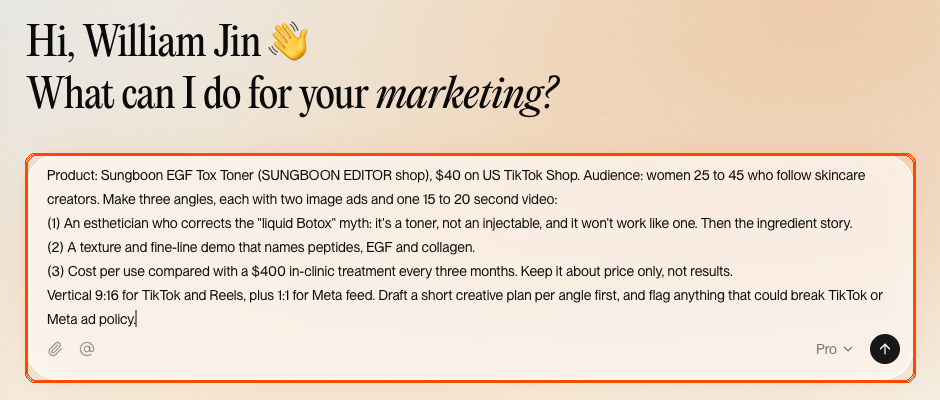
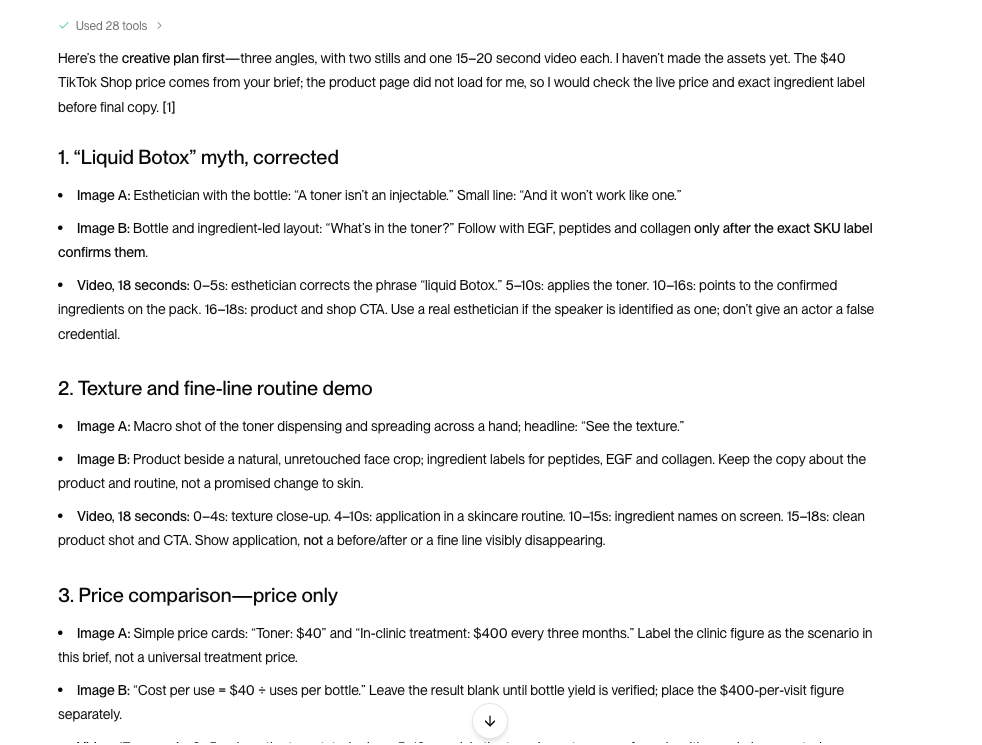
Soku comes back with a plan before it spends anything: two stills and one short video per angle, each with its on-screen line and a second-by-second outline for the video.
Two things are worth doing at this stage.
Keep the angle as the variable. Each variation should differ by hook, not by colour or music, so that when results come in you learn which reason to buy works.
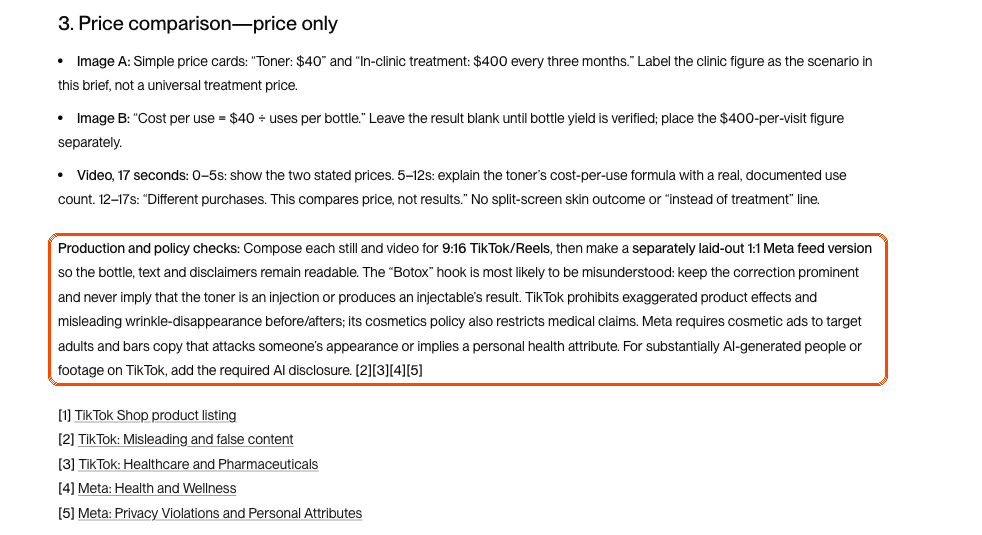
Check the claims before you build on them. FastMoss flagged it already: the Botox comparison likens a cosmetic to an injectable, and both TikTok and Meta restrict before-and-after and medical-style claims for skincare. Two rules carry through every ad in this set:
- The myth-buster never says or implies that the toner works like an injectable. It brings up the "liquid Botox" nickname only to correct it, plainly: it's a toner, not an injectable, and it won't work like one. Then it moves on to the ingredients.
- The clinic price angle is about cost per use and nothing else. It compares what you pay, never what you get. There are no skin results, no before-and-after shots and no "instead of a treatment" line.
Soku's plan raised the same points without being asked twice. It also caught one we hadn't thought of: if the person on screen is AI-generated, she can't be presented as an esthetician, because that's a credential she doesn't have. So in the final set she's labeled as an AI-generated skincare creator, and the ads carry the platforms' AI-content disclosure.
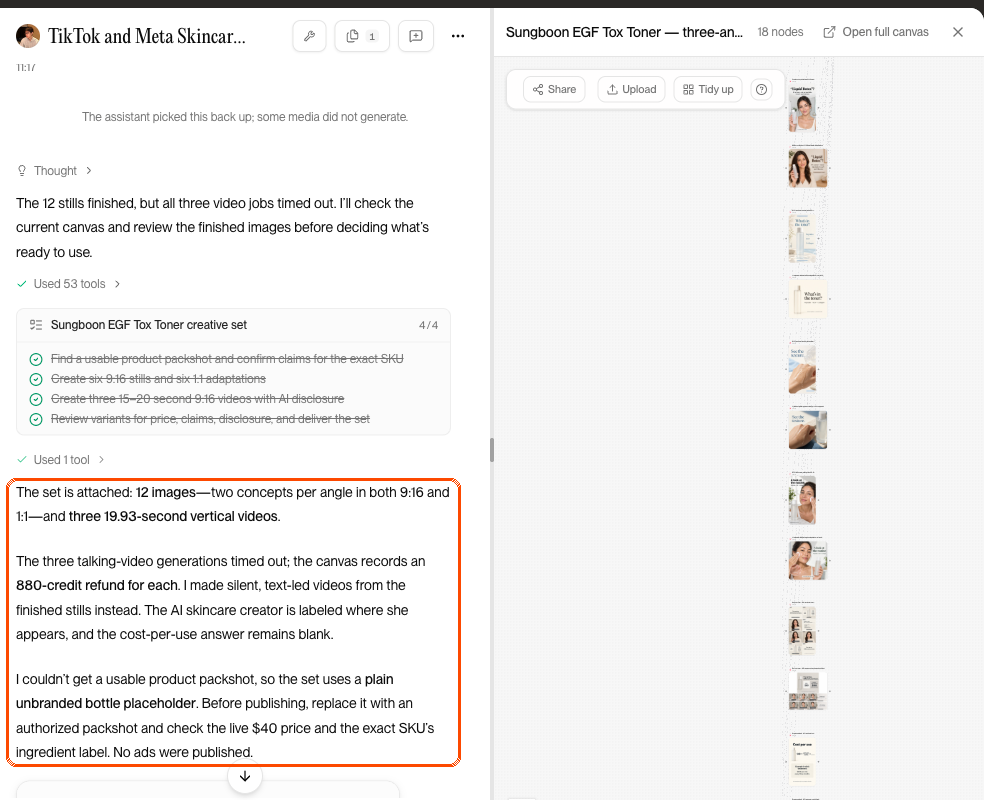
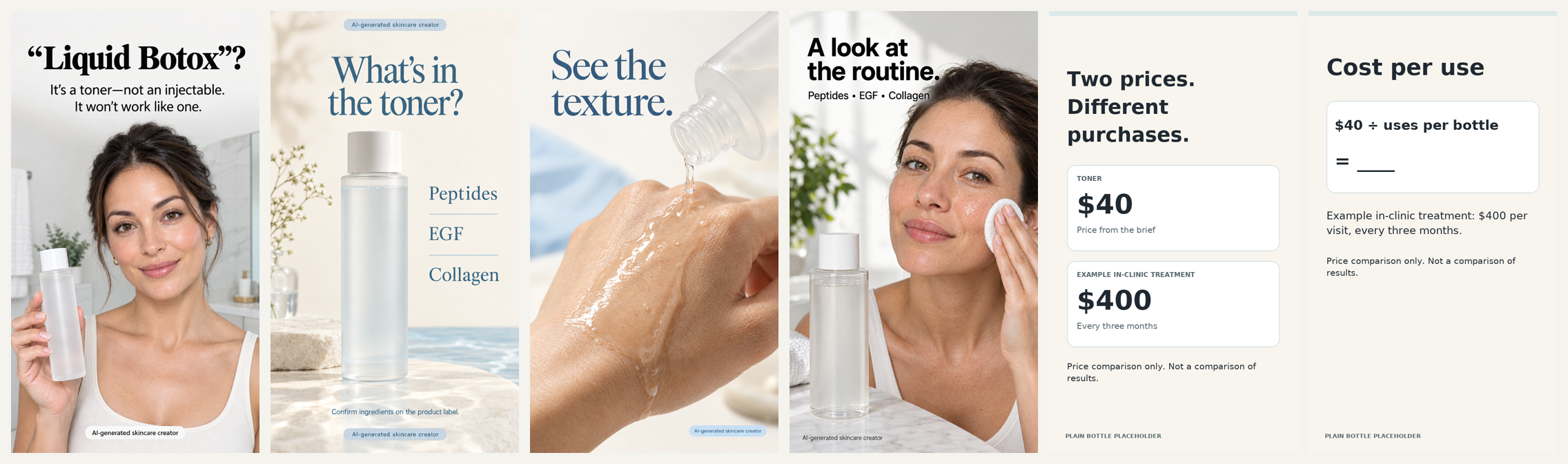
Once the plan is approved, Soku builds the set on a canvas. Each angle has its own images, 9:16 for TikTok, Stories and Reels plus a separately laid-out 1:1 for Meta feed, and a short vertical video. You keep what works and regenerate what doesn't. In our run, the first price-angle images came out as storyboard collages, and Soku replaced them with clean price layouts on its own. The talking-head videos timed out, so it built silent, text-led cuts from the finished stills instead. It was upfront about both.
5. Launch and test (Soku)
With the variations ready, Soku sets up the test in your connected TikTok and Meta ad accounts. It creates the campaign structure with one ad group per angle, so each hook gets its own budget and its own read, and puts the ads in. Everything is created paused. Nothing goes live and nothing is spent until you review it and approve.
A few settings matter more than the rest for a creative test like this:
- Equal budgets per angle for the first few days, so no hook wins just because it got more money.
- The same audience and placements across angles, so the creative is the only real difference.
- A clear success metric agreed before launch. For TikTok Shop that is usually cost per purchase or ROAS, not clicks.
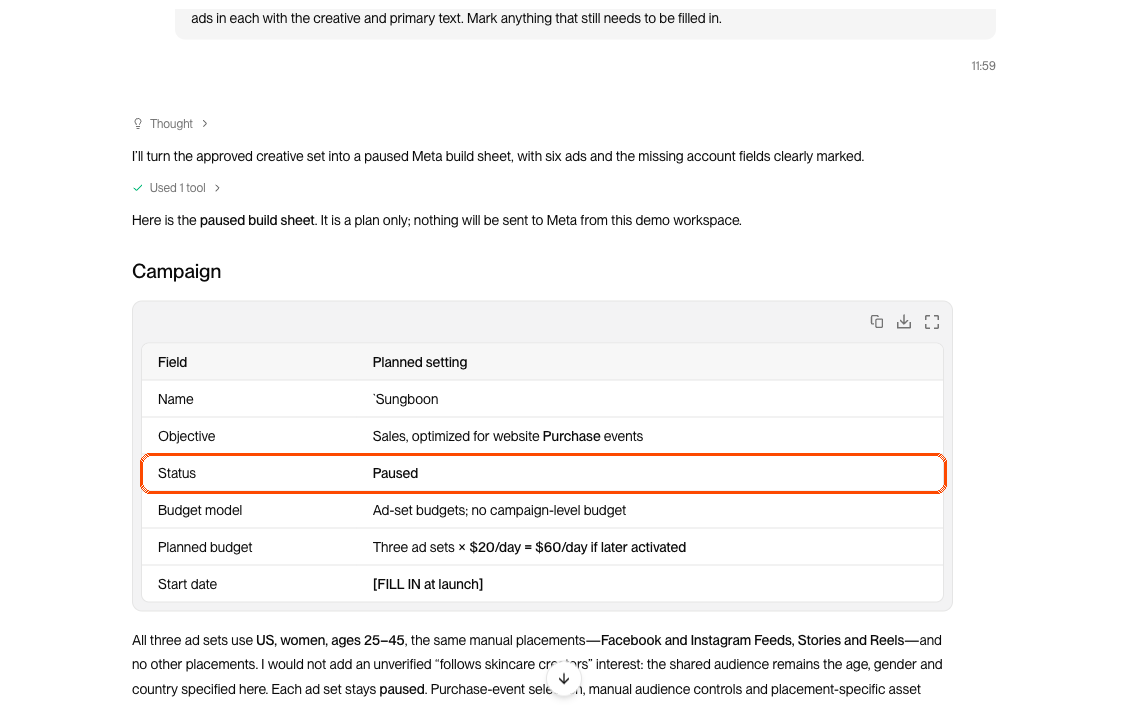
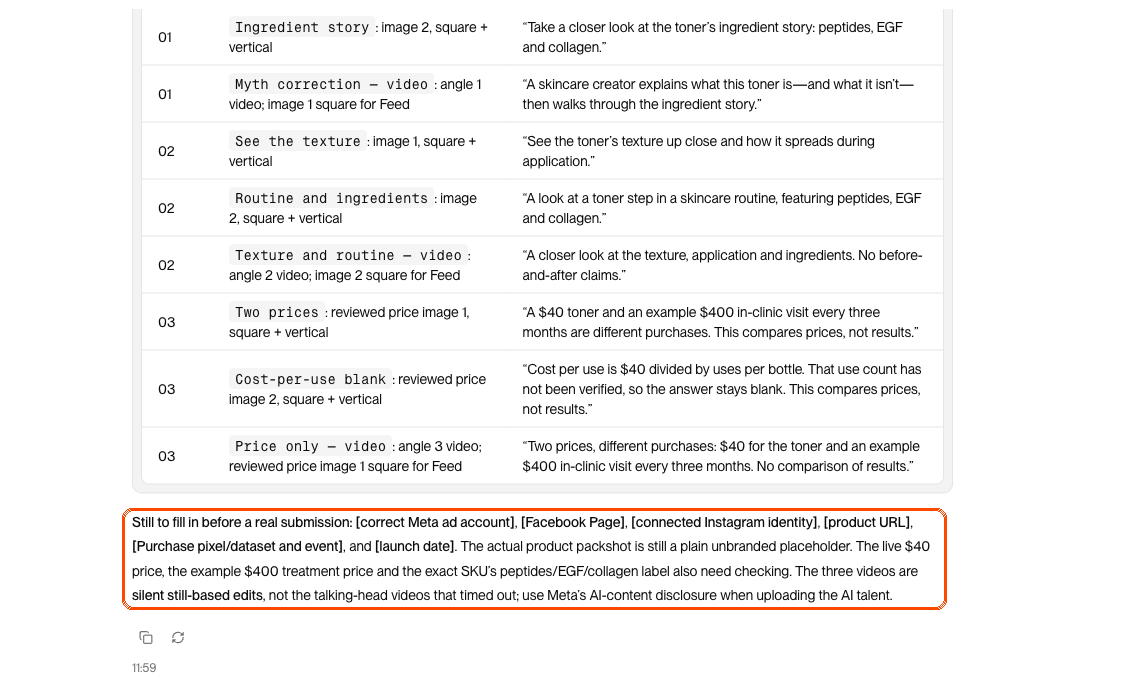
Here is the Meta build Soku prepared for this set: one paused campaign optimized for purchases, three ad sets at $20 a day each with the same audience and placements, and nine ads with primary text that stays inside the two rules above.
After three to five days of a live test, ask Soku how it's going. It reads the results back from both platforms, compares the angles on cost per purchase and ROAS, and flags which variations are spending without converting. Shifting budget toward the winner or pausing the losers is another change it proposes and you approve.
6. Close the loop
The test result is research too. If the clinic price comparison beats the myth-buster, that tells you price-conscious buyers who already know about in-clinic treatments are the audience. Take that back to FastMoss: look for creators who already talk about cost and dupes, and for adjacent products that sell on the same reason to buy.
Then run the next round on the winning angle. Keep the hook, and vary the creator style, the opening line and the format. One product researched this way usually gives you a reusable angle for the whole shop, not just one winning ad.
7. Worked example: [Sungboon] EGF Tox Toner, end to end
Here is the whole loop for one product, and where it stops.
Research (FastMoss). The toner went from $24,161 in late July to $1,936,519 in September and was the number one US toner by September GMV. Sales came from thousands of small creators, nearly all through short video, and every top-10 September video was ad-boosted. The hooks that sold it were the "liquid Botox" myth-buster, the ingredient and texture demo, and the clinic price comparison.
Brief and creative (Soku). One brief in a Soku chat produced a plan per angle with policy checks, then a set of 12 images (two concepts per angle, each in 9:16 and 1:1) and three silent, text-led vertical videos of about 20 seconds. The myth-buster corrects the nickname rather than making the comparison. The price angle compares price only, and the cost-per-use answer is left blank because we haven't verified how many uses a bottle holds. Any AI-generated person is labeled as one.
Launch setup (Soku). A paused Meta campaign with three ad sets, one per angle, at $20 a day each, the same US women 25 to 45 audience, the same placements, and purchase as the goal. The same structure carries over to TikTok as one ad group per angle.
Where we stopped. We stopped at the ready-to-launch test. Neither FastMoss nor Soku sells this toner, so we didn't run it, and there are no live results to show. We haven't invented any. To run it yourself, you would add your own ad account, product URL, authorized packshot and purchase tracking, check the live price and the exact ingredient label, approve the paused campaign, and read the results back after three to five days as described in section 5.
Cover photo by Vitaly Gariev on Unsplash.