 Soku AI
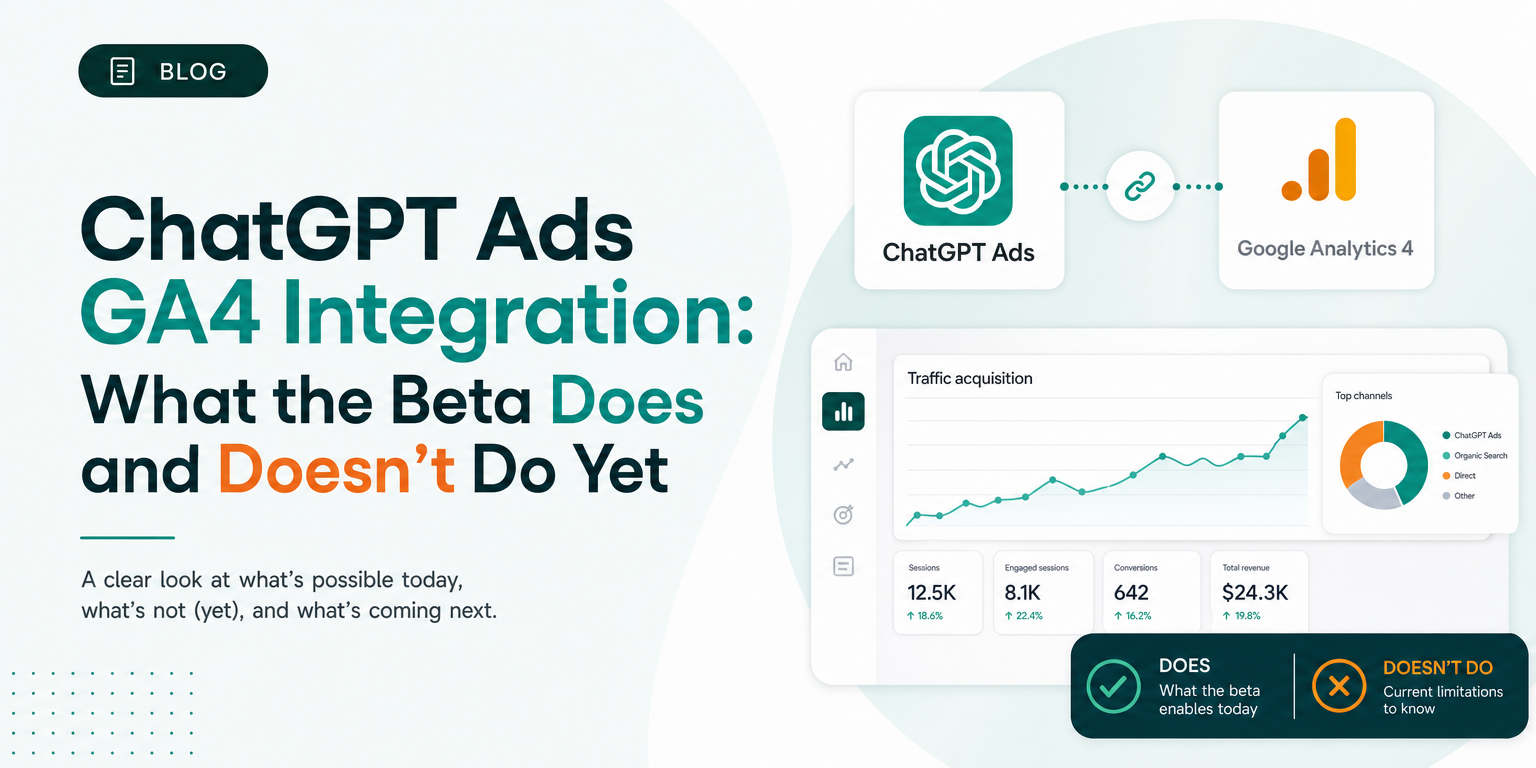
OpenAI has added a way to connect Google Analytics 4 to OpenAI Ads Manager. The help article appeared in the ChatGPT Ads collection this week; Soku's documentation monitor first captured it on 2026-10-05. On the same run, the list of named measurement partners in OpenAI's help centre grew from 9 to 15.
This is the integration most advertisers have been asking for, because GA4 is where they already judge every other channel. It's worth reading the article closely, though. The beta connects the property. It does not yet turn GA4 events into ChatGPT Ads conversions. If you connect it expecting GA4 to back up your campaign numbers, the screen you get will confuse you.
Below: what OpenAI's text actually says, what the beta does and doesn't do, why GA4 and Ads Manager will disagree even once mapping arrives, and what to set up now. Facts are quoted from OpenAI's documentation and dated. Analysis and recommendations are marked as Soku's. For a full overview of the channel, start with our ChatGPT Ads guide.
What OpenAI published
The new article is Connect Google Analytics 4 to OpenAI Ads Manager. It opens with the purpose of the feature:
"Connecting Google Analytics 4 (GA4) lets advertisers share GA4 data with OpenAI to support campaign optimization, where eligible, and compare attribution results between OpenAI Ads Manager and Google Analytics."
The availability note right below it sets the limits:
"This feature is in beta. Reach out to your account manager to get early access. The current beta supports connection setup. Event mapping is coming soon; advertisers will need to map their GA4 events to OpenAI events to enable reporting."
Read those together. The stated goals are optimization ("where eligible") and comparing attribution between the two systems. What is available today is connecting the property. The step that makes GA4 data meaningful to a campaign, mapping GA4 events to OpenAI events, is marked "coming soon", and OpenAI says it is needed "to enable reporting".
Requirements
OpenAI lists three prerequisites:
- Access to the advertiser account you want to connect.
- A Google account with Viewer access or higher to the GA4 property that holds the website or app activity.
- Authorization to connect the property and let OpenAI retrieve and use the selected GA4 data on your organization's behalf.
And one structural limit: each advertiser account supports one GA4 connection and one selected property.
That limit is the first thing to plan around. If one brand runs separate GA4 properties for its website and its app, or per country, a single ChatGPT Ads account can connect only one of them. Agencies using one advertiser account per client are fine. A single account selling across several properties is not, and the property you pick is the one Ads Manager will compare against (Soku analysis).
How to connect GA4 to OpenAI Ads Manager
These are OpenAI's documented steps, current as of 2026-10-05:
- Open the advertiser account in Ads Manager and go to Conversions → Data Sources, then select Create.
- Select Google Analytics 4.
- Review the Data access and terms section.
- Sign in with the Google account that has access to the property, then approve the request for read-only Google Analytics access.
- Select the GA4 property, check its name, and complete the connection.
GA4 now sits in the same Data Sources list as your Measurement Pixel and Conversions API sources. Note what you are agreeing to in step 3. OpenAI writes that by connecting, you authorize it "to retrieve and use the selected GA4 data in accordance with the Advertising Terms", and you confirm your organization "has provided all required notices, has and will maintain all necessary rights, consents, and lawful bases". This is a data-sharing agreement, not just a reporting toggle. If your privacy notice or consent setup doesn't already cover sharing analytics data with ad platforms, get the right person to approve it before someone clicks through (Soku analysis).
Two failure modes are documented. If you can't find the property, you're probably signed in with the wrong Google account or lack access to that specific property. If Google authorization is blocked, your Workspace may restrict third-party apps. OpenAI's instruction is to ask the Workspace administrator and "do not bypass a Google security warning".
What you'll see after connecting
Back in Data Sources, the GA4 connection shows its status, the last successful sync, and "imported event activity". OpenAI defines the window:
- Reporting period: the last 30 completed days in the GA4 property's time zone. The current day is excluded.
- Seven-day trend: the latest seven completed days compared with the seven before.
Then comes the sentence that matters most:
"Event totals include all events reported for the selected property across all traffic sources. They are not limited to key events, purchases, or events attributed to OpenAI ads, and do not represent campaign conversion counts or return on ad spend (ROAS)."
So the screen you get in the beta is a property-wide event count. It covers organic, paid search, email and direct traffic as well as anything from ChatGPT. It shows that the pipe works and the data is fresh. It doesn't tell you what your ChatGPT Ads campaigns produced. Anyone who reads a jump in the seven-day trend as campaign lift is reading the whole property's traffic (Soku analysis).
Does it import conversions or change bidding?
Not as documented today. The two outcomes advertisers want from a GA4 link are reporting campaign results in GA4's terms and optimizing on GA4 conversions. Here is where each stands, in OpenAI's words:
| What you might expect | What OpenAI's article says (2026-10-05) |
|---|---|
| GA4 key events count as ChatGPT Ads conversions | Not yet. "Event mapping is coming soon; advertisers will need to map their GA4 events to OpenAI events to enable reporting." |
| Campaign ROAS from GA4 revenue | No. Event totals "do not represent campaign conversion counts or return on ad spend (ROAS)." |
| Bidding optimizes on GA4 data | "To support campaign optimization, where eligible." Eligibility is not defined. |
| Attribution comparison between the two systems | Named as a purpose of the feature. No comparison view is described yet. |
| Multiple properties per account | No. "One GA4 connection and one selected property." |
Our reading: the beta lays the data-sharing and authorization groundwork, and the useful parts (mapping, then comparison and any optimization use) come after. Treat the "where eligible" optimization line as a stated intent, not a capability to plan a budget around.
Why GA4 and ChatGPT Ads will still disagree once mapping ships
Even after mapping arrives, the two systems will report different numbers for the same campaign. That's normal, and you can predict most of the gap from OpenAI's own documentation.
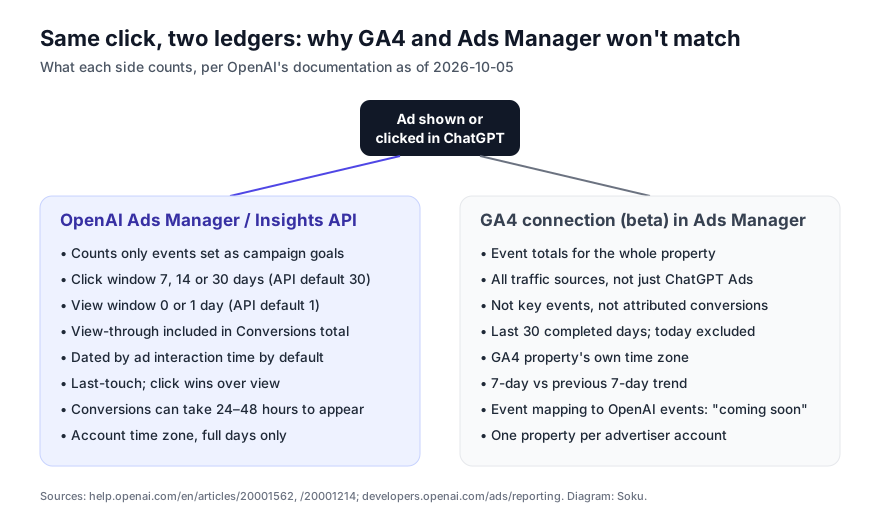
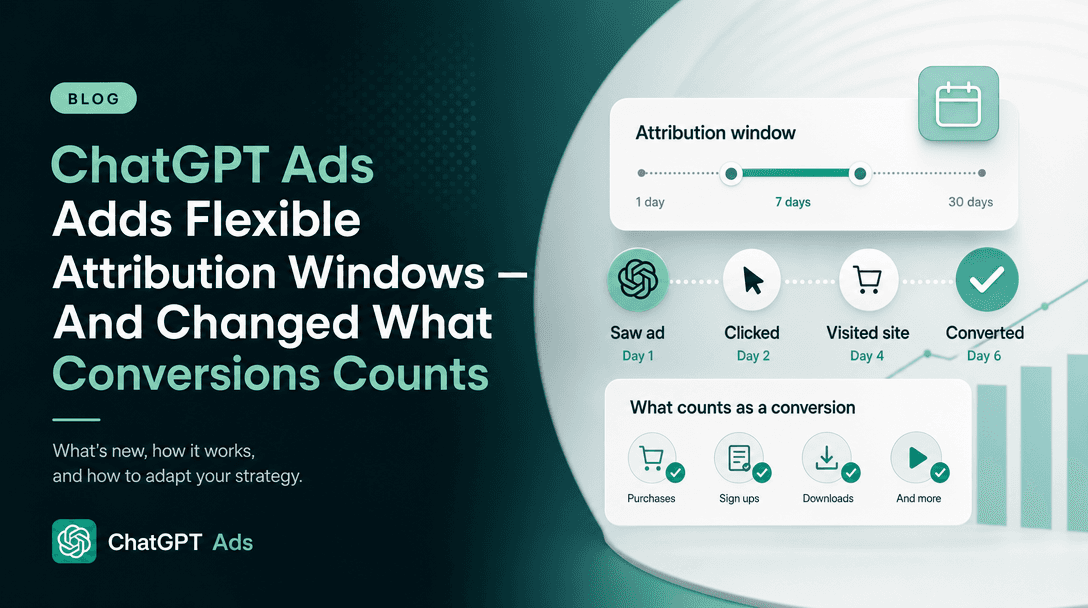
Ads Manager's side. The Measure Results article says advertisers can choose "a 7-, 14-, or 30-day click-through reporting window and either 0 Day (disabled) or a 1-day view-through reporting window", and that at 1 Day, "eligible view-through conversions are included in the Conversions total." By default, Conversions "uses ad event time — the time of the ad click or impression that received credit for the conversion." The attribution is "OpenAI's existing last-touch attribution logic and is not multi-touch attribution." Attributed conversions "can take 24–48 hours to appear." We covered the reporting-window change itself when it landed in ChatGPT Ads flexible attribution windows, and the reporting lag in why ChatGPT Ads spend and conversions show up late.
What changed on 2026-09-30 in the API. OpenAI's developer changelog for September 30 reads: "Added selectable click/view attribution windows and time basis to all four GET Insights endpoints. Omitted settings now default independently to 30-day click, 1-day view, and ad-event time. Conversion totals include click-through plus view-through goal conversions and can differ from previous reports; impressions, clicks, and spend are unchanged." The Reporting guide adds that the endpoints "now default to 30-day click, 1-day view, and ad-event time, including when settings are omitted. Neither provides a legacy reporting mode."
This matters for GA4 reconciliation because many teams pull ChatGPT Ads numbers through the API into a spreadsheet or warehouse and compare them with GA4 there. If your pipeline was built before September 30 and never sent the window parameters, it now receives view-through-inclusive totals by default, and its historical comparisons have shifted under it. OpenAI's instruction for matching totals is to "use the same date range, time basis, and click/view windows" (Soku analysis on the impact; quoted text is OpenAI's).
The developer docs don't agree with themselves yet. As captured on 2026-10-05, the Measurement Pixel guide still says "Ads Manager reports view-through conversions as a separate, campaign-level metric", and the Conversions API guide describes view-through the same way. The API overview and Reporting guide say conversions now includes view-through goal conversions. The newer, more specific Reporting text matches the help centre's Measure Results article, so we read the Pixel and Conversions API wording as not yet updated. If your totals matter to a client, check the click_through_conversions and view_through_conversions fields from the dedicated conversion endpoint rather than relying on either description.
GA4's side. Per OpenAI's GA4 article, the connection reports property-wide events in the property's time zone. GA4 itself credits conversions to sessions using its own attribution settings, which OpenAI's article doesn't touch. A view-through conversion, where someone saw the ad, didn't click, and came back later, can't show up as ChatGPT Ads traffic in GA4 at all, because no click carried a source into the session.
From this, a practical gap list (Soku analysis):
| Source of the gap | Effect |
|---|---|
| View-through conversions | Count in Ads Manager when the view window is 1 Day; can't be credited to a ChatGPT session in GA4. Ads Manager reads higher. |
| Click window vs GA4 attribution | Ads Manager credits up to 30 days after a click; GA4 credits according to the property's settings. Gap depends on purchase lag. |
| Ad-event time vs conversion time | Ads Manager dates a conversion to the click by default; GA4 dates it when it happened. Daily rows won't line up even when totals agree. |
| Time zones | Ads Manager uses the ad account's time zone; the GA4 view uses the property's. Day boundaries differ if these differ. |
| Goal scope | Ads Manager counts only events set as campaign goals; GA4 counts every event. Expect GA4 totals far above Ads Manager conversions. |
| Processing lag | Ads Manager conversions can take 24–48 hours; GA4 has its own processing delay. The latest two days rarely match. |
None of these is a reason to distrust either number. Each is a different question: "what did ChatGPT Ads credit itself with?" versus "what happened on my site, from all sources?" The work is putting them side by side on the same dates, windows and goal definitions.
The measurement ecosystem grew in the same week
GA4 was not the only measurement change Soku's monitor picked up on 2026-10-05. Comparing our captures of OpenAI's two partner articles:
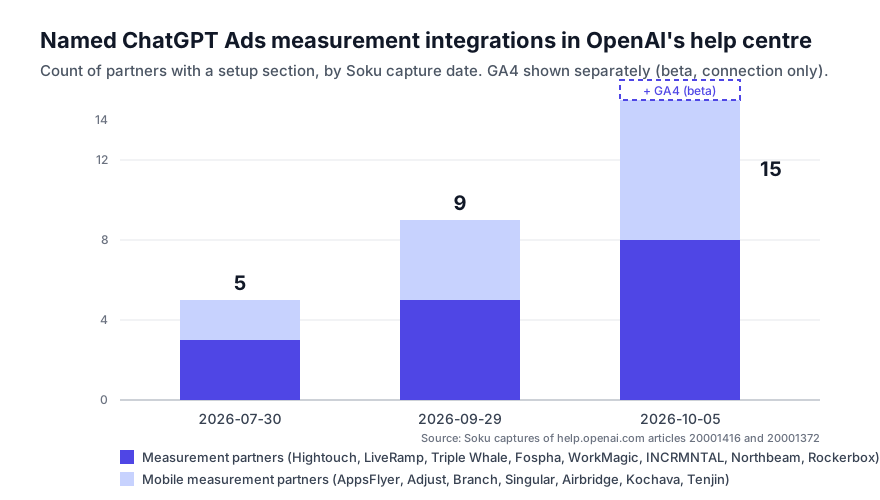
- The measurement partner article went from five setup sections (Fospha, Hightouch, LiveRamp, Triple Whale, WorkMagic) on 2026-09-29 to eight, adding INCRMNTAL, Northbeam and Rockerbox. Its intro now lists "spend reporting" and "incrementality measurement" among the capabilities. Its prerequisites now say partners need "an Ads Manager API key, or a Pixel ID and Conversions API key", so several partners connect by reading your account through an API key rather than by sending events.
- The mobile measurement partner article went from four (AppsFlyer, Adjust, Branch, Singular) to seven, adding Airbridge, Kochava and Tenjin, each with setup steps. OpenAI notes that mobile attribution through these partners "is click-based", and that the partner's windows are set in the partner while "Ads Manager uses its own attribution settings for reporting".
We've updated our ChatGPT Ads measurement partners guide with the full current list and the credential each partner asks for. The pattern matters more than any single name. Three months ago OpenAI named five integrations. It now names fifteen, plus GA4, and the new ones (incrementality, marketing-mix and multi-touch attribution vendors, and Google's own analytics) are tools advertisers use to check a channel's self-reported numbers. OpenAI is making ChatGPT Ads measurable by the tools buyers already trust, which is what a channel has to do before it gets a serious budget (Soku analysis).
The email said something different, and both are true
OpenAI's advertiser product-update email of 2026-09-30 (subject "ChatGPT Ads Product Updates") announced that advertisers "can now retrieve attributed conversion events beyond your campaign's selected goal through the public Insights API". That is documented: the Reporting guide describes adding "include": ["attributed_events"] to POST /v1/conversions/insights to see attributed events "even when they are not configured as campaign conversion goals".
The email didn't mention the GA4 connection, and the GA4 article doesn't mention non-goal event reporting. They solve related problems from opposite ends. Non-goal events let you see OpenAI-attributed purchases while optimizing for something else. GA4 lets you see everything in your analytics, unattributed for now. If your question is "did ChatGPT Ads drive purchases I'm not optimizing for?", the documented answer today is the Insights API, not the GA4 beta (Soku analysis).
What to do now
- Ask your account manager for the beta if GA4 is your source of truth. OpenAI gates access through the account manager.
- Pick the property on purpose. One property per advertiser account. Choose the one where your ChatGPT Ads landing pages and conversions actually report.
- Clear the data-sharing terms internally before connecting. The authorization covers OpenAI retrieving and using GA4 data under the Advertising Terms.
- Don't read the GA4 tile as campaign performance. It is property-wide event volume. Use it to confirm the connection is live and fresh.
- Fix your API pulls. If you report ChatGPT Ads through the Insights API, send
attribution_window_days,view_through_attribution_window_daysandattribution_time_basisexplicitly, matching the windows you show in Ads Manager, so totals stop shifting under you. - Tag landing URLs so GA4 can see ChatGPT traffic. Until mapping ships, GA4's own source/medium data is your view of ChatGPT Ads clicks. Use a consistent UTM scheme; we laid one out in ChatGPT Ads dynamic URL parameters.
- Write down your goal-event definitions now. When mapping arrives you'll be matching GA4 event names to OpenAI events. Teams that have already agreed which GA4 event equals "purchase" or "lead" will finish in minutes.
How Soku fits
Soku's Second Opinion tab, part of the Dashboard since our 2026-10-01 release, puts each connected ad platform's self-reported spend, conversions and value next to what an independent source (GA4 today) credits to the same platform and campaign. It flags tracking problems such as paid clicks that never show up as site traffic, and it treats ChatGPT Ads as a platform alongside Google, Meta, TikTok and others. It doesn't add the two sides together or call a gap "over-reporting". It shows both, which is the reconciliation described above, done for you. It doesn't depend on OpenAI's GA4 beta, so it works whether or not your account has early access.
Sources
- OpenAI, Connect Google Analytics 4 to OpenAI Ads Manager, captured 2026-10-05.
- OpenAI, Measure Results, captured 2026-10-05.
- OpenAI, Set up measurement partner integrations, captured 2026-09-29 and 2026-10-05.
- OpenAI, Set up mobile measurement partner integrations, captured 2026-09-29 and 2026-10-05.
- OpenAI developer docs, Advertiser API overview and changelog and Reporting, fetched 2026-10-05.
- OpenAI advertiser product-update email, "ChatGPT Ads Product Updates", 2026-09-30 (the non-goal event item is corroborated by the Reporting guide above).
Last verified 2026-10-05. Soku tracks OpenAI's ChatGPT Ads help centre and developer documentation daily and dates every factual claim to the capture that supports it. Quoted wording is OpenAI's; analysis and recommendations are Soku's own.