 Soku AI

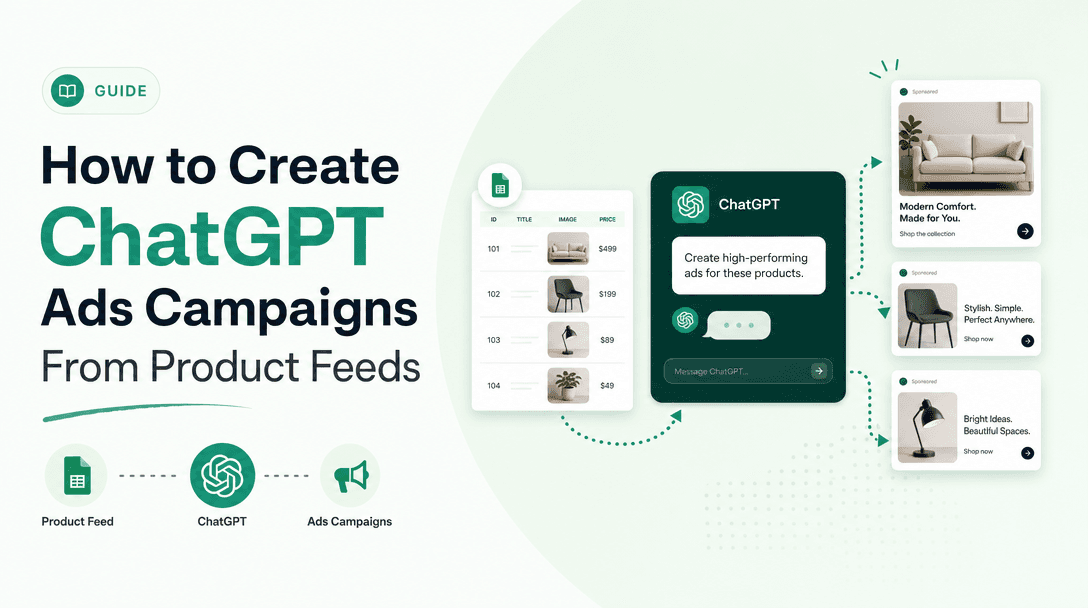
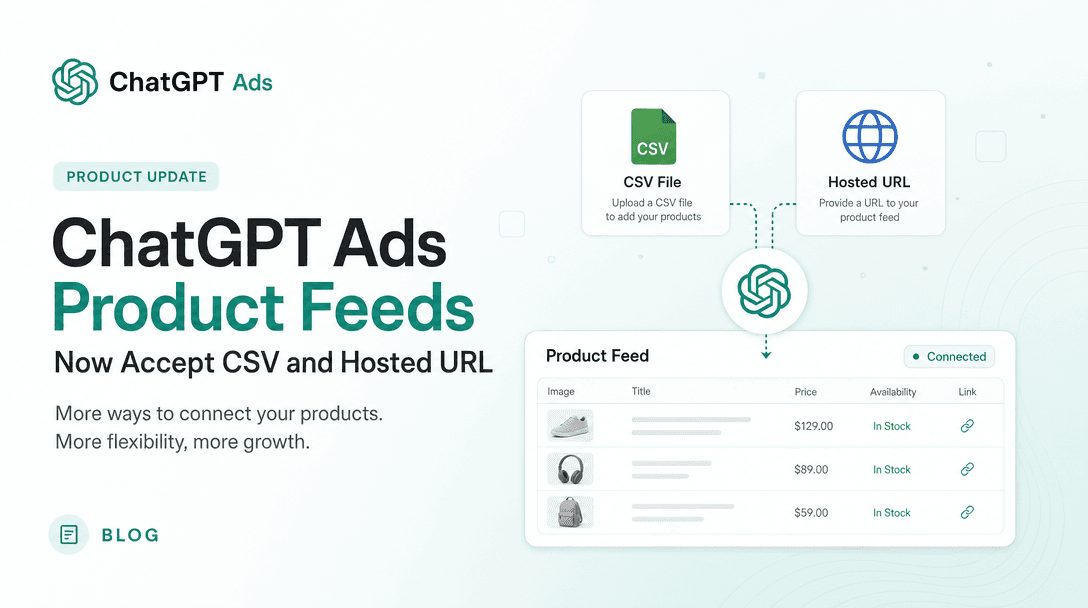
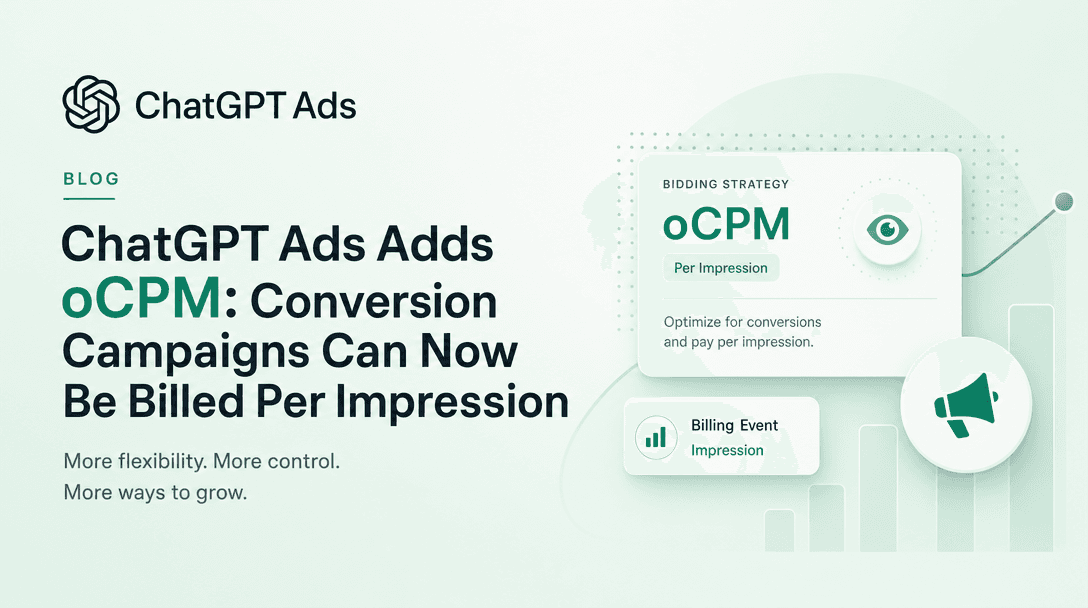
Two of the more consequential ChatGPT Ads updates in months landed together: conversion bidding for product feed campaigns entered open beta, and oCPC campaigns became clonable and bulk-creatable.
For retail advertisers this is the combination that makes ChatGPT Ads legible as a performance channel rather than a catalog-shaped awareness experiment. Feed campaigns were already, in OpenAI's words, "among the strongest-performing ads in our program to date" — but they bid on clicks. Now they can bid on the outcome.
There is also a gap worth being precise about. The announcement and the documentation do not fully agree, and one of the two headline items — cloning — sounds like a migration path and is not one.
Everything below is quoted from OpenAI's developer documentation, help centre, or advertiser product-update email, all as captured on 2026-08-06. Where those sources disagree, this article says so rather than picking one.
What actually shipped
From OpenAI's developer documentation:
Product-feed conversion bidding is available in open beta.
The mechanics are deliberately unremarkable — it is the existing oCPC campaign type pointed at a feed:
For a product-feed campaign, use the same
POST /campaignsendpoint. Includemode: "product_feed", the ID of a product feed linked to the ad account, and the same conversion bidding fields.
And at the ad group level:
For a product-feed campaign, the ad group automatically inherits the campaign's product feed.
Include
product_setonly when you want to specify product filters.
OpenAI's advertiser product-update email adds the scope of the initial release:
Conversion-optimized cost-per-click campaigns (oCPC) are now available in beta for product feed campaigns. This initial release supports click-billed campaigns using fixed or manual bidding with a positive conversion bid cap.
Three constraints are packed into that last sentence. The release is click-billed — as with all oCPC on this platform, optimising toward conversions does not change what you are charged for. It supports fixed or manual bidding only, which is to say there is no automated or target-based bid strategy here. And it requires a positive conversion bid cap, which is the field whose meaning OpenAI redefined in the same week — read that before you set one, because it is a cost-per-conversion bid, not a cost-per-click ceiling.
The prerequisites are stricter than they look
Two independent setups have to be complete before this works, and neither is instant.
Conversion tracking, with exactly one standard event. The developer documentation requires that you have "set up conversion tracking with the JavaScript Pixel, the Conversions API, or both" and possess "exactly one active standard conversion event" to serve as the optimisation goal. It is explicit that "custom events cannot be oCPC optimization goals."
For a retailer this is usually fine — a purchase event is standard. For anyone whose meaningful outcome is a custom event, the answer today is no. Our attribution deep-dive covers the pixel and Conversions API architecture in full.
A feed, over SFTP, already processed. The feed side has its own gating, documented in Create Campaigns from Product Feeds:
- Feeds must comply with OpenAI's feed specifications
- Feeds must be uploaded through SFTP — there is no UI upload, no URL fetch, no scheduled pull documented
- Each ad account is limited to one feed connection
- Processing "can take anywhere from a few minutes to a few hours depending on the size of the feed", and "items are processed gradually"
- Feed products are ads-eligible only; they "will not appear in organic ChatGPT conversations"
The one-feed-per-account limit is the constraint most likely to bite an agency or a multi-brand retailer. If you need separate catalogs to run under separate bid caps, your unit of separation is the ad account, not the feed — and that decision is made before any of this bidding work starts.
The practical sequencing: get the feed uploaded and processing first, confirm your standard conversion event is firing and matching, and only then create the campaign. A campaign created ahead of either one has nothing to optimise against.
Cloning is not a migration path
The second headline item is easy to misread. From the product-update email:
You can now clone an existing CPC campaign into a new oCPC campaign or create oCPC campaigns in bulk. During cloning, Ads Manager will prefill the conversion event when one eligible event is available; otherwise, you'll be prompted to select one.
Meanwhile the help centre, captured the same day, still says:
You cannot modify existing CPM or CPC campaigns to use oCPC at this time. Create a new campaign with the Conversions objective in Ads Manager.
And the developer documentation agrees:
You cannot change an existing CPM or CPC campaign to oCPC. Create a new campaign with
bidding_type: "conversions".
These are not in conflict once you read them precisely. Cloning copies settings into a new campaign; it does not convert the old one. The original CPC campaign continues to exist and run exactly as before. What you save is the typing.
What you do not get — and this is the part worth stating because nobody will say it for you — is any documented transfer of history. Nothing in OpenAI's documentation describes carrying learning, conversion history, or auction history across a clone. The sensible assumption is that the cloned oCPC campaign starts cold, with the same absence of a documented learning period that affects every oCPC campaign on this platform.
So the operating advice from our oCPC setup guide stands unchanged: keep the CPM or CPC campaign running while the oCPC campaign establishes itself. Cloning lowers the setup cost of that parallel run. It does not remove the parallel run.
The bulk-creation half of the announcement is the more quietly useful one for anyone running many accounts, and it pairs with the existing bulk upload campaign schema, whose checklist rules — no duplicate campaign names, no duplicate ad group names, every row a unique object — apply here too.
The conversion-event prefill deserves a second look
One clause in the announcement is a small trap:
During cloning, Ads Manager will prefill the conversion event when one eligible event is available; otherwise, you'll be prompted to select one.
Prefill happens when exactly one eligible event exists. That is convenient, and it is also the condition under which you are least likely to check the field — a single option gets accepted by default.
The conversion event is one of the settings that cannot be changed after campaign creation. Getting a prefilled value wrong means rebuilding the campaign, not editing it. If you are bulk-cloning ten campaigns, the prefill is applied ten times and reviewed zero times.
Check the prefilled event on the first clone of any batch, deliberately, before you run the rest.
What the documentation does not say
How campaign type and objective combine in Ads Manager. The help centre documents two different first choices: for feed campaigns you "select Product feed" in the campaign type dropdown, and for oCPC you "set the Objective to Conversions". Whether these are independent selectors, whether Conversions is available under the Product feed type in every account, and what the UI looks like when both are set is not documented anywhere. The API makes it unambiguous — mode: "product_feed" plus bidding_type: "conversions" on one campaign object — but the Ads Manager path is not written down.
Whether feed oCPC is enabled for every account. "Open beta" implies broad access, but the help centre article on conversion-optimized campaigns does not mention product feeds at all as of 2026-08-06. Only the developer documentation covers it. Check your own account rather than assuming.
How bid caps interact with product filters. The Bid Cap is set per ad group. Product filters are applied per ad group. That implies bid tiering by grouping products into separate ad groups — and OpenAI's feed article gestures at exactly this when it suggests using the ads_metadata field with values such as bidding_tier or product_line to organise products for ad group setup. But no documentation states this is the intended pattern for conversion bidding, and there is no documented per-product bid.
Whether conversion value is used. All of the oCPC documentation is denominated in conversion count. There is no documented value-based bidding, no ROAS target, and no statement about whether a purchase event's value is used in the prediction. For a retailer with a wide price range across the catalog, that is the difference between this being a usable channel and a channel that buys your cheapest SKUs.
Whether feed campaigns get any different treatment. Nothing in the documentation suggests the prediction model, the learning behaviour, or the auction differs for feeds. Nothing confirms they are identical either.
Also in this release, with less certainty
Two further items came from the product-update email and are only partly corroborated by documentation.
Brazil, and maybe Mexico. The email states ChatGPT Ads will launch in Brazil and Mexico "in the coming week". The Ads Manager availability table captured 2026-08-06 added exactly one row — Brazil, Coming Soon. Mexico is not on that table. Both countries have appeared in the minimum campaign spend table since 2026-08-05, at 40 BRL and 150 MXN respectively, but as we noted when those minimums first appeared, a published spend floor is not a statement of availability. Brazil is now the first country to sit in "Coming Soon" rather than "Available" — that status did not previously exist on the table.
A multi-product carousel, in testing. The email says OpenAI has "started testing a carousel format for product feed ads that shows multiple products from an advertiser in a single unit." The help centre still says feed ads "will use the same format as our current ad units" with title and description pulled from the feed, and documents no carousel. This is a test, described by OpenAI as a test, and there is no way to opt in or measure it separately today. It is worth knowing about because it changes what a good feed looks like — a carousel rewards catalogs with coherent product sets rather than isolated hero SKUs — but it is not something to plan a quarter around.
Pixel validation diagnostics. The email describes new detail in Ads Manager showing "why events were dropped before being sent, the affected field, the error type, and a recommended fix", reachable via Tools, then Conversions, then the diagnostics panel. This does not appear in the conversion measurement help article as of 2026-08-06. If it is in your account, it is the fastest way to answer the question that decides whether any of this bidding works: is the pixel actually sending what you think it is.
What to do this week
- If you run a catalog, confirm the two prerequisites independently — one standard conversion event, actively matching; one feed, uploaded via SFTP and showing items ready to serve. Neither is quick to fix on the day you want to launch.
- Set the bid cap as a cost per conversion, not a cost per click. This is the field OpenAI redefined this week, and getting it wrong understates your bid by a factor of your conversion rate.
- Clone rather than rebuild, but keep the original running. Cloning saves setup, not learning.
- Review the prefilled conversion event on the first clone in any batch. It cannot be changed after creation.
- Plan bid tiering into your feed, not into the campaign. Use
ads_metadatavalues to define the groups you will later want to bid differently, before you upload — retrofitting a taxonomy into a feed already in production is the expensive version of this task. - Do not budget against Brazil, Mexico, or carousel. One is Coming Soon, one is unlisted, one is a test.
Sources, all captured 2026-08-06: developers.openai.com — Conversion-optimized campaigns (product-feed conversion bidding open beta, mode: "product_feed", ad group feed inheritance, product_set, prerequisites, custom-event exclusion, immutability of goal and event); help.openai.com — Conversion-optimized Campaigns (oCPC creation path, conversion of existing campaigns); help.openai.com — Create Campaigns from Product Feeds (feed specifications, SFTP requirement, one feed per ad account, processing behaviour, ads_metadata, ad format); help.openai.com — Ads Manager Availability (Brazil, Coming Soon); help.openai.com — Bulk Upload Campaign Schema Checklist. Cloning, bulk oCPC creation, conversion-event prefill, pixel validation diagnostics, the carousel test, and the Brazil and Mexico launch timing are quoted from OpenAI's advertiser product-update email dated 2026-08-05; where that email and the documentation differ, both are quoted above. Statements about what the documentation does not say are statements about the documentation, not about the product.