 Soku AI
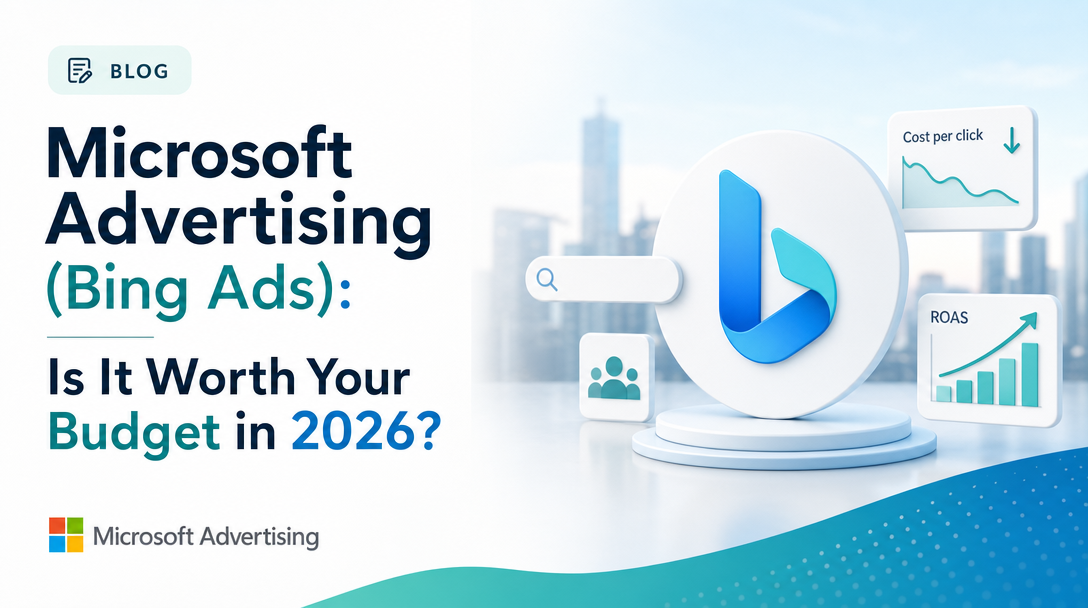
The case for Microsoft Advertising is always presented the same way: cheaper clicks, less competition, an older and wealthier audience, and free money left on the table by advertisers who cannot be bothered.
Most of that is true. It is also not the question. The question is whether the volume available is large enough to be worth a human's attention — because a channel that is cheaper per click but small enough to ignore tends to get ignored, and an ignored ad account is not a bargain.
This article works through that arithmetic, and is unusually explicit about where its numbers come from, because this topic has a source-quality problem that nobody writing about it acknowledges.
First, a Warning About Every Statistic You Will Read
Search for Microsoft Advertising statistics and you will find confident, precise, mutually contradictory figures. Market share is quoted as 4% and as 12%. Average CPC appears as a specific dollar figure. Advertiser adoption is given to the percentage point.
Two things are worth knowing:
Almost none of it comes from Microsoft. These figures are produced by third-party analytics vendors, agencies and comparison sites, each with a different panel, methodology and commercial interest. We are citing several below, with links, and we are not going to present any of them as authoritative.
The contradictions are usually definitional, not factual. The 4%-versus-12% market share gap is the clearest example, and it is not a dispute — it is two different denominators:
| Measure | Approximate figure | Why it differs |
|---|---|---|
| Global search share, all devices | ~4% | Mobile search is overwhelmingly Google; it dominates the blended number |
| Desktop search share | ~12% | Bing is the default in Windows and Edge, where desktop share concentrates |
Ranges as reported by third-party trackers including Searchlab's Microsoft Ads statistics and Improvado's Bing vs Google cost comparison, read 2026-08-04.
Which number applies to you is a real question with a real answer. If your customers research and convert on desktop — B2B software, professional services, considered B2C purchases, anything bought during a working day — the desktop figure describes your opportunity and the blended figure badly understates it. If you sell something bought on a phone, the blended figure is closer to your reality and Microsoft is a smaller opportunity than the optimistic write-ups suggest.
That single distinction resolves most of the disagreement about whether Microsoft Advertising is worthwhile.
What Is Genuinely True
Stripping out the contested precision, four things hold up consistently across sources:
1. Clicks are cheaper. Third-party analyses put Microsoft CPCs roughly 30–40% below Google's for comparable terms. The mechanism is not mysterious and does not depend on trusting the number: fewer advertisers compete in the auction, so it clears lower. (Improvado, Searchlab, read 2026-08-04.)
2. The network is wider than "Bing". Microsoft's search network spans Bing, Yahoo, AOL, MSN and Outlook.com, plus syndication partners that have included DuckDuckGo and Ecosia, and increasingly Copilot surfaces. The "Bing Ads" name is the single biggest reason advertisers underestimate the reach — and a reason to review placement reporting, since syndicated partner traffic does not always behave like Bing traffic.
3. Advertiser adoption is far below Google's. Reported figures put Microsoft usage among US advertisers at roughly a third, against around 80% for Google, with Microsoft taking around 6% of a typical paid-search budget. (NaMedia Experts benchmarks, read 2026-08-04.) This is simultaneously the opportunity — less competition — and the warning, which we get to below.
4. Setup is close to free. Microsoft provides an import from Google Ads that carries campaigns, ad groups, keywords and ads across. Whatever the channel is worth, the cost of finding out is unusually low.
The Arithmetic Nobody Does
Here is the calculation that actually decides this, and it is not about CPC.
Take the widely reported figure that Microsoft receives around 6% of a typical paid-search budget. Apply it:
| Monthly Google spend | Implied Microsoft spend at ~6% | Realistic monthly management time | Verdict |
|---|---|---|---|
| $3,000 | ~$180 | 1–2 hours | Not worth active management |
| $10,000 | ~$600 | 2–3 hours | Marginal; only if near-zero effort |
| $50,000 | ~$3,000 | 3–5 hours | Clearly worth it |
| $200,000+ | ~$12,000+ | Ongoing | Should already be running |
Spend column is our arithmetic on the reported 6% allocation; the time and verdict columns are our judgement, not a published benchmark.
The cheaper-CPC argument is real and mostly irrelevant at the bottom of that table. A 35% saving on $180 of monthly spend is about $63. That does not pay for anyone to look at it, and the account will drift.
This is the honest reason most small advertisers should not run Microsoft Advertising — not that it performs badly, but that the absolute profit available is smaller than the attention it requires. The failure mode is not wasted spend; it is a live account nobody has opened in eight months, still running last year's bids against this year's competitors.
Two things change that calculus, and both are worth taking seriously:
- If the channel can genuinely be run at near-zero marginal effort — because it is managed alongside Google rather than separately — the threshold drops sharply. The overhead, not the spend, is the constraint.
- If your desktop share is unusually high, the 6% benchmark understates your opportunity, potentially by a lot. B2B advertisers in particular should test rather than assume the average applies.
Where It Genuinely Pays
Four profiles where Microsoft Advertising is reliably worth the effort:
1. B2B and professional services. Desktop-weighted, working-hours research, and a corporate device fleet that is disproportionately Windows and Edge. This is the strongest case in the category, and it is the one where the blended 4% figure most badly misrepresents the opportunity.
2. Ecommerce already running Google Shopping. Bing Shopping's marginal setup cost is unusually low because the product feed already exists and Microsoft accepts a Google-shaped feed with little rework. Expect a fraction of Google's volume; judge it on incremental profit, not on parity.
3. High-value, considered purchases. Where a single conversion is worth hundreds or thousands, a smaller audience still produces meaningful absolute return, and a 35% CPC saving on expensive clicks is worth real money.
4. Accounts hitting Google's ceiling. If you are at high impression share on the terms that convert and additional Google budget is buying progressively worse traffic, incremental Microsoft spend is often better traffic than incremental Google spend. This is the most reliably profitable reason to expand, and the least discussed.
Where it does not pay: small budgets, mobile-first and app products, and audiences that skew young and phone-native. In each case the available volume does not survive contact with the management overhead.
Setting It Up Without Creating a Zombie Account
Import from Google — then break the mirror. The import removes essentially all of the build cost. The mistake is leaving it as a permanent one-way sync, which is exactly what produces the neglected account described above.
Three things to change immediately after import:
- Bids. Google bids are wrong on a cheaper auction. Importing them intact means systematically overbidding from day one.
- Match types and negatives. Lower query volume changes how broad match behaves. Negative lists built on Google's traffic will not cover Microsoft's.
- Device and demographic modifiers. The mix is different, particularly desktop weighting. Copying Google's modifiers imports assumptions that do not hold.
Then set the review cadence honestly. If the answer is "we will look at it monthly", the account needs to be simple enough to survive monthly attention — fewer campaigns, broader structure, less manual bidding. An account structure that requires weekly attention it will never receive is worse than a simpler one that matches the attention you will actually give it.
The Copilot Question
The most genuinely forward-looking reason to hold an active Microsoft account is that Microsoft has been extending advertising into Copilot surfaces.
We are going to be careful here, because this is where speculation is thickest. Reported Copilot user figures and ad-format descriptions come from third-party coverage and Microsoft announcements rather than a stable published advertiser specification, and the formats are still evolving. We are not going to quote performance expectations, benchmark CPCs, or availability guarantees for surfaces whose documentation is still moving.
What can be said without inventing anything: assistant surfaces are becoming an ad placement, and Microsoft is further along on that than most. The same shift is visible at OpenAI, where ChatGPT Ads has moved from announcement to a documented Ads Manager with conversion-optimized bidding and published campaign mechanics.
The strategic argument for Microsoft is therefore partly unrelated to CPC arbitrage: an active, instrumented account is the cheapest way to be present as those surfaces develop, and to learn on them before they are competitive. That is a different justification from "cheaper clicks", it should be budgeted as a learning cost rather than a performance channel, and it does not rescue the arithmetic for a $3,000/month advertiser.
The Honest Verdict
Microsoft Advertising is a good channel that is too small to be a priority for most advertisers, and undervalued by exactly the advertisers it suits best.
If you are spending meaningfully on paid search, have desktop-weighted or B2B customers, or are already at Google's ceiling — run it, and manage it on its own numbers rather than as a Google mirror.
If you are a small advertiser with a phone-first audience, the cheaper clicks are real and the total profit available is not worth the hours. Do not open an account you will not look after. A neglected ad account is a liability, not an option you are keeping open.
And whichever applies, be sceptical of the precise statistics — including the ones cited above. The definitional gap between 4% and 12% market share is not a rounding error, and knowing which one describes your customers is worth more than any benchmark CPC you will find.